You'll have to crane your neck just a little farther to look up at SpaceX's new Starship rocket.
The company is gearing up for the planned May 19 debut launch of Version 3 (V3) of Starship, which has undergone a complete design overhaul since its last liftoff seven months ago.
The first fully stacked Starship rocket, which flew the combined Super Heavy booster and Ship upper stage, launched in April 2023. Three years and 10 additional test flights later, SpaceX has introduced Starship V3 — the culmination of successes, failures and lessons learned over those 11 launches. The rocket's new, refined design is more powerful, more resilient and more capable than its antecedent iterations, and a step closer to a fully reusable launch vehicle.
Starship V3 will also launch from SpaceX's newest pad, the second the company has erected at its Starbase site in South Texas. The upgraded hardware is meant to mature Starship's design, moving the vehicle from test flights toward an operational architecture that can support the rapid reuse, high flight rates and orbital refueling necessary for missions like the ones Starship plans to fly for NASA's Artemis program, which will land astronauts on the moon.
V3 stands about 5 feet (1.5 meters) taller than previous Starship builds and packs a much heavier punch. Both stages —Super Heavy and Ship — have been equipped with SpaceX's new Raptor 3 engine — sleeker, more powerful and more reliable upgrades over the previous Raptor 2. For the Super Heavy booster, that means 33 engines firing with a combined thrust of over 18 million pounds at liftoff.
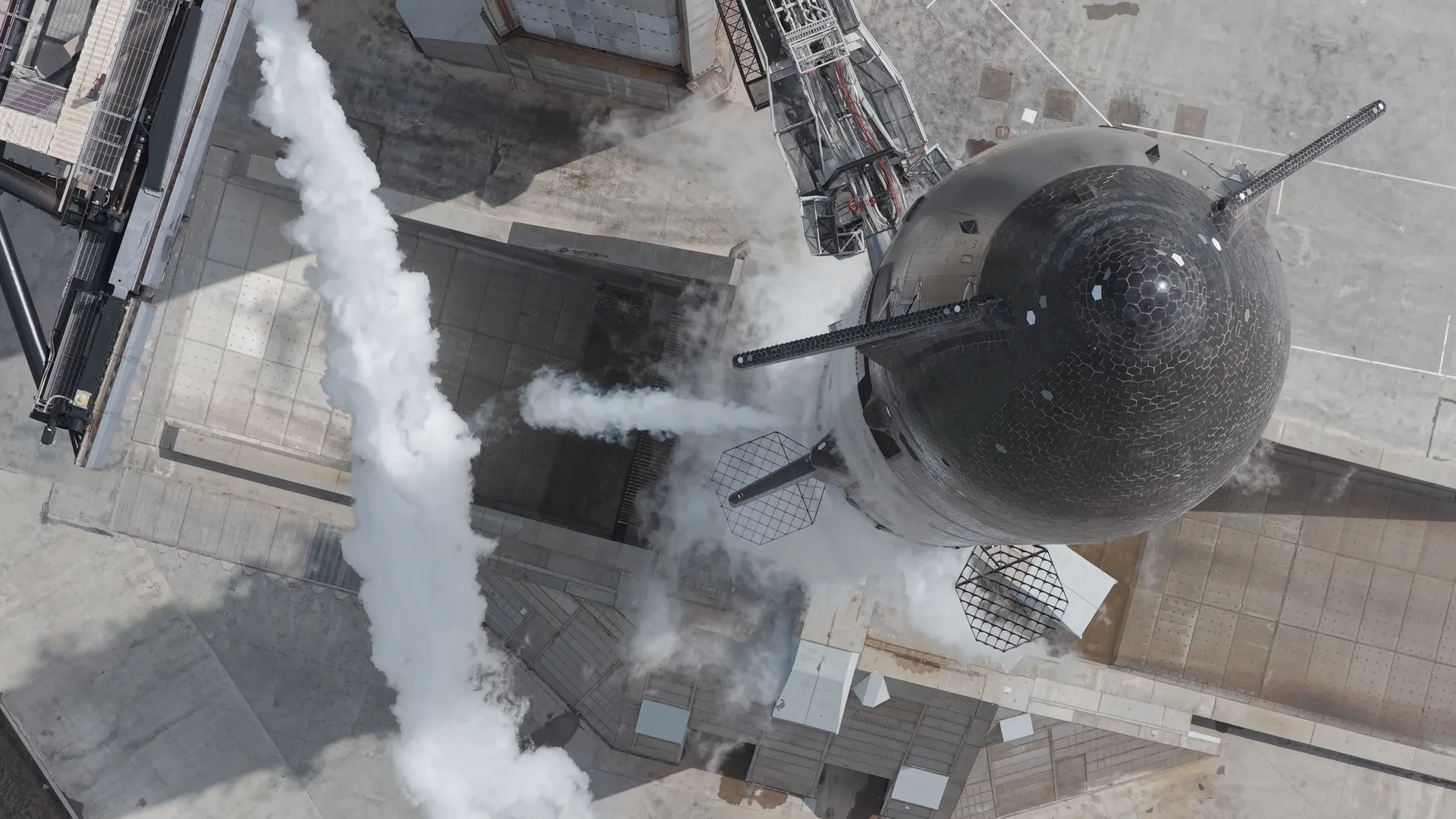
The V3 Super Heavy has three grid fins — lattice-like structures that help it steer back to Earth for pinpoint touchdowns — rather than the previous four, according to a May 12 SpaceX update. Each one is about 50% larger than before and situated lower on the booster's trunk to avoid heat from "hot-fire" staging procedures when separating from its Ship counterpart in flight. (A "hot stage" separation means Ship begins firing its engines before actually separating from Super Heavy). The vehicle's hot stage ring has also been redesigned and attached to the top of the booster; the Starship V2 hot stage ring was an interstage piece that detached from both vehicles and fell back to Earth during flight.
Inside Super Heavy, a redesigned fuel transfer tube that's now "roughly the size of a Falcon 9 first stage" will allow the booster's 33 Raptor 3s faster and simultaneous ignitions for launch and landing burns, according to the update. SpaceX also made changes to the aft end of the rocket that supports those engines to better protect the area from heat with tightened integration of its fuel transfer, power and computer systems.
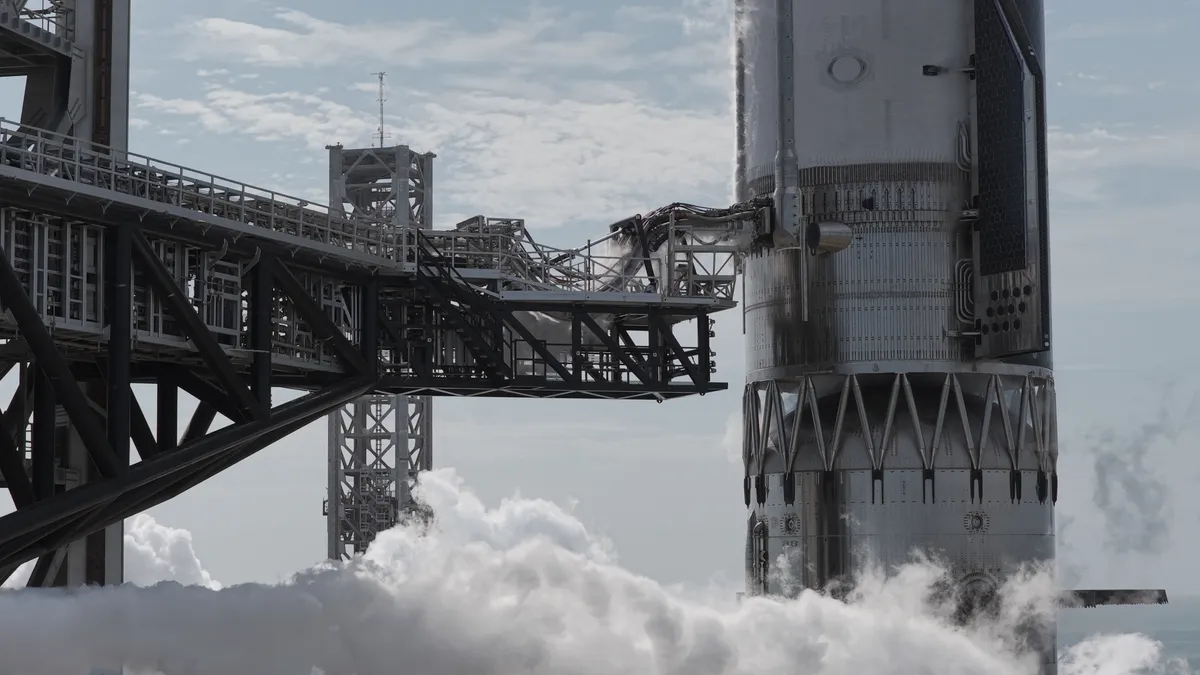
The Ship upper stage has a list of upgrades as well, including plumbing and wiring layout changes in its own aft section, a larger propellant tank and an improved reaction control system. SpaceX also made significant improvements to how Ship handles cryogenic fuels, adding four docking ports along Starship's body and a dedicated system for managing cryogenic propellant in zero-g.
Storing the spacecraft's cryogenic propellants and transferring them between vehicles is a capability SpaceX has yet to attempt, but it's a critical technology for Starship's design. For Ship to fly beyond low Earth orbit (LEO), the spacecraft will require refueling missions using other Starships to top off its tanks. And it's an ability that SpaceX needs to demonstrate soon if it wants to meet NASA's timeline for landing astronauts on the moon (in late 2028, on the Artemis 4 mission, if all goes to plan).
SpaceX is one of two companies contracted to provide lunar landers for the Artemis program, and it needs to meet NASA's qualifications for crewed flights before astronauts can fly on board Starship. That includes the aforementioned cryogenic fuel challenges, as well as the completion of an uncrewed moon landing and launch back safely to lunar orbit, where, on an actual mission, it would rendezvous and transfer astronauts back aboard NASA's Orion spacecraft.
NASA is targeting late 2027 for the Artemis 3 mission, which will launch Orion to LEO to practice docking procedures with Starship and/or the Artemis program's other lander, Blue Origin's Blue Moon. NASA has indicated a willingness to fly with either or both landers, depending on their respective readiness when it comes time for the mission.
So there's a lot riding the upcoming debut flight of Starship V3. A successful mission would include the deployment of 22 Starlink mass simulator payloads, upgraded heat tile dispersion and testing (which involves cameras on two of the simulator payloads inspecting Ship's underside for missing or damaged tiles), an in-space relight of a Ship Raptor 3, various test maneuvers to stress Ship during reentry, and deceleration burns of both stages for soft, offshore landing splashdowns. It's a long list, and any setbacks could have deep implications for both SpaceX and NASA.