At long last, SpaceX has a Mars launch firmly on the books.
Company founder and CEO Elon Musk has had the Red Planet in his sights for decades. Indeed, the world's richest man has repeatedly said that he established SpaceX in 2002 primarily to help humanity settle the fourth rock from the sun.
But the company hasn't launched a Mars mission to date, or even inked a customer for one — until now.
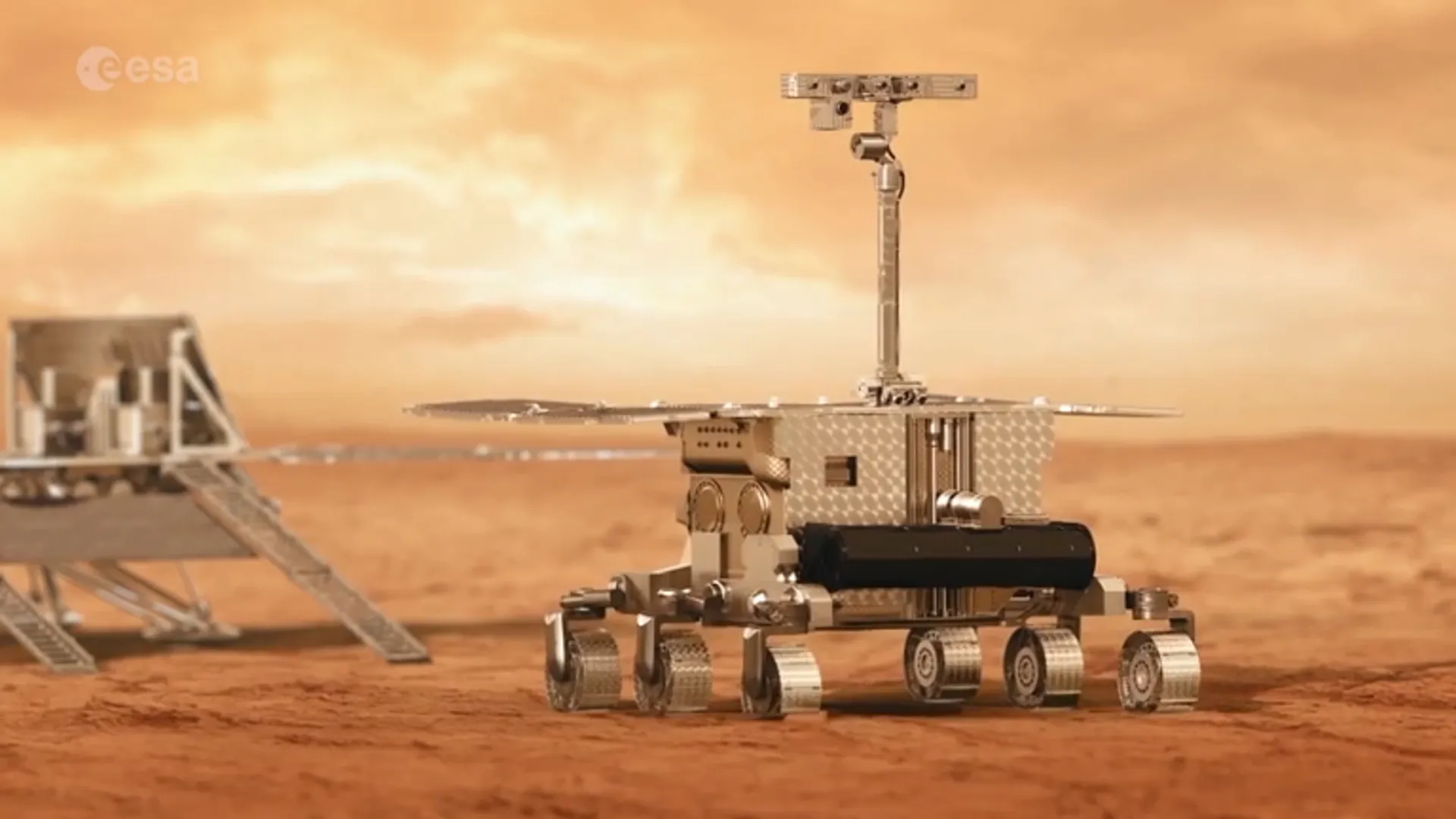
On Thursday (April 16), NASA announced that it has selected SpaceX's Falcon Heavy rocket to launch Europe's first-ever Mars rover, a life-hunting robot called Rosalind Franklin. If all goes to plan, the liftoff will take place in late 2028 from NASA's Kennedy Space Center in Florida.
Things have certainly not gone to plan for Rosalind Franklin to this point, however. The rover is part of Europe's ExoMars exploration program, which was established about 15 years ago with NASA as a key partner.
ExoMars consists of two missions: Rosalind Franklin and the Trace Gas Orbiter (TGO), which was designed to sniff out methane and other interesting compounds from high above Mars. Each was supposed to launch atop its own United Launch Alliance Atlas V rocket — TGO in 2016 and Rosalind Franklin in 2018. (It was just known as the ExoMars rover at the time; Rosalind Franklin wasn't named until 2019.)
But NASA dropped out of the ExoMars program in 2012 due to budget issues, leaving the European Space Agency scrambling. ESA eventually found a new partner in Russia, which successfully launched TGO in 2016 on a Proton rocket and built a landing platform and some science instruments for Rosalind Franklin.
The rover's launch was then delayed by multiple issues, including parachute concerns and supply-chain problems caused by the COVID-19 pandemic. ESA powered through, readying Rosalind Franklin for a planned September 2022 Proton liftoff — but then Russia threw a wrench into the works. It invaded Ukraine in February of that year, spurring Europe to sever most of its space partnerships with Russia, including those concerning ExoMars.
So, ESA needed help once again, and this time it turned to its original partner: NASA. The two space agencies signed a deal in 2024 laying out NASA's contributions to the Rosalind Franklin mission. The American agency would procure a commercial launch vehicle for the rover and provide part of the propulsion system that would help it land softly on Mars, as well as heaters to keep Rosalind Franklin's electronics and scientific instruments warm during the bitterly cold Red Planet nights.
NASA would also provide "specialized electronics and a state-of-the-art mass spectrometer for the Mars organic molecule analyzer science instrument, which will search for the building blocks of life in samples collected at the rover’s landing site, Mars’ Oxia Planum," agency officials wrote in Thursday's announcement.
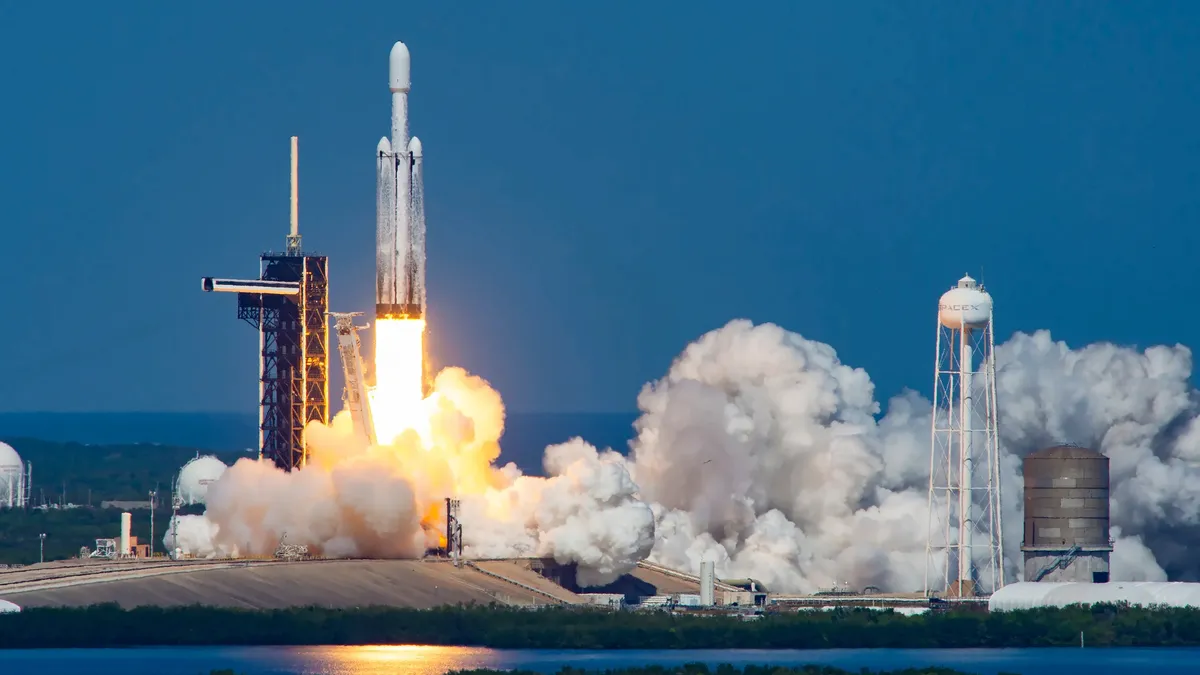
In that announcement, NASA revealed that it has approved initiation of the Rosalind Franklin partnership's "implementation" phase, putting the mission on solid footing for its planned 2028 launch. The agency also told us what rocket would be doing the lifting — SpaceX's Falcon Heavy.
The launcher consists of three modified, strapped-together Falcon 9 first stages; an upper stage, with the payload attached, sits atop the central booster. All three first stages are designed to be reusable.
The Falcon Heavy debuted in February 2018 and has 11 launches under its belt to date, all of them successful. The rocket hasn't flown since October 2024, when it sent NASA's Europa Clipper probe toward Jupiter's famed ocean moon Europa.
While the Rosalind Franklin mission marks SpaceX's first Mars contract, the company is also working to get to the Red Planet on its own dime using its Starship megarocket.
SpaceX envisions Starship — the biggest and most powerful rocket ever built — helping humanity establish bases on the moon and Mars. The rocket has flown 11 suborbital test flights to date, the last two of them fully successful, but has yet to reach orbit or demonstrate off-Earth refueling — a capability it must master for deep-space missions.
SpaceX plans to launch a small fleet of uncrewed Starships to Mars when the vehicle is ready, Musk has said. But it's unclear when that will be. Red Planet launch windows come around just once every 26 months, and the next one is fast approaching: It opens this October.
So, Starship's Mars dreams may have to wait until 2028, just like those of Rosalind Franklin.