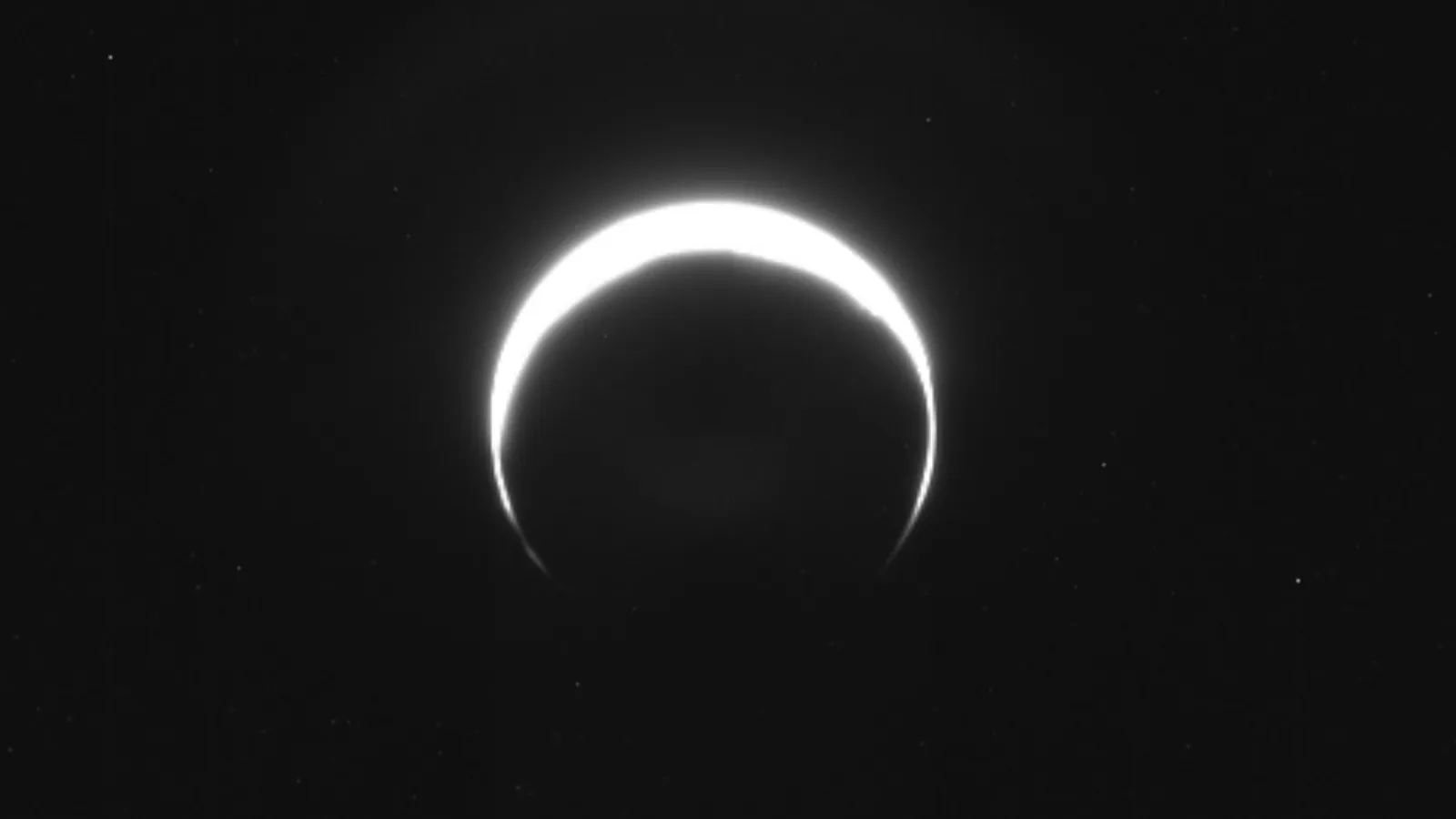
Is it an eclipse? An oddly angled crescent moon, perhaps? Nope. This stunning silver arc is actually Mars.
The breathtaking new image of the Red Planet was captured by the NASA spacecraft Psyche as it heads for a close encounter with Earth's planetary neighbor on Friday (May 15).
NASA shared the image captured late on Wednesday (May 13) on its NASA Solar System X feed. The space agency wrote: "This is not an eclipse, but an even more rare sight: a crescent Mars as seen by NASA’s #MissionToPsyche spacecraft. The unprocessed image — taken by Psyche today — shows the night side of Mars as the spacecraft approaches the Red Planet for a flyby on May 15."
NASA explained the glowing crescent is actually sunlight being reflected from the day side of the Martian surface, with a contribution from sunlight passing through the atmosphere of Mars. The space agency continued: "The irregularities in the crescent are likely caused by surface features, and dust and clouds in the atmosphere."
This is not an eclipse, but an even more rare sight: a crescent Mars as seen by NASA’s #MissionToPsyche spacecraft.The unprocessed image — taken by Psyche today — shows the night side of Mars as the spacecraft approaches the Red Planet for a flyby on May 15. The glowing… pic.twitter.com/MMxQfcXl5ZMay 13, 2026
As Space.com previously reported on Friday (May 15), Psyche will come within around 2,800 miles (4,500 kilometers) of Mars travelling at a speed of 12,333 miles per hour (19,848 kph).
This will allow it to capture some stunning images of Mars and, in the process, calibrate the spacecraft's observational instruments, work which began on May 3. This will verify that Psyche will be ready to collect vital data when it reaches the main asteroid belt between Mars and Jupiter, home of its primary target a metal-rich 173-mile-wide (280 km) asteroid called asteroid 16 Psyche, (or just Psyche).
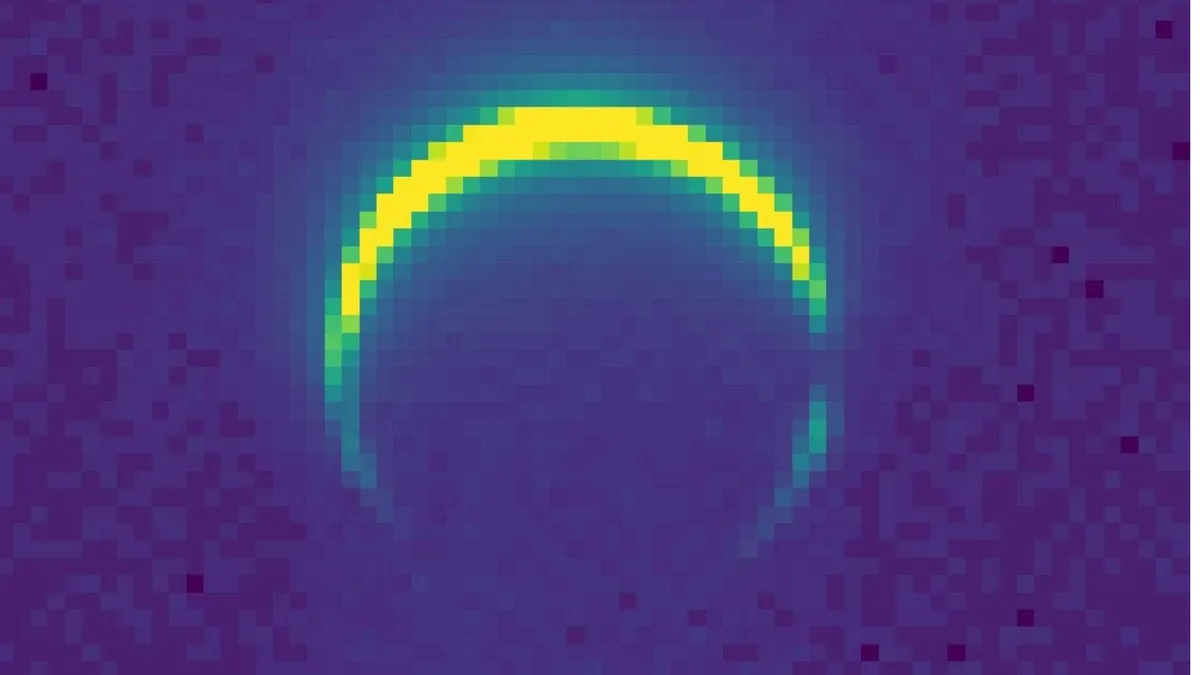
This isn't just a sightseeing tour, howver. The main aim of Psyche's Mars flyby will be to grab a gravity assist from the Red Planet.
This will boost the spacecraft's speed and alter its trajectory enabling the mission which launched in October 2023 to reach its asteroid namesake in 2029.