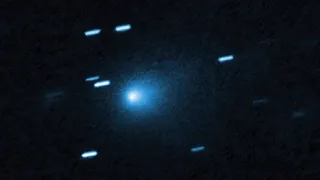
Interstellar comet 3I/ATLAS wasn't supposed to be there — meet the astronomer who discovered it
Dr. Larry Denneau of the University of Hawaii is nothing like your typical astronomer.

By Anthony Wood published
The Geminid meteor shower peaked overnight on Dec. 13.

By Mike Wall published
The planned launch of Japan's Michibiki 5 navigation satellite atop an H3 rocket tonight (Dec. 16) was scrubbed with less than a minute left in the countdown.

By Josh Dinner, Tariq Malik last updated
Follow Space.com's rocket launch blog for the latest on when the next rocket launch will be and how to follow it live.

By Space.com last updated
Reference Keep up with all the rocket launches, astronomical events and mission milestones for 2025 with our space calendar.

By Sharmila Kuthunur published
NASA's Parker Solar Probe captured solar material looping back to the sun, revealing how it recycles magnetic energy and shapes future solar storms.

By Robert Lea published
"This was an absolute surprise. It's extremely different from what we expected."

The latest aurora forecast for tonight help you make sure you're in the right place at the right time to see the northern lights.

Follow Space.com's rocket launch blog for the latest on when the next rocket launch will be and how to follow it live.

Find out what you can see in the night sky for tonight, from planets and stars to dazzling meteor showers.

Witness live views of Earth from the International Space Station as it orbits the planet. Space streaming company Sen is broadcasting 24/7 from the ISS in beautiful 4K HD.

NASA astronaut Sally Ride became the first American woman in space aboard the space shuttle Challenger.

See what moon phase it is tonight and find out when you can see the rest of the moon phases for 2025.

Keep up with all the rocket launches, astronomical events and mission milestones for 2025 with our space calendar.

By Samantha Mathewson published
Frequent flares from the nearby star TRAPPIST-1 could offer new clues in the search for habitable planets beyond Earth.

By Kenna Hughes-Castleberry published
To develop more robust next-generation aerial explorers, NASA's Mars Exploration program is turning to drones.
Please login or signup to comment
Please wait...