The US government is 'sincere in its efforts to understand UAP', new White House council chair says

Whatever they are and from where, UFOs, now known as Unidentified Anomalous Phenomena or UAP, are the subject of serious scrutiny at the highest levels of the U.S. government.
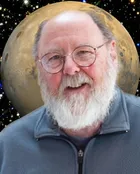
In June 2026, the White House established a new UAP Science Advisory Council in coordination with the Pentagon's All Domain Anomaly Resolution Office, the Office of the Director of National Intelligence and the FBI Deep diving into the UAP landscape is Avi Loeb, noted Harvard astrophysicist. He is also director of the Galileo Project at Harvard, which aims to search for signs of extraterrestrial activity here on Earth. As the council chair, Loeb said the goal of this group is to advise the U.S. government on how to resolve the nature of UAP.
Members of the UAP Science Advisory Council recently gathered at a private meeting, held on Aug. 31 at the Office of the Director of National Intelligence, Loeb told Space.com. "I cannot disclose the contents but I will say that the U.S. government is sincere in its efforts to understand UAP based on the scientific method of data collection," Loeb said.
Council membership
One of the council's members is Ben Lamm, co-founder and CEO of Colossal Biosciences. As a serial technology entrepreneur, he's no stranger to diving into complex challenges. Colossal is advancing the use of genome editing technology to "de-extinct" previously lost species such as the Wooly Mammoth.
Working along with the council's group of scientists and experts, Lamm is bullish about bringing clarity to a long-standing investigation and wonder of UAP.
"I've been fascinated by this topic for a long time, so having the opportunity to help examine the evidence firsthand and contribute to a serious scientific effort is incredibly exciting," Lamm told Space.com.
"Our mission is straightforward," Lamm added. "This is not about belief, it is about evidence. We want to apply rigorous scientific methods to both historical UAP records and new observations, collecting and analyzing data that meets today's scientific standards," he said.
Lamm said that the expectation is to bring transparency and accountability to the field by objectively evaluating credible evidence and sharing findings openly with the scientific community and the public.
"It's time to search for answers around the science because they could reshape our understanding of the world and, potentially, become one of the most significant discoveries in human history," said Lamm.

New polling data
Meanwhile, and serving as a backdrop to studying UAP, is a new Gallup poll, conducted in July. That poll found that about half of Americans, 49 percent, think all Unidentified Flying Object (UFO) sightings can be explained by human activity on Earth or natural phenomena.
The poll also found 37 percent believe at least some UFOs have been alien spacecraft visiting Earth from other planets or galaxies while another 13 percent do not have an opinion.
Interestingly, rather than becoming increasingly convinced that some sightings have been alien spacecraft, the percentage of Americans who are unsure has grown, from 7% in 2019 to 13% in 2026 the Gallup poll found.
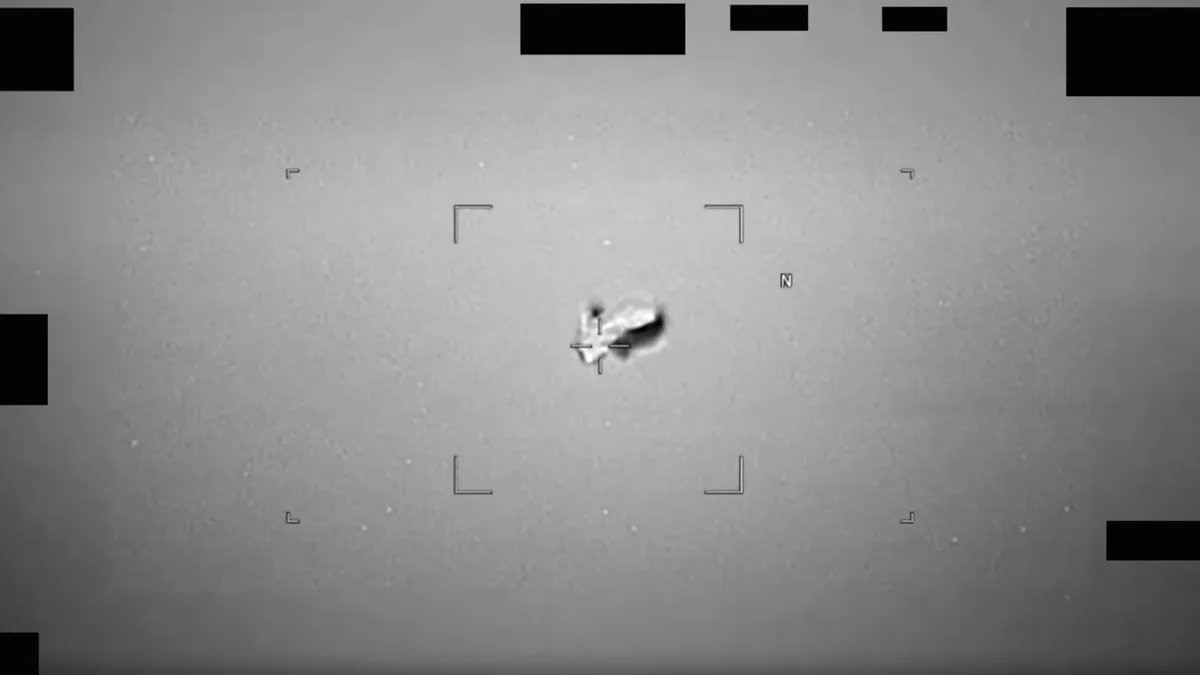
The new poll also notes that a majority say the U.S. government is withholding UFO information. Seventy-eight percent of Americans say the U.S. government knows more about UFOs than it is telling the public, higher than the 68 percent and 71 percent who said so in 2019 and 1996, respectively.
These findings come as the Department of War continues to release a mix of UFO files under a President Donald Trump executive order.
In August 2026, the UAP Science Advisory Council announced their support for the Trump administration to provide legal assurances, including immunity where necessary, for current or former government employees and military personnel to share information with the council "regarding alleged technology from a non-human origin and help guide the council's scientific evaluation."