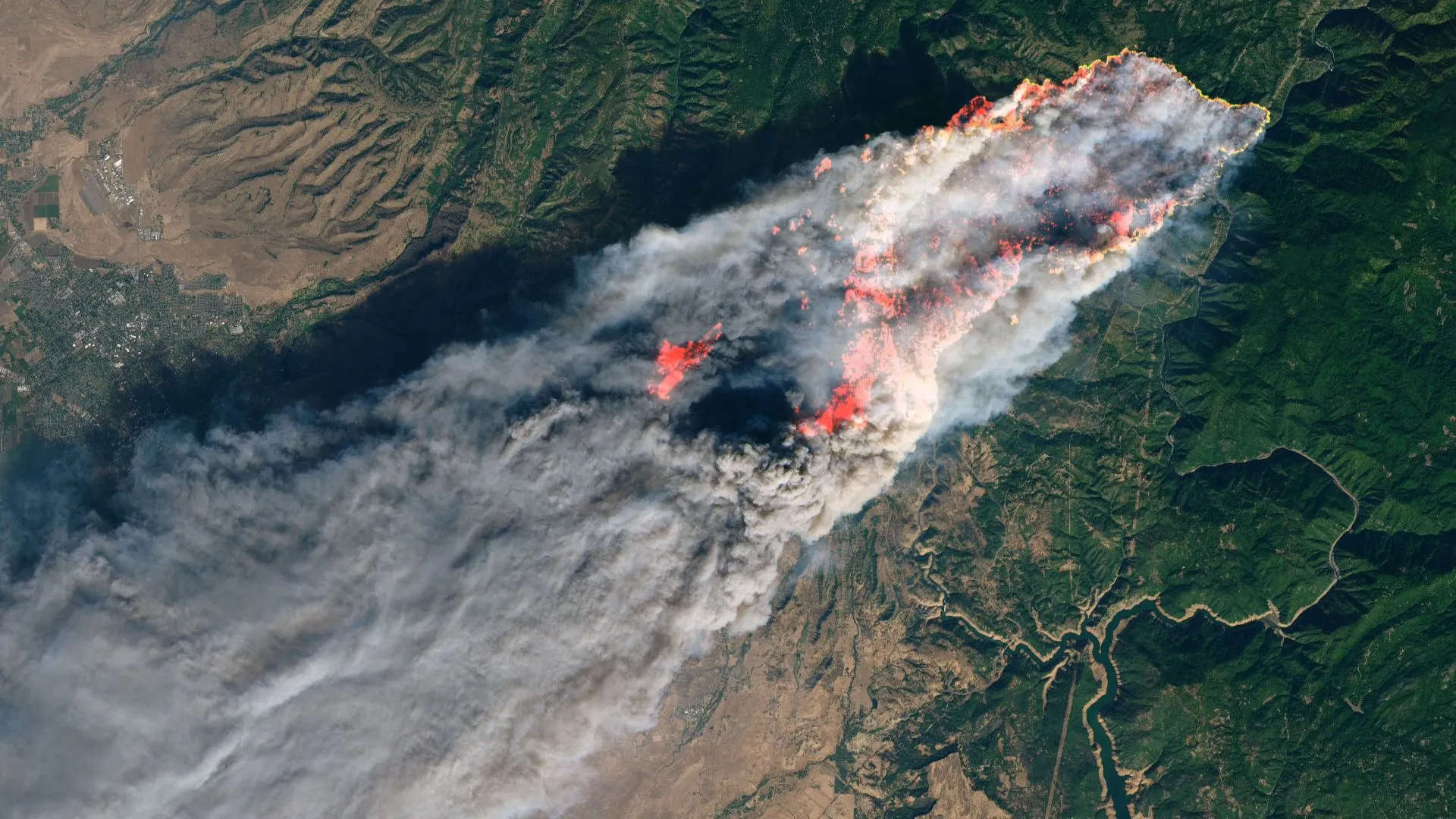
If this summer felt hotter than usual, you're not alone. As it turns out, this past summer was the hottest on record in the United States.
This is the hottest that summer in the U.S. has been in at least 132 years. Specifically, the temperatures rose to 3 degrees Fahrenheit (1.67 degrees Celsius) above average, beating out the most recent record set in 2021 of 0.4 degrees F (0.22 degrees C) above average, according to a new report from National Oceanic and Atmospheric Administration (NOAA). And looking month-to-month, this was also the hottest August we've ever seen.
The record-breaking season saw unmatched temperature highs across the contiguous U.S. (all of the adjoining states, excluding Alaska and Hawaii which just aren't a part of this record) from June through August. But scorching temperatures aren't all that this new record reveals, as this summer was also one of the driest on record for the contiguous U.S., with more than half of the country in a drought by September. The summer of 2026 saw both extreme precipitation highs and lows across the country, too. From droughts to heavy rain, there was nothing average about the precipitation seen across the U.S. this summer.
A closer look
Digging into some of the details, the full summer was 3 degrees F above the average for the season, 74.4 degrees F (23.5 degrees C). August was 3.5 degrees F (1.94 degrees C) above average for the month at 75.6 F (24.2 C). And while most of the contiguous U.S. experienced well above average temperatures this summer, some locations felt the heat the most. The Southwest, the southern Rockies, the southwestern Plains, southern Florida, California, Nevada, New Mexico and Colorado hit particularly high temperatures this August.
Looking at the summer's unusual precipitation levels, the total precipitation across the contiguous U.S. was 0.32 inches (0.8 centimeters) below average, making this past summer the third driest on record, and the driest summer since 2000. By Sept. 1, 59.1% of the country was in drought. There was drought across the West, the upper Midwest, the Deep South and more. Over 75% of Puerto Rico lie in drought conditions as well, with 40% being in "extreme drought." And while summer might be ending, a lot of this drought is projected to continue, according to the report from NOAA. When it comes to drier lands, that also means an increased risk of wildfire.
Though these temperature differences might seem small or relatively mild at face value, they have massive consequences. As climate change progresses primarily due to greenhouse gas emissions caused by human activities like transportation and manufacturing, we continue to see a whole host of its effects across the world. This ranges from rising average temperatures and glacial ice loss to sea level rise and worsening natural disasters. Those natural disasters include events like flooding, hurricanes, wildfires and cyclones.
While different areas of the world will experience different effects of global warming, one thing remains true for all: The consequences will only continue to worsen as our planet warms.

If we just look at this past August 2026 in the U.S., not only did we see record-high temperatures, but also weather and climate disasters of all varieties. Fires broke out over 10,000 acres of eastern Washington, even spreading across the state and into Oregon. More fires, in fact, spread across Nevada and Alaska while wind gusts up to 111 miles per hour (178.6 kilometers per hour) tore across South Dakota. A heatwave brought sweltering temperatures to south Florida and Hurricane Lala brought intense winds, rain and flooding to Hawaii;. And these are just a few of the many examples — from just this last month.