


The International Space Station (ISS) is a multi-nation construction project that is the largest single structure humans ever put into space.
Its main construction was completed between 1998 and 2011, although the station continually evolves to include new missions and experiments. It has been continuously occupied since Nov. 2, 2000.
The ISS is not owned by one single nation and is a "co-operative programme" between Europe, the United States, Russia, Canada and Japan, according to the European Space Agency (ESA). The International Space Station costs about $3 billion per year for NASA to operate, roughly a third of the human spaceflight budget, according to the agency's Office of the inspector general.
Related: International Space Station: Live updates
The ISS includes contributions from 15 nations. NASA (United States), Roscosmos (Russia) and the European Space Agency are the major partners of the space station and contribute most of the funding; the other partners are the Japanese Aerospace Exploration Agency and the Canadian Space Agency. Through a private company called Axiom Space, private astronauts are starting to work on the orbiting complex, from time to time; additionally, astronauts from other nations such as the United Arab Emirates, do fly occasionally to the ISS.
ISS live views
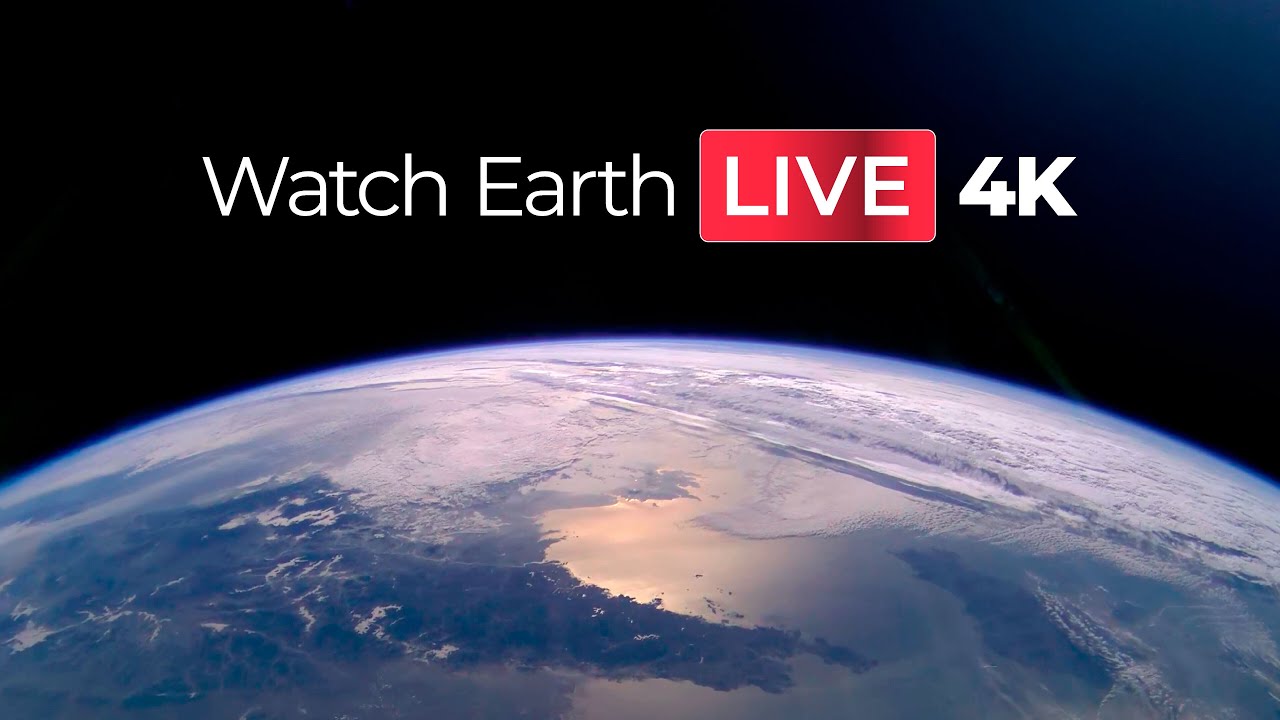
This Sen livestream shows high-definition views from the ISS as it orbits Earth. The external camera is mounted on the station's Columbus module.
ISS expert Q&A
We asked Raphael Grau, deputy manager of NASA's International Space Station External Integration Office, a few frequently asked questions about the ISS.

Raphael Grau is the deputy manager of NASA's International Space Station External Integration Office.
How big is the ISS?
The International Space Station is 356 feet (109 meters) end-to-end with a mass of 925,335 pounds (419,725 kilograms) without visiting vehicles. The solar panels alone cover one acre. There is 13,696 cubic feet of habitable volume for crew members, not including visiting vehicles. The space station has seven sleeping quarters, with the ability to add more during crew handover periods, two bathrooms, a gym, and the cupola — a 360-degree-view bay window of the Earth. You can learn more in the reference guide here.
How high is the ISS?
The space station orbits Earth at an altitude of approximately 250 miles (402 kilometers), with its orbital path taking it over 90 percent of the Earth's population. Thanks to the size of its solar panels, it can be seen with the naked eye at dusk or dawn when flying over a local area. You can track the space station's path near you at spotthestation.nasa.gov.
Who owns the ISS?
The International Space Station is exactly that — international. It is a partnership of five space agencies from 15 countries who contributed different parts to make up the ISS, which are still owned by the respective partner, and we all help to continuously operate the station 24 hours a day, seven days a week, 365 days a year. The space station is composed of parts provided by the United States, Russia, Japan, Canada, and the countries comprising the European Space Agency.
How to see the International Space Station

The International Space Station orbits Earth, at an average altitude of 248 miles (400 kilometers).
At night, the ISS is visible from Earth, appearing as a luminous moving point of light and rivaling the brilliant planet Venus in brightness. It can be seen without the use of a telescope by night sky observers who know when and where to look. For more information on how to see and track the ISS, check out our guide.
You can also take pictures of the International Space Station with the right equipment; our guide takes you through how to photograph the ISS.
How fast is the ISS moving?
The ISS circles Earth every 90 minutes at a speed of about 17,500 mph (28,000 km/h). In one day, the station travels about the distance it would take to go from Earth to the moon and back.
How to astronauts get to the ISS?
There is typically an international crew of seven people that live and work inside the ISS. However, during the changeover of crew members, this number can vary; for example, in 2009, 13 crew members visited the ISS. This is also the record for the most people in space at one time. Occasionally, private missions such as those from Axiom Space bring non-professional astronauts on board the space station, too.
Typically, astronauts travel to the space station via SpaceX's Crew Dragon capsule or, in the case of Russian cosmonauts, a Russian Soyuz capsule.
What do astronauts do on the ISS?
Once at the station, astronauts will typically spend a mission period of around six months conducting various science experiments and maintaining and repairing the ISS. Outside of work, astronauts will spend at least two hours on exercise and personal care. They also occasionally perform spacewalks, conduct media/school events for outreach, and post updates to social media. The first astronaut to tweet from space was Mike Massimino, who did it from a space shuttle in May 2009.
Bedrooms in the ISS typically include small bunk beds. The astronauts tether themselves to a wall or allow themselves to freely float in the small space, depending on their preference. Crews temporarily visiting for just a few days may sleep in their spaceship or in a spare spot on the station, which is allowed as long as they tether themselves in space.
The ISS is a platform for long-term research for human health, which NASA bills as a key stepping stone to letting humans explore other solar system destinations such as the moon or Mars.
Human bodies change in microgravity, including alterations to muscles, bones, the cardiovascular system and the eyes; many scientific investigations are trying to characterize how severe the changes are and whether they can be reversed. Astronauts also participate in testing out products — such as an espresso machine or 3D printers — or doing biological experiments, such as on rodents or plants, which the astronauts can grow and sometimes eat in space. As the only microgravity laboratory in existence, the ISS has facilitated more than 3,600 researchers to conduct more than 2,500 experiments to date.
Astronauts only have limited spare time in space, but they use it for activities like looking out the window, talking with friends and family, taking pictures or doing hobbies like playing instruments or sewing. One astronaut, Mark Kelly, once donned a gorilla suit on the ISS in 2016 as a practical joke on ground controllers.

Crews are not only responsible for science but also for maintaining the station. Sometimes, this requires that they venture on spacewalks to perform repairs. From time to time, these repairs can be urgent — such as when a part of the ammonia system fails, which has happened a couple of times. Spacewalk safety procedures were changed after a potentially deadly 2013 incident when astronaut Luca Parmitano's helmet filled with water while he was working outside the station.
How big is the International Space Station?
The space station, including its large solar arrays, spans the area of a U.S. football field, including the end zones, and has a mass of 925,335 lbs. (419,725 kilograms), not including visiting vehicles. The complex now has more livable room than a conventional 6-bedroom house and has 2 bathrooms, gym facilities and a 360-degree bay window. Astronauts have also compared the space station's living space to the cabin of a Boeing 747 jumbo jet.

Building the International Space Station
The International Space Station was taken into space piece-by-piece and gradually built in orbit using spacewalking astronauts and robotics. Most missions used NASA's space shuttle to carry up the heavier pieces, although some individual modules were launched on single-use rockets. The ISS includes modules and connecting nodes that contain living quarters and laboratories, as well as exterior trusses that provide structural support, and solar panels that provide power.
The first module, the Russia Zarya, launched on Nov. 20, 1998, on a Proton rocket. Two weeks later, space shuttle flight STS-88 launched the NASA Unity/Node 1 module. Astronauts performed spacewalks during STS-88 to connect the two parts of the station together; later, other pieces of the station were launched on rockets or in the space shuttle cargo bay. Some of the other major modules and components include:
- The truss, airlocks and solar panels (launched in stages throughout the ISS lifetime; docking adapters were launched in 2017 for new commercial spacecraft)
- Zvezda (Russia; launched in 2000)
- Destiny Laboratory Module (NASA; launched 2001)
- Canadarm2 robotic arm (CSA; launched 2001). It was originally used only for spacewalks and remote-controlled repairs. Today it also is regularly used to berth cargo spacecraft to the space station – spacecraft that can't use the other ports.
- Harmony/Node 2 (NASA; launched 2007)
- Columbus orbital facility (ESA; launched 2008)
- Dextre robotic hand (CSA; launched 2008)
- Japanese Experiment Module or Kibo (launched in stages between 2008-09)
- Cupola window and Tranquility/Node 3 (launched 2010)
- Leonardo Permanent Multipurpose Module (ESA; launched for permanent residency in 2011, although it was used before that to bring cargo to and from the station)
- Bigelow Expandable Activity Module (private module launched 2016)
- NanoRacks Bishop Airlock (launched 2020)
- Nauka, Multipurpose Laboratory Module (launched 2021)
- Prichal, a Russian docking module (launched 2021)

Records in space
The ISS has had several notable milestones over the years, when it comes to crews:
- Most consecutive days in space by an American: 371 days, which happened in 2022-2023 with NASA astronaut Frank Rubio.
- Longest single spaceflight by a woman: 328 days, during American astronaut Christina Koch’s 2019-20 mission aboard the space station.
- Most total time spent in space by a woman: Again, that's Peggy Whitson, who racked up most of her 675 days in space.
- Most women in space at once: This happened in April 2010 when women from two spaceflight missions met at the ISS. This included Tracy Caldwell Dyson (who flew on a Soyuz spacecraft for a long-duration mission) and NASA astronauts Stephanie Wilson and Dorothy Metcalf-Lindenburger and Japan's Naoko Yamazaki, who arrived aboard the space shuttle Discovery on its brief STS-131 mission.
- Biggest space gathering: 13 people, during NASA's STS-127 shuttle mission aboard Endeavour in 2009. (It's been tied a few times during later missions.)
- Longest single spacewalk: 8 hours and 56 minutes during STS-102, for an ISS construction mission in 2001. NASA astronauts Jim Voss and Susan Helms participated.
- Longest Russian spacewalk: 8 hours and 13 minutes during Expedition 54, to repair an ISS antenna. Russian astronauts Alexander Misurkin and Anton Shkaplerov participated.
Additional resources
You can discover more about the ISS with this Haynes manual and through the eyes of the astronaut who lived there a year: Scott Kelly. Endurance: A Year in Space, a Lifetime of Discovery.
If you want to feel like you are living on the ISS yourself, look out the window of the ISS with this amazing visual guide: Interior Space: A Visual Exploration of the International Space Station: Photographs by Paolo Nespoli & Roland Mille.

Elizabeth Howell (she/her), Ph.D., was a staff writer in for Space.com between 2022 and 2024 specializing in Canadian space news.
Latest about International Space Station

Northrop Grumman's robotic Cygnus XL spacecraft departed the International Space Station today (Oct. 9) after a six-month stay.

The four astronauts of SpaceX's Crew-12 mission returned to Earth on Thursday (Oct. 8), wrapping up their nearly eight-month flight to the International Space Station.

Wednesday, Oct. 7, 2026: Updates on SpaceX and NASA's Crew-12 astronaut mission home from the International Space Station.

The astronauts of SpaceX's Crew-13 mission reached the International Space Station today (Oct. 1) less than eight hours after launch, setting a new speed record for a U.S. spacecraft.

City lights streak by as stars twinkle in the distance in this image captured from aboard the International Space Station.

Russia's Progress 96 spacecraft arrived at the International Space Station today (Sept. 19), delivering a wealth of supplies to the orbiting lab.

A new European-designed spacesuit has been tested aboard the International Space Station — and ESA astronaut Sophie Adenot says the prototype still has some design kinks to work through.

The astronauts of SpaceX’s Crew-12 mission are now gearing up for their return to Earth and reflecting on their time spent aboard the International Space Station.

