Wubbo Ockels, First Dutch Astronaut to Fly in Space, Dies at 68
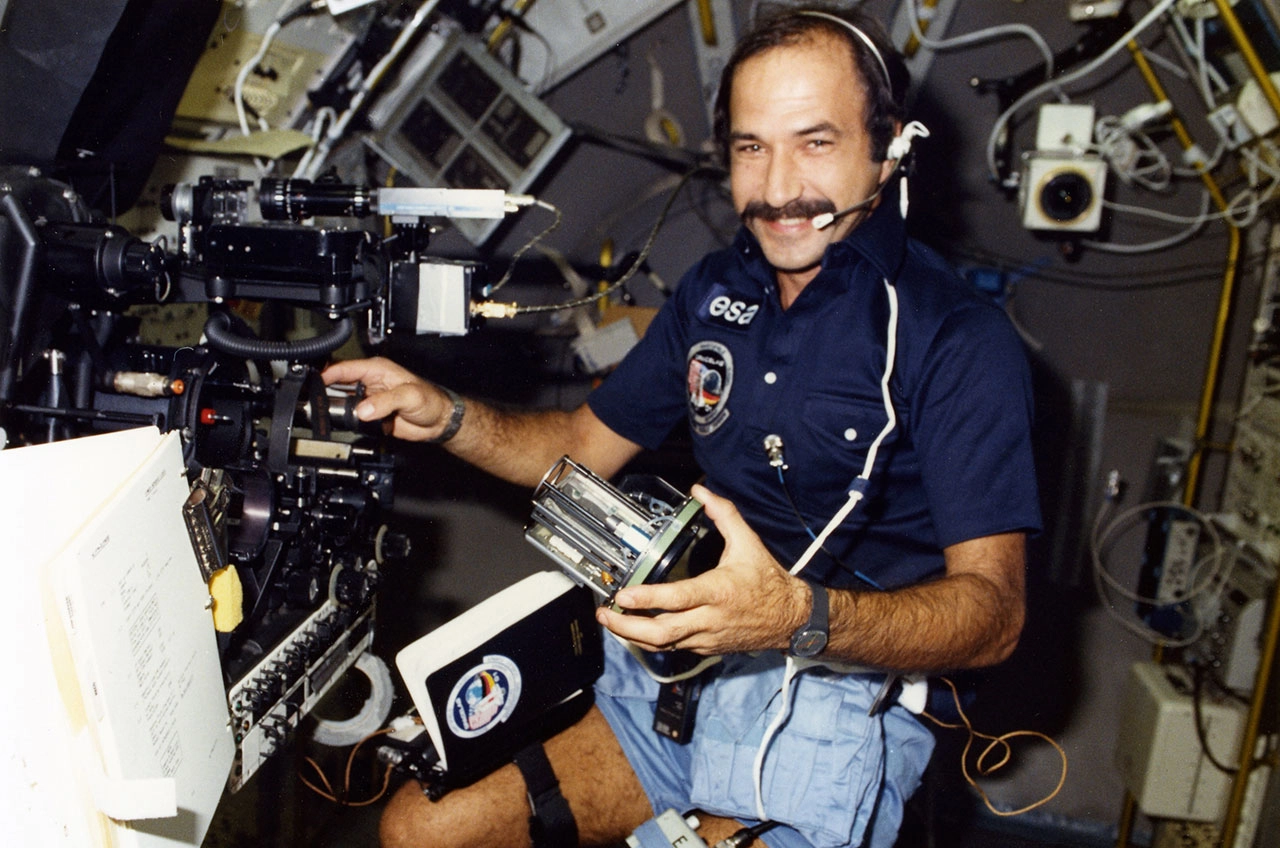
Wubbo Ockels, who in 1985 became the first Dutch citizen to fly into space, died Sunday (May 18), the European Space Agency (ESA) confirmed. He was 68.
"Sad to hear former ESA astronaut Wubbo Ockels passed away this morning," agency officials wrote on Twitter.
Ockels' death was due to complications from renal cancer. In May 2013, he confirmed to Dutch news services that he had been diagnosed with an aggressive kidney cancer and that it had spread to his lungs. [The Most Memorable Space Shuttle Missions]
"I went on board [the mission] as a payload specialist and was responsible for the scientific experiments," recounted Ockels in an interview with Delft University of Technology, where he later taught as a professor. "That's how I learned about the medical and biological side of things but also, for instance, about materials engineering."
Ockels was twice considered for a second trip to space. New safety precautions put into place after the Challenger tragedy however, precluded his again flying as an eighth crew member onboard STS-55, the Spacelab D-2 mission, in 1993. He was also a candidate for a mission to Russia's Mir space station, but was medically disqualified.
"In the laboratory where I worked, in the hall on the notice board one day appeared a notice in Dutch, an opportunity to be a scientific astronaut," Ockels shared in a 2010 ESA interview. "Some colleagues of mine had put some jokes on it, but when I saw it I thought, 'Well wait [a] minute, this could be serious,' and so I wrote for extra information."
"I remember when I got the information, I thought, 'This is my job,'" he continued. "It was just so perfect that it was exactly what I wanted to do so I applied."
Ockels became one of three European payload specialists selected to train for Spacelab missions. In May 1980, he reported to NASA's Johnson Space Center in Houston for a year of basic training and then served as a backup crew member for the first flight of Spacelab.
From Nov. 28 through Dec. 8, 1983, Ockels served as a ground communicator and liaison-scientist for the crew on board space shuttle Columbia's STS-9 mission. [NASA's Space Shuttle Program in Pictures]
"It's a fact that you become a well-known person in your country, and that's unavoidable," Ockels told ESA. "I see it as a responsibility."
"It's a responsibility to use that for a good mission," said Ockels. "My mission is sustainability and innovation and youth. I'm very happy to have this opportunity."
After flying in space, Ockels supported human spaceflight activities from the European Space Agency research and technology center, ESTEC, in Noordwijk, the Netherlands, before heading ESA's education and outreach office.
Ockels, who credited his spaceflight for shaping his views about "life, about the Earth, about our dependence on the Earth [and] about how we see the Cosmos," described his pursuit of sustainability as "Happy Energy."
"Essentially, people subconsciously feel unhappy about the fact that each kilometer you drive in your car leaves a trail of pollution and misery in its wake," Ockels remarked. "If you were to opt for sustainability, consuming less fossil fuel, you'd automatically feel better."
"Children understand instinctively what 'Happy Energy' is about," Ockels continued. "During my lectures for children I explain that they are astronauts from spaceship Earth and they have to make sure that order is maintained. They find that perfectly logical."
"There's something very appealing about Happy Energy," Ockels said. "After all, you're talking about something that really matters."

Ockels' daughter Gean wrote his biography, "Seven Lives of Wubbo Ockels," in 2010.
"It's partly biographical and recounts the five times I very narrowly escaped death," Ockels described. "Starting with a life-threatening tropical illness (1982), a collision with an Airbus at Lille airport (1989), a cardiac arrest in 2005 and finally a kidney tumour (2008). I'm in my sixth life, so only one left to go."
Ockels is survived by his wife Joos Swaving, two children and two grandchildren.
Follow collectSPACE.com on Facebook and on Twitter at @collectSPACE. Copyright 2014 collectSPACE.com. All rights reserved.