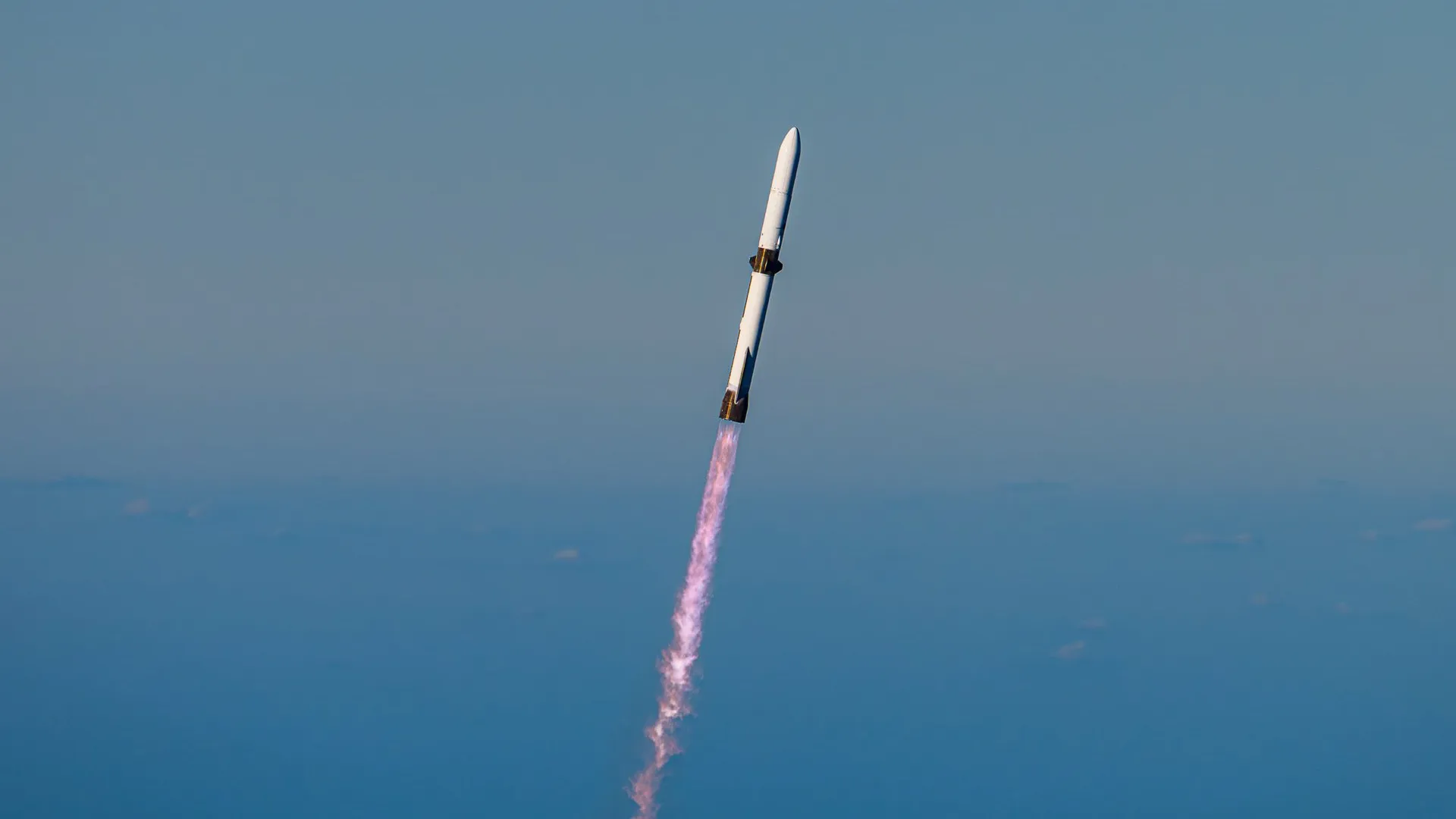
Blue Origin's New Glenn rocket is about to show its reusability chops.
New Glenn will loft one of AST SpaceMobile's huge Block 2 BlueBird internet-beaming satellites on its next mission, which is targeted for late February, Blue Origin announced on Thursday (Jan. 22).
That flight will be the third overall for New Glenn, and the first to feature a flight-proven booster: It will reuse the first stage from New Glenn's second flight (NG-2), which launched NASA's twin ESCAPADE Mars probes on Nov. 13, Blue Origin said on Thursday.
The two-stage New Glenn is one of the largest rockets in the world, standing 322 feet (98 meters) tall. Its first stage is designed for extensive reuse — at least 25 flights, according to Blue Origin.
New Glenn debuted in January 2025, successfully sending a test version of Blue Origin's Blue Ring spacecraft to orbit. The rocket's first stage crashed during its touchdown try on that flight, but NG-2 was a different story: The booster landed softly on Blue Origin's drone ship "Jacklyn," which was stationed in the Atlantic Ocean.
And now it will fly again.
The upcoming NG-3 mission will lift off from Florida's Cape Canaveral Space Force Station, as NG-1 and NG-2 did. It will deliver a Block 2 BlueBird to low Earth orbit, helping build out Texas-based AST SpaceMobile's direct-to-cellphone internet constellation.
Block 2 BlueBirds have antennas that span about 2,400 square feet (223 square meters), making them some of the largest satellites in space. One Block 2 BlueBird has reached orbit to date, getting there atop an Indian rocket this past December.
AST SpaceMobile has also sent five first-generation BlueBirds to LEO. Those satellites have 693-square-foot (64.4 square m) communications arrays.
"We're proud to have AST SpaceMobile as our customer on NG-3," Blue Origin CEO Dave Limp said in a statement on Thursday. "Our customers need a reliable, cost-effective launch vehicle, and New Glenn is purpose-built to serve their needs."

Blue Origin had experience with reusable rockets before the first New Glenn booster recovery. The company has been flying New Shepard, a reusable rocket-capsule combo, to and from suborbital space since 2015.
New Shepard has launched 38 times to date, 17 times with space tourists on board. The most recent crewed flight occurred on Thursday.
The company is following in SpaceX's footsteps, however, in the recovery and reuse of orbital-class rockets. Elon Musk's company pulled off its first landing on an orbital flight in December 2015 and has now done so more than 500 times.