HOUSTON — Ever had a mysterious meeting with management show up on your work calendar? Unannounced and unprompted? With invitees from parts of the company you don't normally sit in on meetings with?
That kind of calendar event might send spikes of panic down the spines of some recipients, but it's not always the dreaded meeting with HR you may fear. In this case at NASA, the unsuspecting attendees were not handed their pink slips and shown the door. Quite the opposite. They were gathered to learn the crew assignments for Artemis 3, the agency's next mission progressing its efforts to return astronauts to the moon. Turns out, the five astronauts sitting in the room that day were to become the primary and backup crew for Artemis 3.
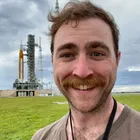
"Historically, I think most of us have been told in the past individually," Artemis 3 backup crew member NASA astronaut Bob Hines told Space.com. "There was some fake meeting name that showed up on a calendar, and we all ended up in a room together," he said.
NASA announced the Artemis 3 crew to the public during a reveal ceremony at the Johnson Space Center (JSC) on June 9. It includes NASA astronaut Randy Bresnik as mission commander, Italian astronaut Luca Parmitano from the European Space Agency as pilot, NASA's Frank Rubio and Andre Douglas as mission specialists, and Hines as backup.
The quartet will lift off aboard an Orion spacecraft on NASA's Space Launch System (SLS) rocket, and spend about two weeks in low Earth orbit. There, Orion will rendezvous and dock with two different lunar lander designs to test the vehicles' compatibility in space. It's the follow-on mission to NASA's Artemis 2, which flew Orion and a crew of four on a 10-day mission around the moon in April, and the precursor to the Artemis program's first planned lunar landing mission, Artemis 4.
Near the end of Artemis 2, NASA associate administrator Amit Kshatriya told reporters the Artemis 3 crew announcement would come "soon" — and now that the picks have been revealed to the public, we're also gaining a little more insight into how the astronauts found out the news themselves.
Sitting together around a table in a room at JSC about two weeks before the public announcement, not knowing why they had been called in, NASA's chief astronaut Scott Tingle told the group: "'Look around. This is your Artemis 3 crew,'" Hines said. "That was a really, really cool way to find out."
"We know that there's a cast of thousands that make it happen," he said. "There are a lot of astronauts that are qualified and capable of doing it, and it is an incredible responsibility that not just the astronaut office or NASA, but that the country bestows upon us."

NASA announced a group of 18 astronauts up for consideration for Artemis mission assignments in 2020. Since then, however, the eligibility pool has grown as NASA's broader astronaut cadre has gained more experience, widening the possibilities leading up to the Artemis 3 crew selection. The commander for Artemis 2, NASA astronaut Reid Wiseman, was one of those from outside the original 18 — and now, only one astronaut from the original list, Rubio, wound up being assigned to Artemis 3.
Even though he is designated as the mission's backup, Hines and his Artemis 3 colleagues see themselves as a single group. "We're really looking at it as a crew of five and making sure that everybody's ready to go come launch," Hines said. In fact, as the sole backup astronaut for the Artemis 3 crew, Hines' training will cover the needed skills for each mission crew member, rather than the individualized responsibilities of any one of them.
"The intent is that I can substitute in for anybody if they drop out at any time," Hines said. "So, as you can imagine, that's a lot of things to cover."
Now that the Artemis 3 crew selection has been made, the group will begin training for their mission ahead. NASA is targeting the latter half of 2027 to launch Artemis 3, putting the astronauts on a time crunch leading up to liftoff.
By comparison, NASA announced the astronauts for Artemis 2 in 2023. Their three years of training will be cut in half for the Artemis 3 crew, if it launches on schedule, and for a much more complex mission than its predecessor.
Both lunar lander vehicles for the Artemis program, SpaceX's Starship and Blue Origin's Blue Moon lander, have faced significant development delays, and neither has yet made it to orbit. So, for NASA to launch Orion to rendezvous, dock and perform maneuvers with two unproven spacecraft makes Artemis 3 one of the agency's most complicated missions it's ever taken on.
For his part, Hines doesn't mind being the backup for Artemis 3's primary crew, even if it means not getting to fly to space as a part of the mission. "We all are really excited to play any role in it," he said. And his role on Artemis 3 gives him a potential advantage when NASA chooses the crew for Artemis 4.
Prior to his selection as mission specialist for Artemis 3, Douglas served as the backup astronaut for Artemis 2. So Hines could very well be positioned for an upcoming lunar landing.
"I think any astronaut is lying to you if they say they don't hope they're not on the next mission," Hines said. "The best mission is the current mission, and the next best mission is the next mission … Certainly, everybody would like to have a role in upcoming missions, and so that's an exciting thing to look forward to. And whether or not my name is on it, if I can contribute to making it successful, that's the most important thing. Because there's certainly an urgency in getting NASA back to the moon — getting America back to the moon — and trying to do that as soon as we can, as successfully as we can, is really important."