Strategy games don't come much bigger than the Total War franchise, and the Warhammer trilogy showed how well the formula worked in a fantasy setting. Now, after three hits in collaboration with Games Workshop, studio Creative Assembly is embracing a grimdark futuristic setting with Total War: Warhammer 40,000.
Warhammer 40K is the most famous miniature wargame in the world, with nearly 40 years of legacy behind it. The 11th edition of the game was released in June 2026. There have been plenty of Warhammer 40K video games in that time, but nothing quite on the scale that 'Total War: Warhammer 40,000' promises.
In the 41st millennium, the Imperium of Man is besieged by extraterrestrial forces of all sorts and even darker threats, but humanity's defenders are brutal and relentless, too.
We covered the basics of the 40K universe a while back, but all you really need to know is that 40K's future is defined by a mix of sci-fi and dark fantasy, often called "grimdark". Oh, and there is only war; that's quite important too.
Now that you're suitably prepared, scroll down and learn everything we know about Total War: Warhammer 40,000 so far (and we'll be keeping this page updated as new info drops).
August 18, 2026 - Updated with latest gameplay trailer
When is Total War: Warhammer 40,000 coming out?

Total War: Warhammer 40,000 doesn't have a specific release window yet, but we're not expecting it to launch before early 2027 at the earliest.
With a late 2025 reveal during the Game Awards ceremony, publisher SEGA, developer Creative Assembly, and WH40K owner Games Workshop unleashed both striking CG cutscenes and in-game footage, but nothing we've heard suggests Total War: Warhammer 40K is anywhere near done.
We know this strategy behemoth will be playable at Gamescom 2026, with closed beta tests coming later. Those hoping to play the game before its eventual release can sign up for a chance to join the closed beta here.
What platforms is Total War: Warhammer 40,000 launching on?

Total War: Warhammer 40,000 is set to launch on PS5, Xbox Series X|S, and PC (Windows) via Steam.
The Total War franchise had never escaped the confines of PC gaming, but that's about to change with the engine refresh that's powering Total War: Warhammer 40K, which was confirmed to be invading current-gen consoles day one as well.
No doubt, this also means much of the user interface and the control scheme will have to be adapted to the limitations of gamepads, but we're confident Creative Assembly is building a flexible experience from the ground up for all platforms.
Total War: Warhammer 40,000 trailers
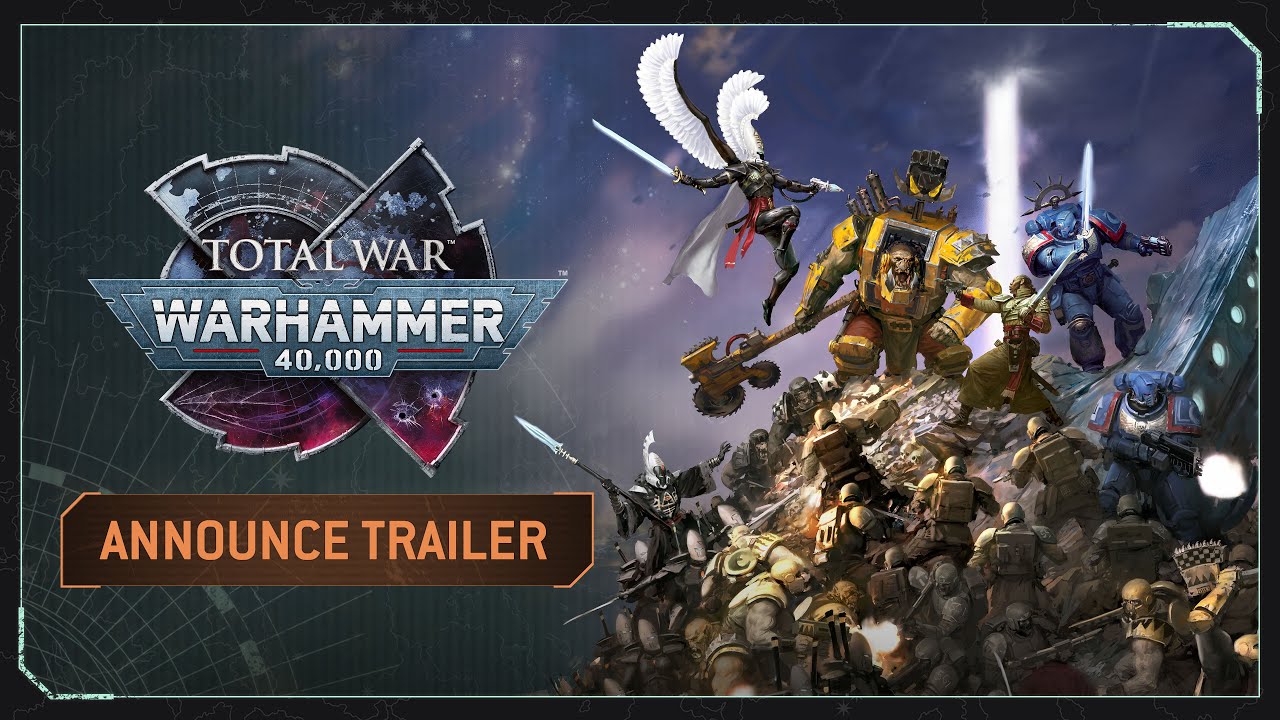
Three Total War: Warhammer 40K trailers have been released so far. The debut trailer shown at the 2025 Game Awards was meaty, showcasing CG cutscenes that perfectly set the dark epic atmosphere and gameplay clips that tease a new level of large-scale warfare across the stars.
You can watch it above.
We also got a shorter, CGI-only trailer at Skulls 2026, Games Workshop's annual video game-focused event. The trailer doesn't show much, as it's just a computer display playing an audio log, but the audio is very revealing.
Commissar Yarrick's voice is unmistakable, and that means only one thing: Total War: Warhammer 40,000 is going to Armageddon. Armageddon is one of the most infamous planets in the 40K setting; the site of a never-ending war between the Imperium and the Orks.
Warhammer 40K 11th Edition will be taking the narrative back to Armageddon for its launch in June. We can't wait to be back there, both on the tabletop and in Total War.
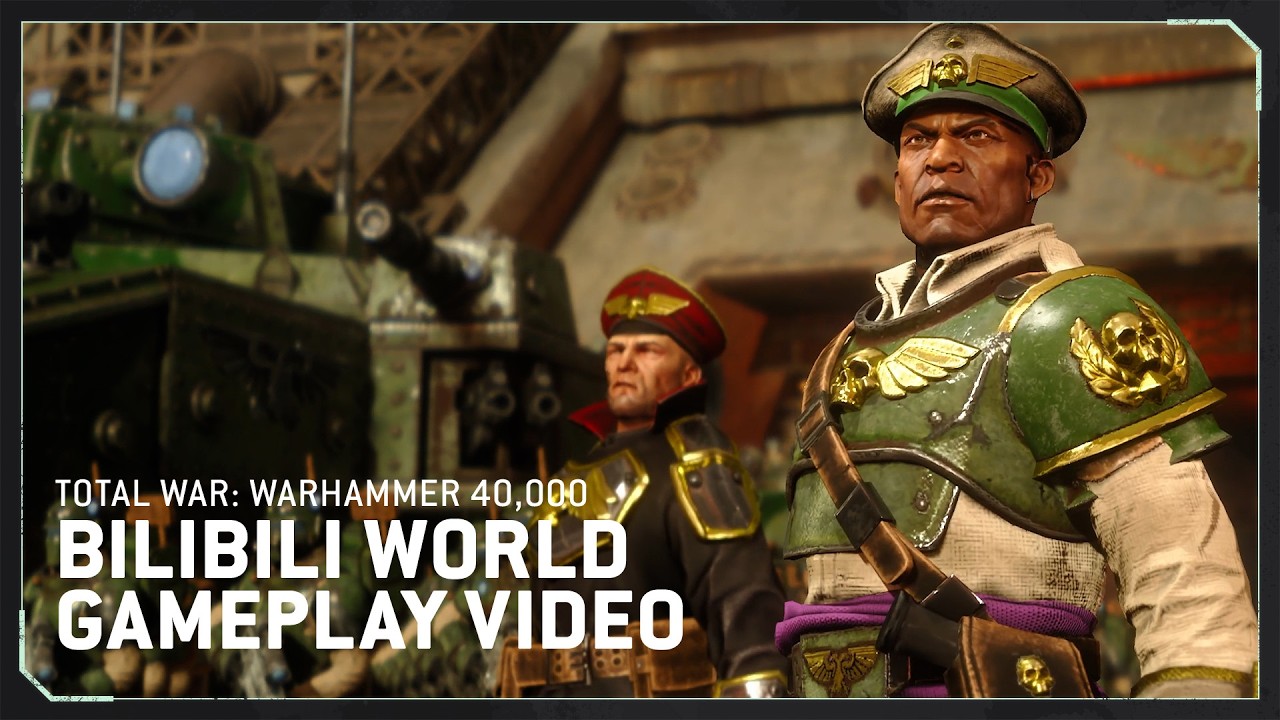
More recently, an extensive gameplay video was shown to the public at the Bilibili World 2026 event. Luckily for us, the showcase also made its way online through the official channels. Watch the Astra Militarum and their war machines take on a massive Ork infestation:
What type of strategy game is Total War: Warhammer 40,000?

Total War: Warhammer 40,000 is a mix of large-scale, real-time tactical battles and turn-based campaigns. On a basic level, it could be considered a blend of RTS and grand strategy, but the Total War franchise has evolved over the decades, almost becoming a unique strategy video game subgenre.
Like in past Total War games, players must choose an army (and species in this case) and conquer a massive campaign map against a varying number of enemies, which are controlled by the computer and/or humans. This involves turn-based movements — more like in a traditional board game — diplomacy, and basic management of cities, outposts, and massive armies. Of course, the Warhammer 40K setting will add in plenty of sci-fi elements and even fleet management, but we've yet to receive proper details on what's coming.
RPG-like progression has also become a notable part of these games, especially in the fantasy settings of Warhammer, with both units and unique heroes gaining new skills, weapons, equipment, and spells over time. Part of the progression is tied to experience gained during battles, while other upgrades come from specific buildings and resources acquired through the conquest of the map, which in this case includes full star systems.

The real-time battles are widely considered to be the main part of the Total War games. They vary depending on the location of the encounters and the size and composition of each army. While it's possible to have them play out automatically without exiting the turn-based layer of the game, it's advisable to take full control of your armies when the advantage isn't clear. Through smart positioning and tactical moves (plus powers) used at the right times, the goal is to either annihilate or repel the enemy forces.
Needless to say, in the Warhammer 40K setting, ranged firepower and vehicles are at the center of these conflicts; we haven't learned much about those elements yet, though.
When in the timeline does Total War: Warhammer 40,000 take place?

Total War: Warhammer 40,000 is set during the Era Indomitus, which is currently the "present period" of the WH40K universe from the point of view of the Imperium of Man. Everyone agrees it began with the Fall of Cadia during the Black Crusade and the formation of the Great Rift – also called Cicatrix Maledictum – across the galaxy.
This tear in reality has also led to a series of warp storms and the emergence of a wave of "ferocious empyric energy and supernatural darkness." The Imperium now remains divided into two halves by the Rift, with the Imperium Nihilus found across the half of the galaxy that's considered "northern" and the Imperium Sanctus covering much of the southern and western part of the original Imperium territory. The latter has access to the psychic beacon of the Astronomican, which is used to correctly navigate the galaxy and the chaos of Warpspace, but in the Dark Imperium (Nihilus), faster-than-light travel has been rendered almost impossible.
During this time, Primarch Roboute Guilliman became the Lord Commander of the Imperium and Imperial Regent, and launched the Indomitus Crusade, the largest the Imperium has seen since the Great Crusade of roughly 10,000 years before. Much of this era steps into the 42nd millennium, but the chronology isn't entirely clear.
The second trailer made it clear that we'll be heading to Armageddon as part of the game, with a story almost certainly centered around the epic battles between Commisar Yarrick and Ghazghkull Thraka, which sets the game around the same time as the launch of the 11th edition of the tabletop game.
What factions are available in Total War: Warhammer 40,000?

Total War: Warhammer 40,000 includes four factions at launch: Space Marines, Orks, Aeldari, and the Astra Militarum. Of course, everyone is expecting more to arrive after the game launches*, but unless some surprises are being hidden, only four factions will be available when Total War: Warhammer 40K releases.
The Space Marines are the most iconic military force of the WH40K universe. As the fist of the Imperium, these genetically enhanced warriors are "few" (only hundreds of thousands for a galaxy-spanning empire), but they are among the most powerful weapons that humanity has access to. As hulking figures covered in armor, they strike fear even into the hearts of the most fearsome xenos.
Orks are almost identical to their Warhammer Fantasy counterparts; an unrelenting and largely disorganized species, but now spread across the stars. They simply love war and throwing endless green mobs against every enemy the horde comes across. Ork weapons and vehicles are unpredictable and clanky, but don't underestimate this species.
The Aeldari (Eldar) are essentially "space elves", a race of humanoid xenos that once had almost complete control of the known galaxy, but now their race has fallen into decline. They rely on precision strikes and ancient – almost magic-like – weapons and psyker powers to win conflicts. Elegance feels essential to their governing aesthetic and style of warfare.
Last but not least, the Astra Militarum (aka the Imperial Guard) is the largest fighting force in the galaxy and represents the bulk of the Imperium of Man's military force. Billions of men and women serve, and their primary combat tactic is to "overwhelm the enemy with their endless numbers", while at the same time hammering them into submission with devastating artillery and crushing them with powerful main battle tanks.
*Editor Ian: Give me my Necrons, you cowards!!!