Andrew Chaikin's 'A Man on the Moon' relaunched as Folio Society book set
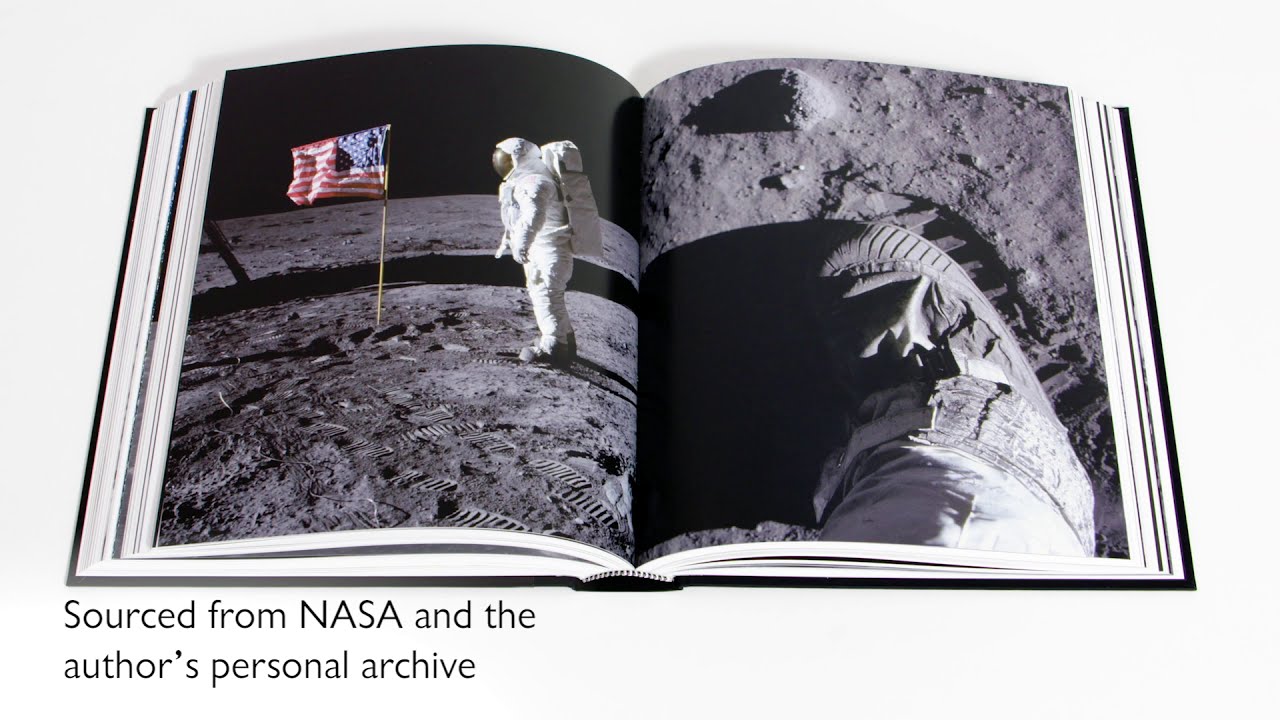
When Andrew Chaikin's "A Man on the Moon" was first published in 1994, a quarter century had passed since the first astronauts walked on the lunar surface. Now, more than 25 years after its release, a new, deluxe version of the book is ready for the next generation of lunar explorers, space enthusiasts and anyone who wonders what it was like to journey from Earth to the moon.
Described as the definitive account of NASA's Apollo program by the astronauts themselves, Chaikin's "A Man on the Moon: The Voyages of the Apollo Astronauts" has been presented anew by The Folio Society as a two-volume, illustrated set featuring a new preface and nearly 200 photo curated by the author.
"I have a little subroutine running in my head and it's always measuring the distance from the Apollo missions to now, as they recede into the past," Chaikin said in an interview with collectSPACE. "Every time we have an anniversary, I'm reminded of that and it makes me feel even more compelled to get these stories down on paper and out into the world."
"I've done that with 'A Man on the Moon,'" he said.
Related: Reading Apollo 11: the best new books about the US moon landings

The product of hundreds of hours of interviews with 23 out of the 24 Apollo astronauts who flew to the moon, as well many of the the scientists, engineers and flight controllers who made the missions the historic achievements that they were, "A Man on the Moon" has been reproduced by Folio as Chaikin originally wrote it.
"My aspiration was to be the best writer I could possibly be," said Chaikin of the decade he spent writing the book. "I wanted to be a storyteller good enough to live up to the spectacular material that I was writing about, that I had gotten from the astronauts, that I integrated with all the research that I did. I wanted to get myself up to a level of storytelling that would live up to the story that I was telling."
The original hardcover had several pages of small, black and white photos. The new Folio edition features hundreds of color images, many of them full page, carefully chosen and prepared specifically for the book by Chaikin, together with his wife and co-author, writer and editor Victoria Kohl.
"What Vicki and I wanted to do was pick the images that would enhance the narrative in each chapter, each mission. What were the images that would really bring the storytelling to a new level?" said Chaikin.
Chaikin also wanted the images to be true to life, bringing the reader as close as possible to seeing what it looked like for the astronauts standing on the moon.
"For that reason, for example, I took out all the little Reseau marks — the little crosses seen in all of the lunar surface images, which were on each photo as a result of a plate in the camera."
In the 27 years since the first edition was released, high resolution scans have been made of each photo taken on the Apollo missions. Chaikin spent hundreds of hours cleaning up the raw scans to be used in the book and took advantage of their resolution to highlight details.

"One example is the Genesis rock, the piece of the moon's primordial crust that Dave [Scott] and Jim [Irwin] picked up [on Apollo 15]," Chaikin said. "There's a great photo of that rock before they collected it. It's a color photo that shows the rock sitting on this pedestal of gray dust, just like Dave and Jim described. And you can even see, if you look at the rock itself, it's pretty well covered with grime, the kind of a grime that stuck to the rock over the millions of years since it was blasted out of a crater. But you can see streaks of white in the middle showing the anorthosite [Dave and Jim] had been trained to recognize."
"You can see that in the picture. And because the photo is high resolution, you can crop it to bring out the details in a very compelling way," he said.
Chaikin also used imagery from NASA's Lunar Reconnaissance Orbiter, which since 2009 has been studying the moon, including capturing the first views of the Apollo landing sites from above.
"So you're reading, for example, in the Apollo 11 chapter about the account of landing on the moon and all of the tension in those final moments as Neil [Armstrong] is trying to get down safely before he runs out of fuel. And then you turn the page and there's this really amazing image from Lunar Reconnaissance Orbiter that shows Eagle [the Apollo 11 lunar module], it's descent stage by this time, but it shows where they landed in such amazing detail."
Related: NASA's 17 Apollo moon missions in pictures

The Folio edition of "A Man on the Moon" includes 56 pages of photo plates and an eight-page fold-out in each volume. Bound in cloth and encased in a pictorial slipcase, the new version retails for $225.
Chaikin hopes the new "A Man on the Moon" can help inspire a new audience, including members of the Artemis generation, the title NASA has given to those growing up and living through a new era of lunar exploration. The space agency is now working to land the next man and the first woman on the moon within the current decade.
"There will never again be another group of human beings who were first to leave their home planet and visit another world," he said of the Apollo astronauts. "I think kids who grow up with Artemis are going to be able to turn to books like mine and so many others and find out what it was like from the very first people did this for the very first time. And I think they're just going to be amazed by it."
Follow collectSPACE.com on Facebook and on Twitter at @collectSPACE. Copyright 2021 collectSPACE.com. All rights reserved.