Life in Space: Astronaut Chris Hadfield's Video Guide

Here are 10 ways Canadian astronaut Chris Hadfield has revealed his life in space to the world. [ See the full gallery]
Kepler's Supernova: Huge 17th-Century Star Explosion Comes into Focus
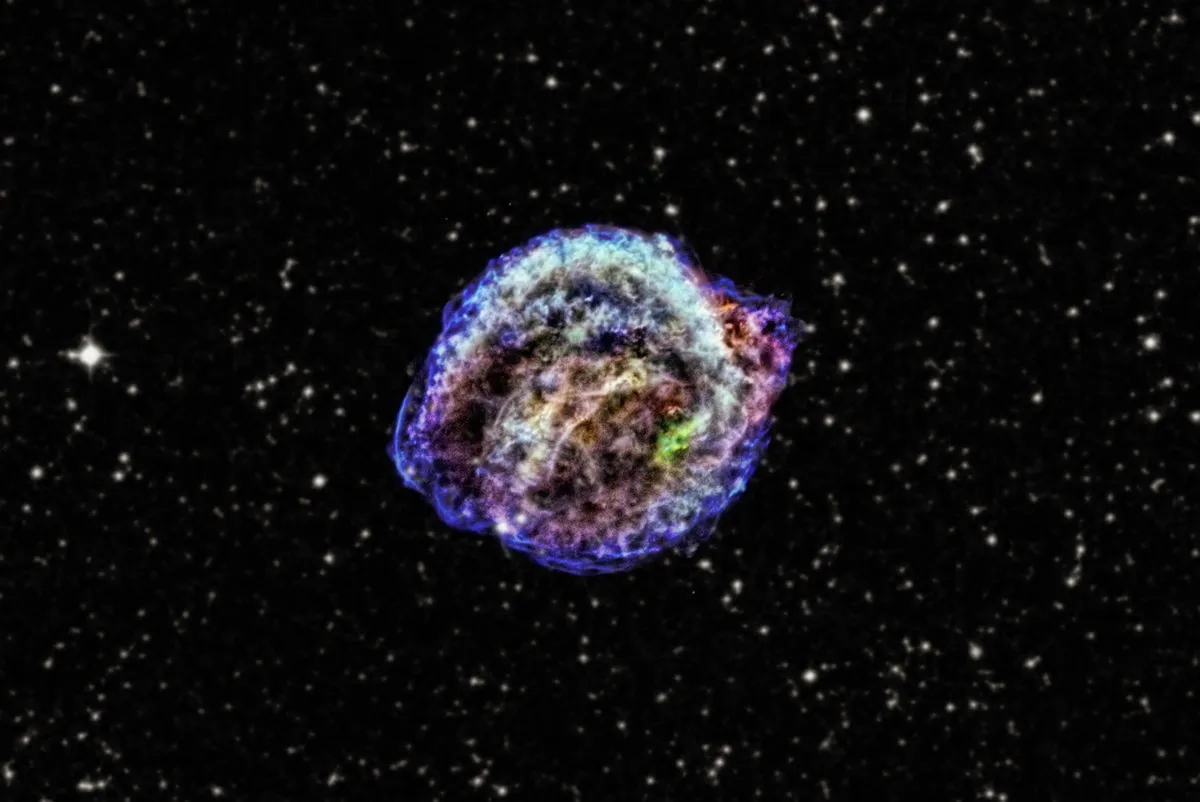
Scientists have conducted a postmortem exam on the last gigantic star explosion ever observed by the naked eye in our galaxy, revealing that the supernova was triggered by a compact white dwarf containing more heavy elements than the sun. [Full Story]
Photos: Orbital Sciences' 1st Antares Rocket Test Flight

Orbital Sciences' Antares rocket launches on its first test flight April 21, 2013 from its Wallops Island, Va. launch site. [ See the full gallery]

Virgin Galactic's SpaceShipTwo Makes Stunning Leap Toward Private Spaceflight

A new private spaceship is one step closer to flying its first commercial crew high above the Earth's surface. Virgin Galactic's SpaceShipTwo successfully conducted its first "cold flow" flight test above the Mojave Desert in California last week (April 12). [Full Story]
Hubble Telescope Snaps Stunning Nebula Photo for 23rd Birthday

NASA's Hubble Space Telescope has snapped a spectacular new image of an iconic nebula to celebrate its 23 years of peering deep into the heavens. [Full Story]
Three Possibly Habitable 'Super-Earth' Alien Planets Found (Gallery)

NASA's Kepler spacecraft has discovered three new super-Earth planets around the stars Kepler-62 and Kepler-69. [ See the full gallery]
Young Blue Stars Shine in Cosmic Photo

An incredible new photo taken by a telescope in the Southern Hemisphere shows a cluster of blue stars burning brightly about 1,500 light-years away from Earth. [Full Story]
Huge New Radio Telescope Pinpoints Ancient Star-Forming Galaxies

A stunning picture from ALMA shows more than 100 of the “most fertile star-forming galaxies in the early universe.” [Full Story]
'Darkened Cities' by Thierry Cohen: Amazing Night Skies Imagined

See photos of “Darkened Cities” - a series of composite images revealing the night sky above cities around the world. [See the full gallery]
Under These Clouds

The antennas of the Atacama Large Millimeter/submillimeter Array (ALMA) stand beneath a brilliant night sky in Chile. The Large and Small Magellanic Clouds hang majestically above. At 16,400 feet (5000 meters) on the Chajnantor Plateau, ALMA represents the world’s most powerful telescope for studying the universe at submillimeter and millimeter wavelengths. Christoph Malin, an ESO Photo Ambassador, painstakingly made the time-lapse video from which this still frame comes.[See More Images]
Bright Blue Times

: Loops and arcs shoot from two active regions on the sun, April 8, 2013. The STEREO's (Ahead) spacecraft took the image in extreme UV light. The loops consist of plasma at temperatures up to a million degrees C., arcing along the lines of magnetic fields. [See More Images]