




The October full moon rises tonight! Here's everything you need to know about the "Hunter's Moon," including where to see it, how it got its name and other tricks of the light and mind that could conspire to create a truly spectacular lunar light show.
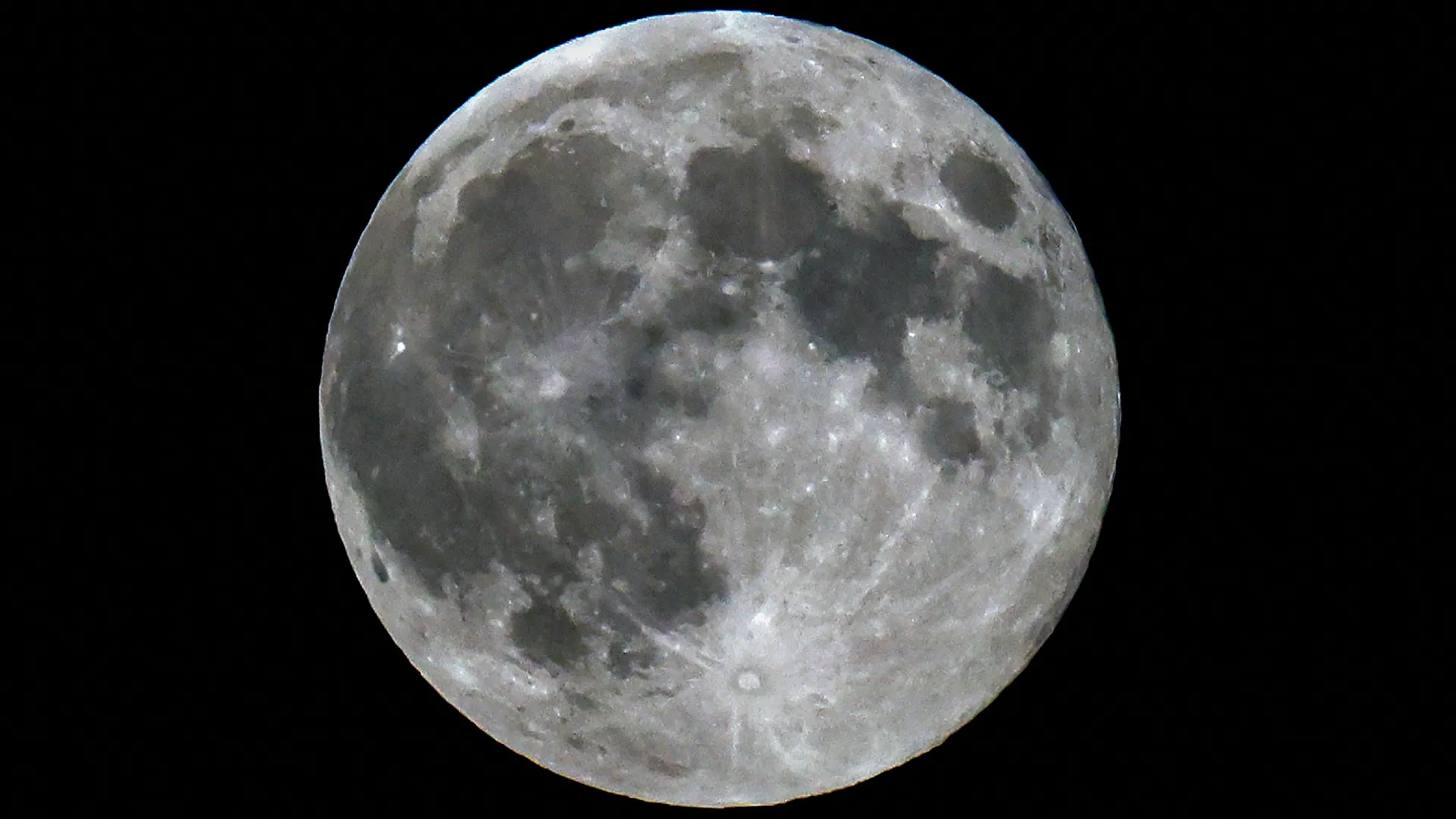
October's moon reaches 100% illumination at 12:12 a.m. EDT (0412 GMT) on Oct. 26, as the lunar disk shines opposite the sun in Earth's sky. The shadowy terminator that separates the day and night side of the moon is conspicuously absent around this time, as are the shadows that throw craters into spectacular relief during the waxing and waning lunar phases.
Instead, it's a perfect time to explore the dark lunar "seas" that cover the moon's surface where lava flooded impact basins billions of years ago, before hardening to create enormous basaltic plains. Streaks of reflective material can also be spotted streaking away from bright young craters, where material from the lunar subsurface was excavated and cast across the moon's surface during brutal asteroid impacts.
Where and when to see the October full moon.
Stargazers in the U.S. will get their first view of the full moon as it climbs into the eastern sky at sunset on Oct. 25. Be sure to check out Time and Date's moonrise tracker to discover the exact timings for your location.
The moon often appears particularly large while close to the horizon, thanks to a phenomenon called the "Moon Effect," wherein our brains trick us into thinking that the lunar disk is larger while in close visual proximity to the ground than it is when overhead.
The moon can also take on a spectacular yellow-orange color in the hour after moonrise, as blue wavelengths of its reflected light — the shortest in the visible spectrum — are scattered during its oblique passage through Earth's atmosphere.
Why is the October full moon called the "Hunter's Moon"?
October's full moon is commonly known as the Hunter's Moon in the Northern Hemisphere because it rises soon after farmers have cleared away the summer's harvest, leaving the fields bare for hunters to catch their prey and prepare it as food for the winter, according to the Old Farmer's Almanac.
It's also called the "Migrating Moon" by the North American Cree people, in reference to the birds that travel to warmer climates around the time of its rising. The Ojibwe and the Haida know it asthe "Freezing Moon," to reflect the drop in temperature that occurs in autumn.
Want to make the most of the October full moon? Then be sure to check out our guide to observing the moon and photographing the lunar disk, along with our picks of the best cameras and lenses for astrophotography.
Editor's Note: If you would like to share your photos of the October full moon with Space.com's readers, then please send your photo(s), comments, and your name and location to spacephotos@space.com.