Look east tonight to see September's full "Harvest Moon" rise into the autumn sky. Here's what to expect on Sept. 26.
The Harvest Moon is the name given to the full moon that falls closest to the autumn equinox, which this year marked the beginning of astronomical autumn in the Northern Hemisphere on Sept. 22.
September's full moon will reach its point of maximum illumination at 12:49 p.m. EDT (1649 GMT), when the moon shines opposite the sun in Earth's sky, appearing fully illuminated from our perspective.
What to expect from the Harvest Moon
The full Harvest Moon rises over the eastern horizon around sunset on Sept. 26, as the diamond formation of stars belonging to the Great Square of Pegasus sparkling higher in the Autumn sky.
You may notice the moon adopt a yellow-orange color around moonrise, as sunlight reflected off its surface is scattered by Earth's atmosphere while close to the horizon. The lunar disk will return to its usual silvery luster upon rising higher into the autumn sky, as its light passes through less of Earth's atmosphere.
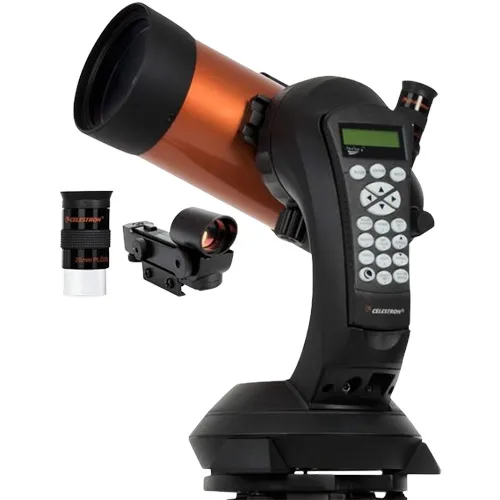
This is a fantastic go-to telescope with a 4-inch aperture and can help you quickly find a steady view of the moon. For a closer look at craters and the terminator, make sure to grab a 9mm or 12mm eyepiece and get stronger magnification.
_
Look for Saturn shining as a bright star-like object a little over 5 degrees below the moon for viewers in the U.S. about an hour after moonrise. A 6-inch telescope will help reveal its iconic ring system, along with bright points of light representing the large moons Titan, Rhea, Dione, Iapetus, Tethys and Enceladus.
Turn your scope on the moon and you'll see evidence of its violent past etched across the lunar surface. Bright rays mark material blasted outward by relatively recent impacts, while vast, dark lunar seas lie where basaltic lava flooded ancient craters.
September's Harvest Moon will track a steady arc over the southern horizon as the night unfolds, before finally setting in the west as dawn breaks on Sept. 27.
Read more: September full moon 2026: When, where and how to see the Harvest Moon.
You can capture gorgeous photos of the moon for yourself using our easy guide to photographing the lunar disk. While you're at it, be sure to check out our picks of the best cameras and lenses available for astrophotography if you're thinking about upgrading your gear.
Editor's Note: If you would like to share your Harvest Moon photos with Space.com's readers, then please send your photo(s), comments, and your name and location to spacephotos@space.com.