





SpaceX has already built the world's largest rocket with its Starship, and in just a few days the company will attempt to put that giant vehicle in orbit for the first time. But if you're hoping to watch the history-making launch yourself, you'll need to exactly where and when to tune in. We've got all the details you need below.
The first-ever orbital Starship launch, SpaceX's Flight 14 test flight, is scheduled to launch from the company's Starbase proving ground in South Texas no earlier than Sept. 28. Liftoff is set for 8:15 a.m. EDT (1215 GMT). You can follow the mission live on our Starship Flight 14 launch updates page.
Flight 14 will mark the 14th Starship test flight for SpaceX and the third Starship flight this year. It follows SpaceX's success of Starship Flight 13 in July, which the company touted as its softest Ship upper-stage landing ever — so soft, in fact, that the Ship splashed down and floated for weeks, allowing SpaceX to recover it from the sea for study at Starbase.
But now it's time for the more than 400-foot-tall (121 meters) Starship to reach orbit, a feat SpaceX must achieve if it is to land NASA's Artemis astronauts on the moon with a Ship by 2028. Here's what to know.
What time is SpaceX's Starship Flight 14 launch?

SpaceX currently aims to launch Starship Flight 14 no earlier than 8:15 a.m. EDT (1215 GMT) on Monday, Sept. 28. But it is possible the launch may occur up to over an hour later, depending on conditions at the Starbase pad.
Starship Flight 14 actually has a 75-minute window in which to launch, so its exact timing could shift a bit later if bad weather or a technical glitch delays the countdown. That means the launch could occur anytime between 8:15 a.m. EDT and 9:30 a.m. EDT (1215-1330 GMT). SpaceX's official livestream of the launch will begin about 30 minutes before liftoff.
NOTE: Unlike past Starship flights, which have lasted about an hour, Flight 14 will run nearly 10 hours due to its orbital nature.
SpaceX may also have up to two backup days for launch, on Sept. 29 and Sept. 30, but the launch times for those days are expected to be the same.
Related: Read our SpaceX Starship and Super Heavy guide for a detailed look at the megarocket.
Can I watch SpaceX's Starship Flight 14 launch?
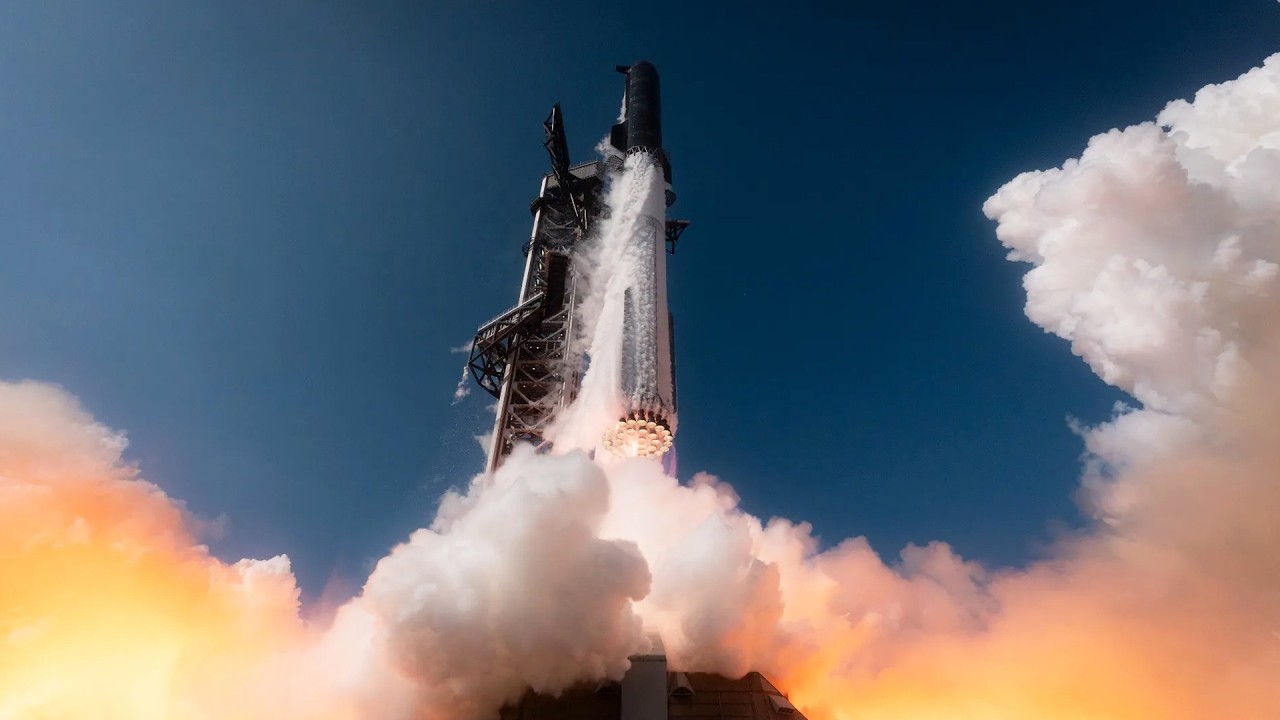
Yes, of course you'll be able to watch SpaceX launch its Starship Flight 14 orbital test flight. The company will host a live webcast of the launch, but you can also pick your venue on where to watch.
SpaceX's own livestream begins 30 minutes before liftoff (as mentioned above) and will be available via the SpaceX X account and the official Flight 14 mission page. If everything is on time, that livestream will begin at about 7:45 a.m. EDT (1145 GMT).
Space.com will simulcast the SpaceX Flight 14 launch webcast on this page, as well as an our homepage and YouTube channel.
A prelaunch show

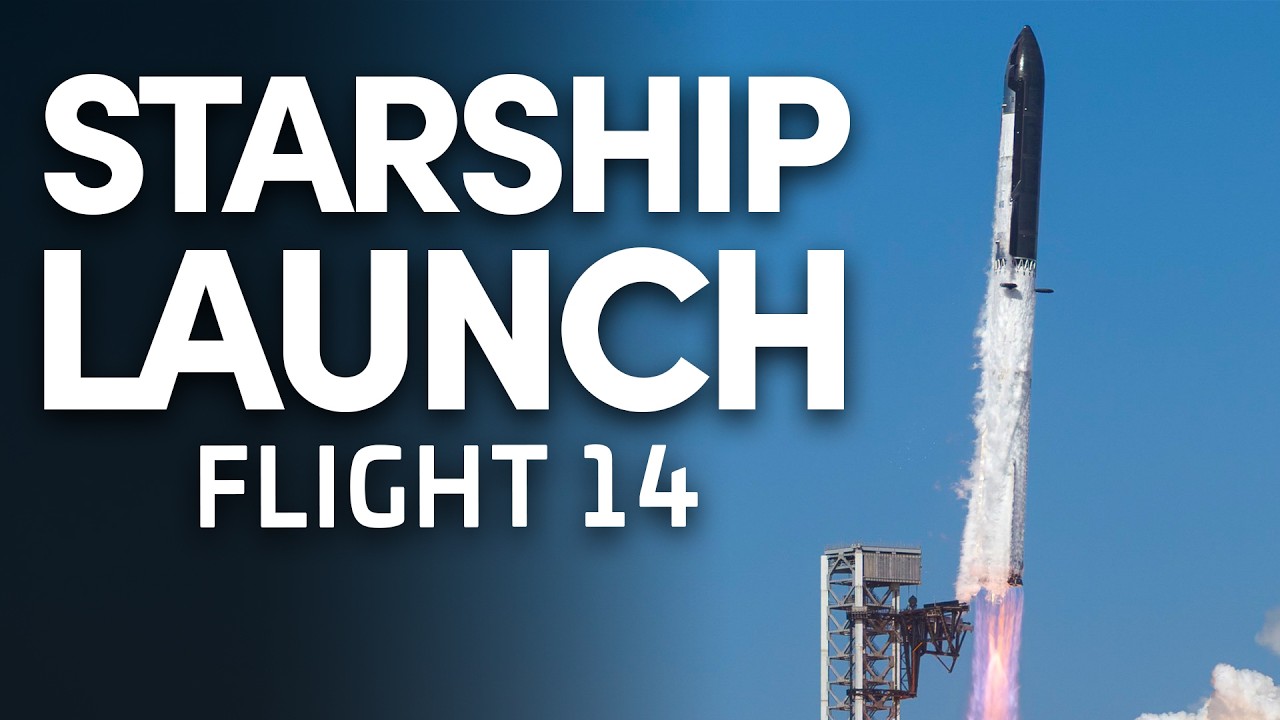
If you can't wait until Sept. 28 to see live views of Starship Flight 14, you can tune in right now at NASASpaceflight, which has 24/7 live views of SpaceX's Starship pads at Starbase.
The NASASpaceflight Flight 14 launch webcast will begin on Sept. 28 at 4:15 a.m. EDT (0815 GMT), about four hours before launch. NASASpaceflight has many cameras in position around Starbase, and the company typically shares up-close video views and live commentary for preflight activities.
In-person launch options
As I've shared in past Starship launch guides, SpaceX does not have an official Starship launch viewing site near Starbase, but there are several places where you can see the liftoff in person.
For first-time spectators, I've always recommended watching a Starship launch from the rocky beach near the Cameron County Amphitheater at Isla Blanca Park on South Padre Island. The park is across the bay from Starbase and draws a good crowd, offering a view of ships on the bay that frame the towering Starship launch pad. It's 5 miles (8 kilometers) from the launch site as the crow flies, and the park has bathrooms.
Traffic getting onto South Padre Island can be heavy on launch days if you're not staying at a hotel on the island (which is easier in my experience). If that's your situation, you may opt for watching from around Port Isabel. And you can always grab a bite at Hopper Haus, a SpaceX-themed bar that makes a mean burger.
There is also a shoreline stretch of Highway 48 between Brownsville and Port Isabel, from 6 to 8 miles (10 to 13 km) from the launch site, where you can pull up for the day to watch the launch. It's just the side of the highway, so you won't find amenities like bathrooms there. You can learn more about that here: SpaceLaunchSchedule.com.
If you want a closer view(and have cash for a $200 ticket, though kids under 17 are $40), you can camp at the Rocket Ranch. The campground is 3.8 miles (6.1 km) from the Starbase launch site, and your ticket allows you to camp there for one day and night. It has two viewing locations available, with its "Outpost" one offering the closest view and "unmatched media service," so you can stay connected. The other location is a bit farther away on the campground itself. The ticket includes bus transportation from the ranch campground to a viewing site and back for one launch attempt. I haven't visited this ranch, but I've been including it here as an option in case you want to try it. (If you do, let us know!) Longer, four-day camping packages are also available.
Be sure to read the full Rocket Ranch FAQ for details on the site.
How long is SpaceX's Starship Flight 14?

SpaceX's Starship Flight 14 orbital test flight will last just over 9 hours and 50 minutes and will mark the first time a Starship has reached orbit, if all goes to plan. It will also be the third flight of SpaceX's new Starship Version 3.
"Flight tests until this point have intentionally flown passively safe suborbital trajectories to maximize public safety while allowing for maximum learning," SpaceX wrote in a mission overview. "By going to orbit, the next phase of developing Starship to be fully and rapidly reusable can begin."
Starship Flight 14 will launch from SpaceX's newer Pad 2 at Starbase on a path that should deliver it into an orbit nearly 171 miles (275 kilometers) above Earth. If all goes well, SpaceX hopes to orbit Earth six times with Starship before attempting a water landing.
TIME (Hr:Min:Sec) |
EVENT |
|---|---|
T-0:50:00 |
Flight director polls for fueling |
T-0:36:33 |
Super Heavy liquid oxygen loading begins |
T-0:35:00 |
Super Heavy liquid methane loading begins |
T-0:34:13 |
Ship liquid oxygen loading begins |
T-0:34:11 |
Ship liquid methane loading begins |
T-00:21:40 |
Raptor engine chilldown begins on Ship and Super Heavy |
T-00:02:50 |
Super Heavy fueling complete |
T-00:02:10 |
Ship fueling complete |
T-00:0:30 |
Flight Director GO for launch poll |
T-00:00:17 |
Flame deflector activation |
T-00:00:03 |
Booster ignition sequence startup |
T-00:00:00 |
Liftoff ("Excitement Guaranteed," SpaceX says) |
TIME (Hr:Min:Sec) |
FLIGHT EVENT |
|---|---|
T+00:00:00 |
Liftoff! |
T+00:00:58 |
Ship/Super Heavy reach "Max Q" |
T+00:02:20 |
Super Heavy main engine cutoff |
T+00:02:22 |
Hot-staging separation/Ship Raptor engine ignition |
T+00:02:27 |
Super Heavy boostback burn startup |
T+00:03:07 |
Super Heavy boostback burn engine shutdown |
T+00:06:36 |
Super Heavy landing burn startup |
T+00:07:01 |
Super Heavy landing burn shutdown (followed by splashdown) |
T+00:08:11 |
Starship engine cutoff |
T+00:25:17 |
Starship orbital engine burn begins |
T+00:25:36 |
Starship orbital engine burn shutdown |
T+00:34:07 |
Payload deploy demo starts |
T+01:04:39 |
Payload deploy complete |
T+08:52:37 |
Deorbit burn begins |
T+08:52:48 |
Deorbit burn shutdown |
T+09:28:56 |
Ship reentry |
T+09:47:29 |
Ship transonic |
T+09:48:07 |
Ship subsonic |
T+09:50:11 |
Landing burn start |
T+09:50:13 |
Landing flip |
T+09:50:21 |
Landing burn three to two engines |
T+09:50:28 |
Landing burn two to one engines |
T+09:50:30 |
"An exciting landing!" SpaceX says. |
Starship's Flight 13 test in July deployed Starlink V3 internet satellites, but on a suborbital trajectory, so they soon reentered Earth's atmosphere. Flight 14 will carry the first operational Starlink V3 satellites to be deployed in orbit.
"Starship will deliver 26 Starlink V3 satellites to orbit for the first time, which aim to greatly expand the network's capacity and user speeds," SpaceX wrote. "Each Starlink V3 satellite will add 1 Tbps of capacity to the constellation, for a total of 26 Tbps of capacity added on this mission alone. That’s ~10x the capacity compared to a single launch of V2 mini Starlink satellites on Falcon 9."
Flight 14's Ship upper stage is expected to deploy the Starlink satellites through a Pez dispenser-like door starting about 34 minutes after liftoff. The entire process should take about 30 minutes.
SpaceX will not try to catch either the giant Starship Super Heavy booster or the Ship upper stage on this flight. The Super Heavy first stage is expected to make a soft water landing in the Gulf of Mexico while the Ship upper stage splashes down in the Pacific Ocean, off the coast of Chile. That is a departure from past flights, which have had the Ship upper stage splash down in the Indian Ocean.
What if Starship Flight 14 can't launch on Sept. 28?
As with every launch, there is a chance that something may come up the day of launch and prevent liftoff. In that event, SpaceX appears to have at least two backup days in case it is unable to launch on Sept. 28.
Officials say there are alternate launch dates available on Tuesday, Sept. 29 and Wednesday, Sept. 30, if needed. Those dates are alternate beach closure dates for Boca Chica Beach, which is a beach near Starbase, and a good indicator of when SpaceX plans to fly.
You'll be able to follow SpaceX's Starship Flight 14 mission on Space.com as it happens. Be sure to come back on launch day for complete Starship Flight 14 coverage.
