





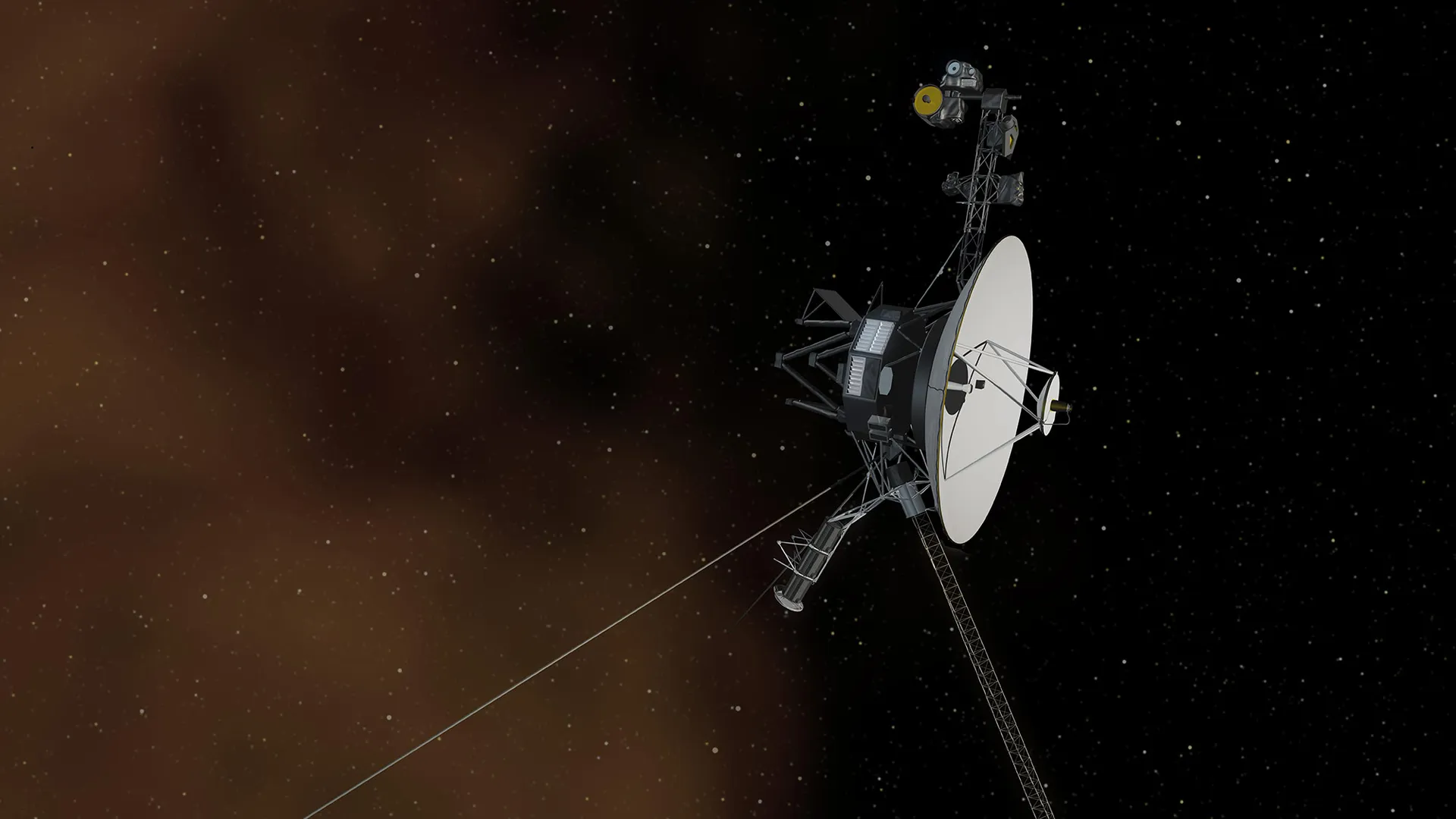
As NASA's Voyager 1 spacecraft prepares to reach a historic distance from Earth, the agency is inviting people around the world to celebrate by shining a light into the night sky in honor of humanity's farthest-flung spacecraft.
The event, called "Shine Bright for Voyager's Light-Day," will take place after sunset on Tuesday (Nov. 17), the day before Voyager 1 gets one light-day from Earth. And that's a big milestone: One light-day is the distance light travels in a day — about 16 billion miles (26 billion kilometers).
NASA is encouraging "Shine Bright" participants to create a symbolic wave of golden light around the planet by flashing the spacecraft's three-letter mission call sign, VGR, in Morse code, according to a statement from the space agency.
To celebrate the spacecraft, participants can use a flashlight, phone, bike light or other portable light source to send the signal skyward. And don't fret if you're unfamiliar with Morse code: NASA has created an automated flasher that can be opened in a smartphone or tablet browser to display the VGR sequence.
The spacecraft’s call sign pattern consists of three quick flashes followed by one long flash for the letter V, two long flashes and one quick flash for G, and one quick flash, one long flash and another quick flash for R. Participants are encouraged to repeat the sequence for about a minute, NASA officials said.

NASA also invites people to photograph or record their light signals and share them on social media, tagging the agency's official account, @NASA. The goal is to create a worldwide display of light marking a milestone nearly five decades in the making.
The celebration is intended as a symbolic tribute rather than an actual attempt to communicate with Voyager 1. At a distance of one light-day from Earth, the spacecraft is so far away that even radio signals traveling at the speed of light take approximately 24 hours to reach it. A flashlight or phone signal from Earth, of course, cannot reach the probe; NASA communicates with it using its Deep Space Network of radio dishes.
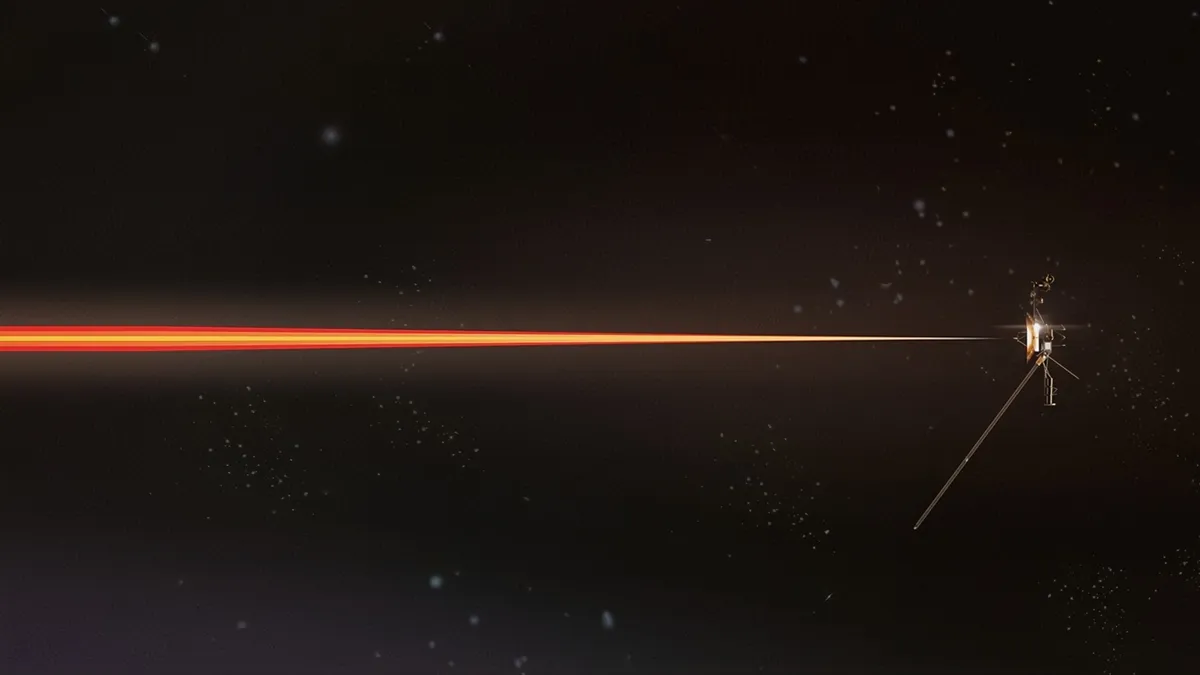
Launched on Sept. 5, 1977, Voyager 1 has spent nearly 50 years traveling through space and is now the most distant human-made object from Earth. When it reaches the one-light-day milestone, it will have traveled a distance that light itself takes 24 hours to cross. Its twin, Voyager 2, is expected to reach the same milestone in November 2035. (The two spacecraft took different routes through the solar system.)
The public celebration will be followed by another opportunity to learn more about the historic mission. On Thursday (Nov. 19) at 12 p.m. EST (1700 GMT), NASA's Jet Propulsion Laboratory in Southern California will host a moderated discussion with Voyager mission team members and NASA leadership.
The discussion will cover the current status of both Voyager spacecraft, the unique scientific observations they continue to collect in interstellar space and the engineering challenges involved in keeping the nearly 50-year-old probes operational. A question-and-answer session with members of the media and audience will follow. NASA will also offer a preview of an upcoming Voyager documentary planned for release in 2027, coinciding with the mission's 50th anniversary.
For a mission that has carried humanity's message into interstellar space for nearly half a century, the "Shine Bright for Voyager's Light-Day” offers a chance for people back on Earth to mark just how far these pioneering spacecraft have traveled. More details about NASA's automated VGR flasher and step-by-step Morse code instructions are available online.