





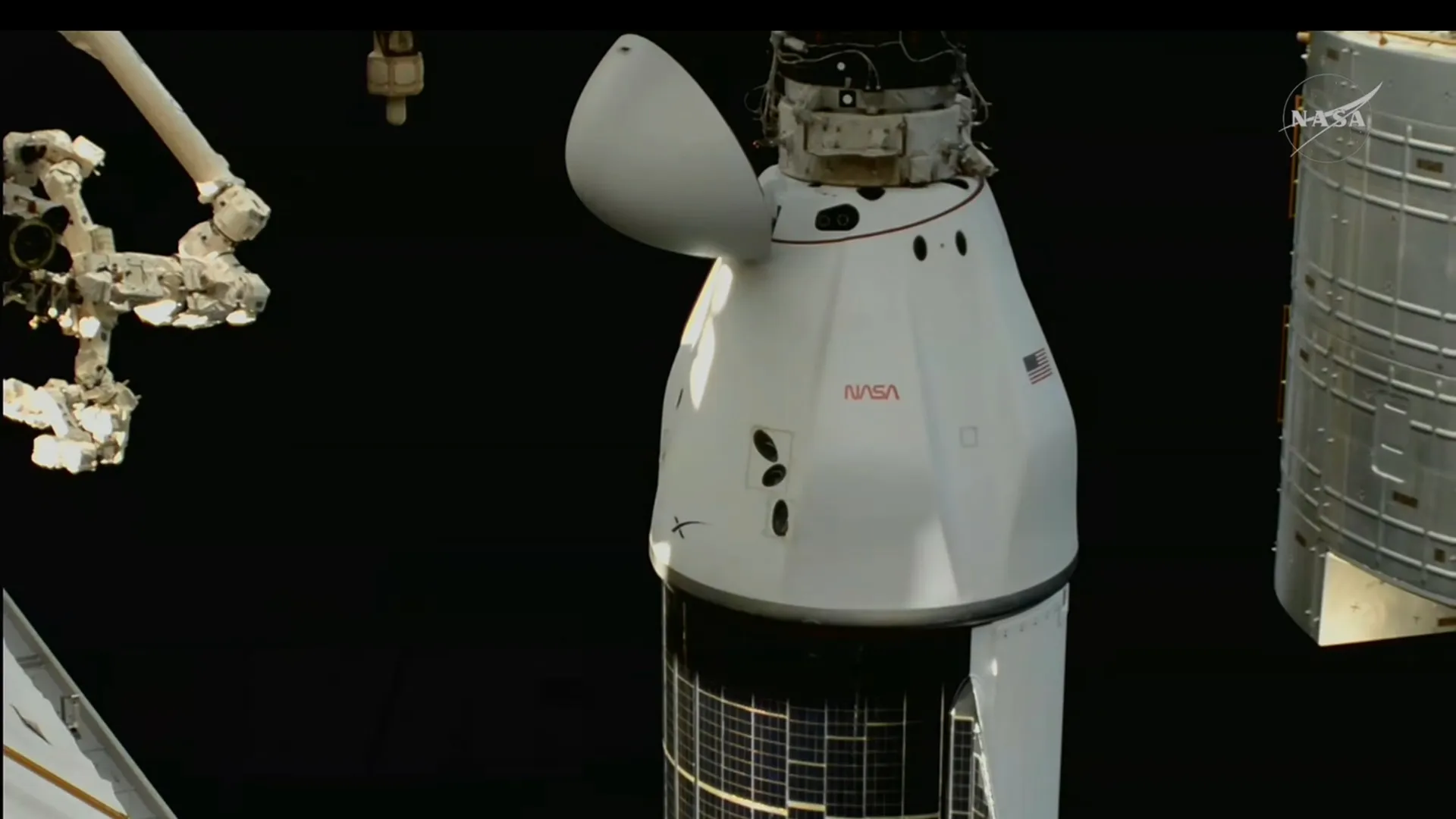
SpaceX's 35th Dragon cargo mission has come home to Earth.
The robotic Dragon capsule undocked from the International Space Station (ISS) on Friday (Nov. 20) at 12:05 p.m. EST (1705 GMT), while the duo were flying 260 miles (418 kilometers) above western China.
The freighter made its way Earthward over the next 29 hours, ultimately splashing down in the Pacific Ocean off the coast of California on Saturday (Nov. 21) at 5:03 p.m. EST (2155 GMT).
The Dragon launched Oct. 13, on a mission called CRS-35 because it was the 35th that SpaceX has flown for NASA's Commercial Resupply Services program.
The capsule arrived at the ISS on Oct. 15, delivering more than 6,300 pounds (2,860 kilograms) of food, scientific gear and other supplies to the astronauts aboard the orbiting lab. It brought a lot of stuff down to Earth, too.
"Thousands of pounds of cargo are returning from the space station, including research samples that could advance future space exploration and improve life on Earth," NASA officials wrote in an update on Tuesday (Nov. 17).
"The returning research includes a 3D-bioprinted blood vessel construct scientists used to study vascular aging and cardiovascular disease in space and on Earth," they added.
Dragon is the only cargo craft flying today that's capable of making such downward deliveries. The others — Northrop Grumman's Cygnus, Russia's Progress vehicle and Japan's HTV-X — are all expendable and burn up in Earth's atmosphere to wrap up their first and only spaceflight.
Editor's note: This story was updated at 12:20 p.m. ET on Nov. 20 with news of successful undocking, then again at 8:55 p.m. ET on Nov. 21 with news of splashdown.