Just as the Artemis 2 astronauts are preparing to return home from their epic moon trip, a very different crew is readying to launch to the International Space Station.
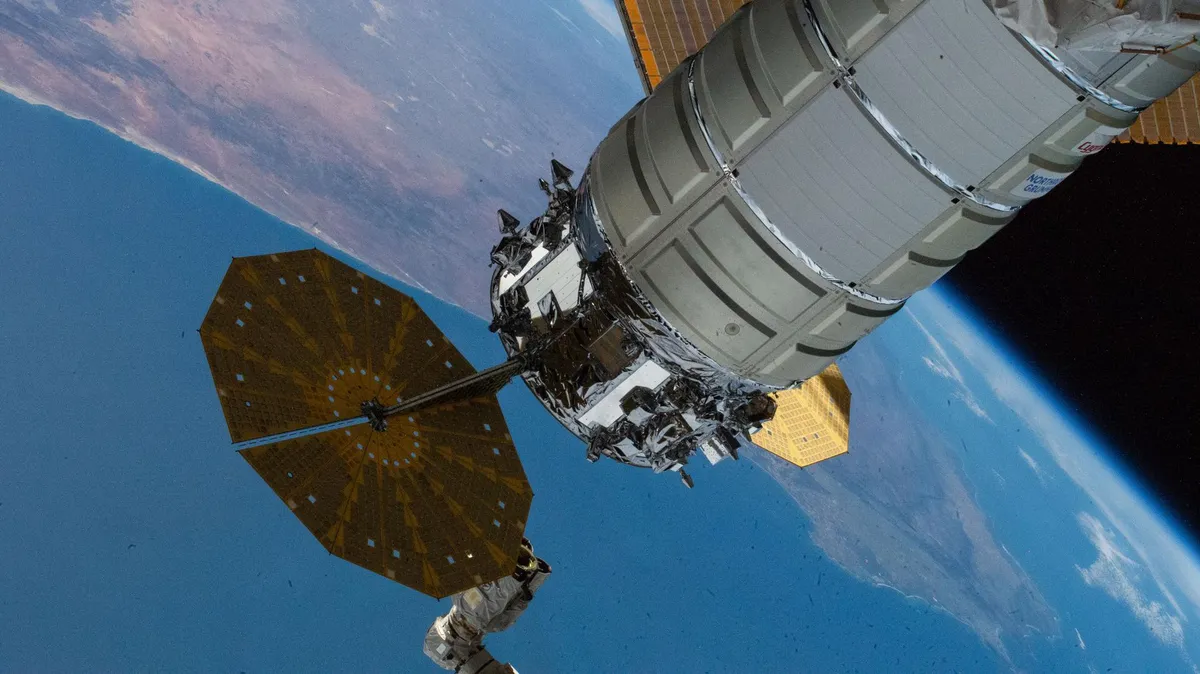
British scientists have packed a container full of worms aboard Northrop Grumman's Cygnus XL cargo vehicle, to be launched by a SpaceX Falcon 9 rocket on Saturday morning (April 11), to study the effects of long-duration spaceflight on biological organisms. The researchers hope the results will help mission planners keep human astronauts healthy on future space trips.
The worms, a species called Caenorhabditis elegans, are tiny creatures about 1 millimeter long that are commonly found in soil and have been used in biology research for decades. Dozens of them are travelling to the International Space Station (ISS) as part of the experiment, enclosed in petri dishes inside a pod that measures 4 by 4 by 12 inches (10 by 10 by 30 centimeters).

The pod will first spend some time inside the station to allow the worms to adjust before being mounted on an experimental platform outside the orbital outpost, where it will remain for up to 15 weeks.
During that time, researchers will keep an eye on the worms' health using automated miniature cameras capturing microscopic fluorescent signals emitted by the organisms' cells in real time. The automated nature of the experiment means the study won't require any time or specialist skills from the astronauts aboard the ISS.
"The conditions of space, including microgravity and radiation exposure, are known to alter cells and genes in potentially harmful ways, yet the extent and causes of these changes are still a rich topic of study," a spokesperson for the U.K. Space Agency told Space.com in an email. "By measuring such changes in living organisms in real time, we can gain more precise data on the direct causes of human health hazards in space, informing new prevention strategies and potential pharmaceutical solutions."
The experimental pod, engineered by scientists from the University of Exeter and the University of Leicester, both in the U.K., maintains a comfortable environment for the worms, including temperature and atmosphere maintenance and provision of food and water via an agar carrier.
The team hopes the low-cost experiment will open new avenues for biological research in space and help improve our understanding of the effects the harsh conditions of space have on the health of biological organisms, including humans.
"NASA's Artemis program marks a new era of human exploration, with astronauts set to live and work on the moon for extended periods for the first time," Tim Etheridge, a life sciences researcher at the University of Exeter and one of the designers of the experiment, said in a statement.
"To do that safely, we need to understand how the body responds to the extreme conditions of deep space," he added. "By studying how these worms survive and adapt in space, we can begin to identify the biological mechanisms that will ultimately help protect astronauts during long-duration missions — and bring us one step closer to humans living on the moon."
Astronauts in space suffer from a wide range of ailments, including bone and muscle loss, vision problems and reduction in the number of red blood cells. In addition, the high radiation levels that their bodies absorb during spaceflight increases the risk of cancers and DNA damage. With global space agencies discussing ambitions to establish permanent human bases on the moon and possibly on Mars, researchers have to find a way to protect future space explorers from those potentially devastating effects of long-term space trips.
Editor's note: This story was updated at 3:45 p.m. ET on April 9 with the new target launch date of April 11.