You are now subscribed
Your newsletter sign-up was successful
Want to add more newsletters?
Delivered daily
Daily Newsletter
Breaking space news, the latest updates on rocket launches, skywatching events and more!

Once a month
Watch This Space
Sign up to our monthly entertainment newsletter to keep up with all our coverage of the latest sci-fi and space movies, tv shows, games and books.

Once a week
Night Sky This Week
Discover this week's must-see night sky events, moon phases, and stunning astrophotos. Sign up for our skywatching newsletter and explore the universe with us!

Twice a month
Strange New Words
Space.com's Sci-Fi Reader's Club. Read a sci-fi short story every month and join a virtual community of fellow science fiction fans!
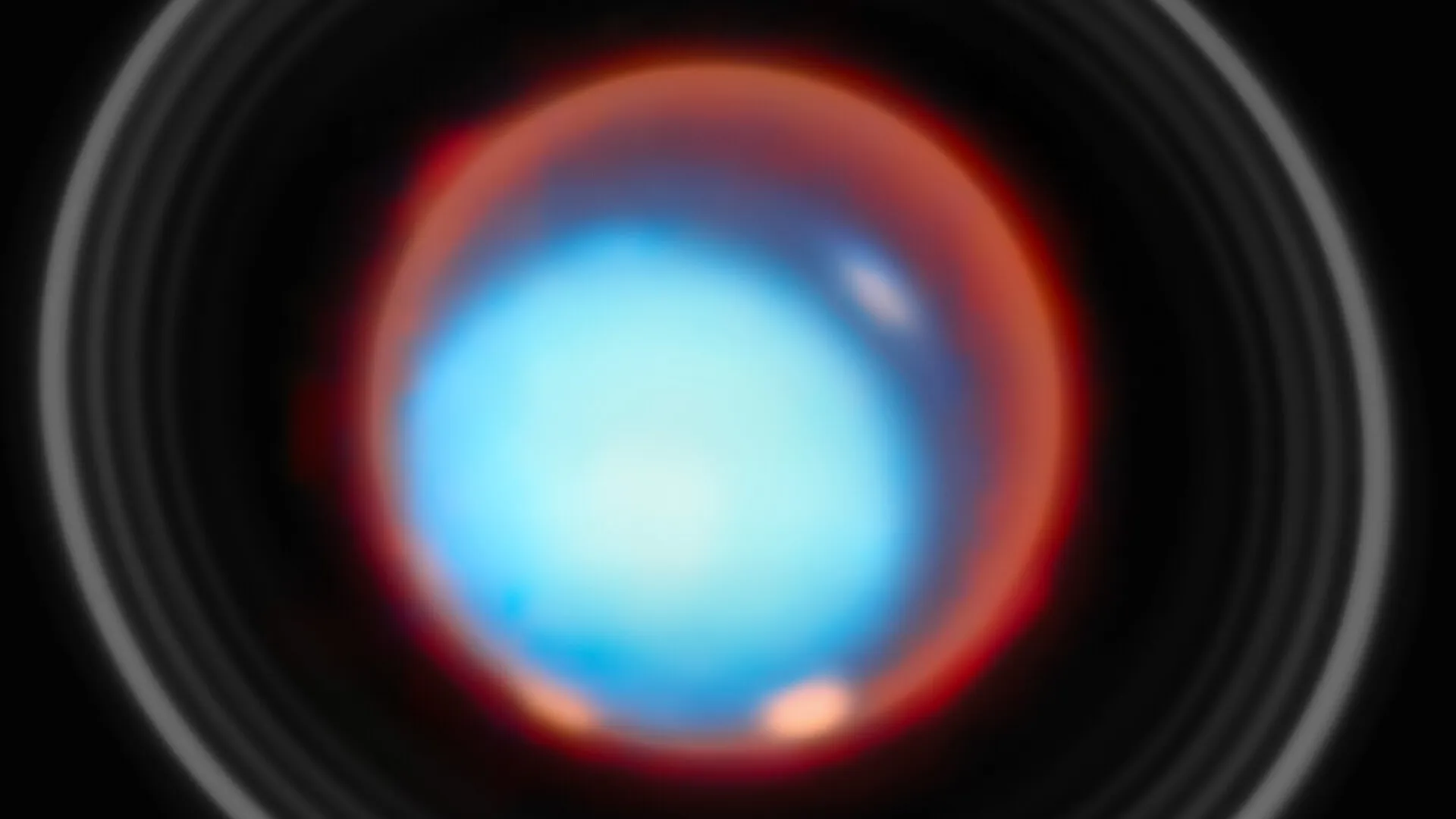
An international team of researchers has uncovered new insights into the upper atmosphere of Uranus, where ions swirling above the ice giant planet's clouds meet the magnetic field surrounding the world.
"Uranus's magnetosphere is one of the strangest in the solar system," Paola Tiranti, a researcher at Northumbria University in the U.K., said in a statement. "It's tilted and offset from the planet's rotation axis, which means its auroras sweep across the surface in complex ways."
"By revealing Uranus's vertical structure in such detail, Webb is helping us understand the energy balance of the ice giants," Tiranti said. "This is a crucial step towards characterizing giant planets beyond our solar system."

The JWST continues to provide unprecedented detail on comic phenomena located millions, even billions, of miles away from us. With such detailed data available, scientists are still able to make new discoveries about the planets in our solar system. The telescope has previously had its sights set on Uranus too, even discovering a new moon of the planet in 2025.
"This is the first time we've been able to see Uranus's upper atmosphere in three dimensions," said Paola. "With Webb's sensitivity, we can trace how energy moves upward through the planet's atmosphere and even see the influence of its lopsided magnetic field."
Voyager 2 provided our first close-up data and images of Uranus way back in 1986. The flyby helped scientists figure out that Uranus is very cold compared to its neighboring planets — in fact, around then is when we found out Uranus is our solar system's coldest planet.
"Webb's data confirm that Uranus's upper atmosphere is still cooling, extending a trend that began in the early 1990s," said Paola. "The team measured an average temperature of around 426 kelvins (about 150 degrees Celsius), lower than values recorded by ground-based telescopes or previous spacecraft."
The research was published on Feb. 19 in the journal Geophysical Research Letters.

You must confirm your public display name before commenting
Please logout and then login again, you will then be prompted to enter your display name.
