





Spring is here, and while the days are longer, there's still plenty of time to get some stargazing in, whether that's watching the full moon this May 1 or surveying the skies for stars and planets. You may even be able to catch the full 'flower' moon as it climbs over the SE horizon.
The best binoculars will let you zoom in, but if you really want the best view of the moon's ancient craters, you'll need a telescope. We've rounded up the best telescope deals, so you can experience the beauty of the full moon and save big into the bargain.
Deals come and go, and we regularly update this guide with the latest deals. So read on for our pick of the best telescope offers.
- More top deals: Telescopes on Amazon
- See the latest discounts: Telescope at Walmart
- Browse the sales: Telescopes at Best Buy
Best telescope deals 2026
Today's best US telescope deals
Today's best UK deals
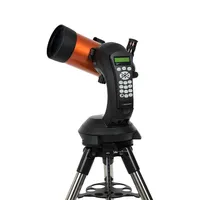
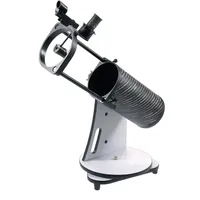
Buying advice: Finding the right one for you
Of course, you want the biggest discount you can possibly get, but saving isn't the only thing you need to consider. As tempting as these savings are it's important you get the right telescope for you, so think about your stargazing experience and what you want to view. Do you want to look at far-off nebulas and galaxies or planets and the moon, which are a little closer to home?
If you're after superb views of the planets and the moon you'll want something with a longer focal point - around 2000mm (80 inches) is an excellent choice. But, if it's crystal clear views of nebulas, star clusters and galaxies then a shorter focal length of around the 500mm (20 inches) mark would work really well.
Just to make it that little bit more challenging, there's also three different main types of telescopes to look out for. You have the choice of refractor, reflector and catadioptric telescopes, and while that say seem a daunting choice, don't worry. We've included a rundown of the pros and cons to each. It's important to consider these before picking out the right telescope deal for you.
Refractor telescopes are great for beginners, as they're easy to assemble and operate. They're also usually relatively cheap to manufacture, which is reflected in their final price. They are best suited to viewing things like planets and moons, thanks to their typically long focal length, but unfortunately, they do have a tendency to suffer from chromatic aberration.
Reflector telescopes are well-loved by amateur astronomers and better suited to low-magnification targets, such as galaxies and nebulas. These telescopes can be divided into two different types: Newtonians and Dobsonians. Newtonian reflectors are quite versatile and well-suited to astrophotography, but they require quite a lot of upkeep. Dobsonians might be more tempting to amateurs, as they tend to be simpler to maintain.
Finally, there are the slightly pricier catadioptric telescopes, which were created to tackle some of the problems found in the standard refractor and reflector design. Here, we've divided them into two categories: the Maksutov-Cassegrain and the Schmidt-Cassegrain. The former model is great for correcting issues such as the "coma" distortion effect and the aforementioned chromatic aberration. The latter is a very versatile model, also boasting reduced chromatic aberration, which typically comes equipped with a GoTo system. This software allows you to automatically point your scope at particular astronomical objects, which is great for beginners.
Newtonian telescope deals
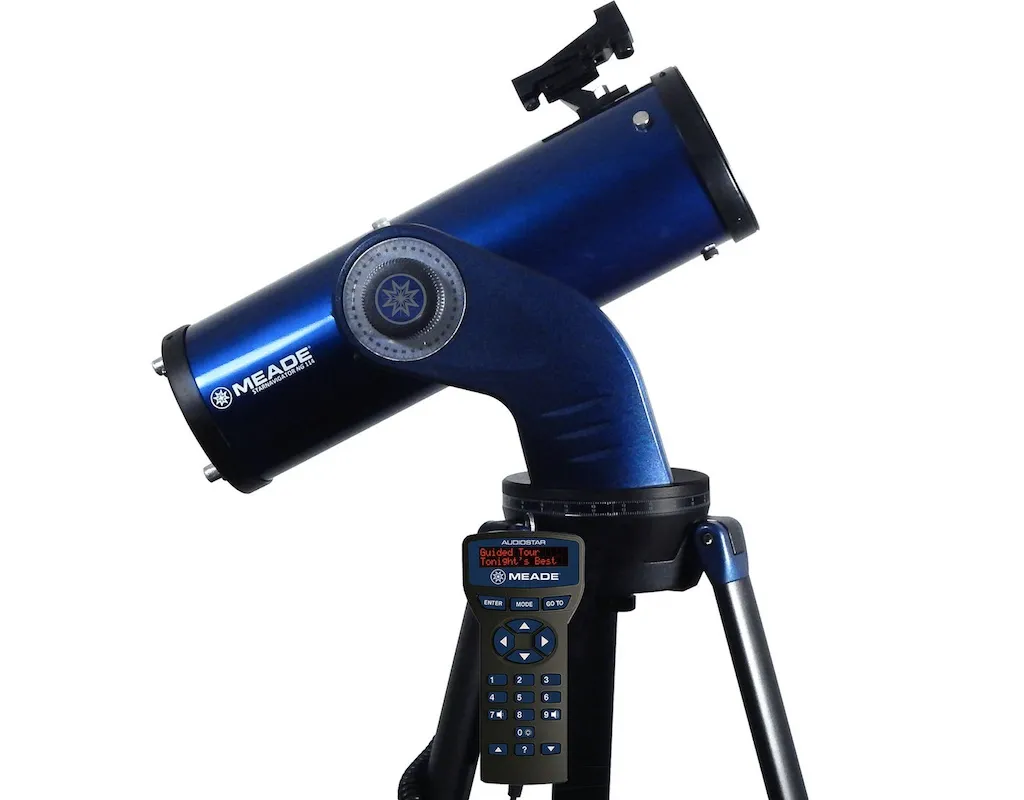
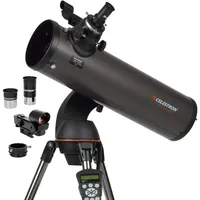
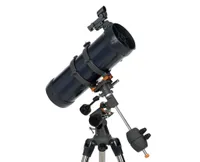
Newtonian telescopes are popular with amateur astronomers because they allow users to focus on a really wide range of night sky objects. They're complicated bits of kits that require a fair bit of maintenance, so if you are going to buy one of these models then make sure you pick one that has mirrors with a protective coating, as it will last longer.
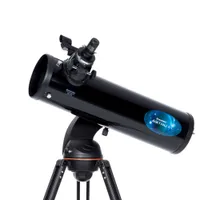
Below, you'll find deals on the Celestron StarSense Explorer DX 130AZ. It's great for beginners and – crucially – usually reasonably priced.
Dobsonian telescope deals

Dobsonian telescopes are another kind of reflector telescope. They're a lot easier to maintain and operate than their Newtonian counterparts, but they're still great for spotting a wide range of astronomical objects.
Depending on availability in your local area, in the deals box below, you'll find the latest prices for the Sky-Watcher Skyliner 200P and the Sky-Watcher Flextube 300 SynScan Dobsonian. The former is priced and ideal for beginners, while the latter model is a slightly pricier option, with a huge aperture that allows you to see deeper into space.
Refractor telescope deals
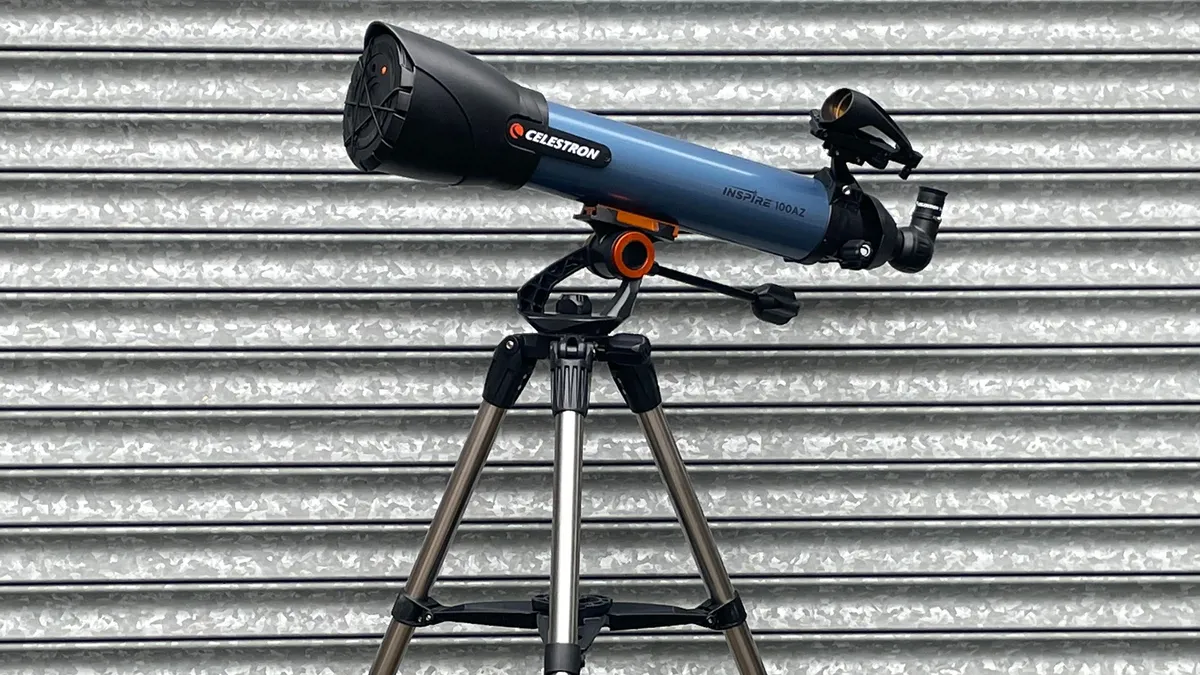
Refractor telescopes are intuitive to use and easy to set up, so they are popular with novice astronomers. They are also relatively cheap to manufacture, which means that you can get a refractor telescope with a decent size aperture for a very good price. The only drawback here is that the telescopes can suffer from chromatic aberration, where colors and images can seem a bit fuzzy.
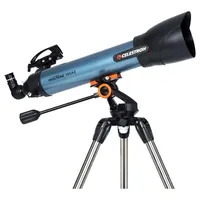
Here, we've rounded up some of our favorite refractors: the Celestron Inspire 100AZ and the Celestron Omni XLT 120. The latter is brilliant for beginners who want to get clear views of planets, while the Celestron Omni XLT 120 is perfect for intermediate astronomers who value high-quality optics and want to spend a little more.
Maksutov-Cassegrain telescope deals

Put simply, Maksutov-Cassegrain telescopes correct problems you might find in a reflector telescope, such as the 'coma' effect, where images appear blurred. They have sealed optics, so you don't have to worry about maintenance, and they also tend to come with a go-to system, making it easy to navigate the stars. Some of the best beginner telescopes can be found in this category, although they can also be a little bit pricey.
Just below, you'll find deals on some of our favorite models when they're available. These are the Sky-Watcher Skymax 150 PRO and the Celestron Astro Fi 102. The Celestron Astro Fi 102 is actually fairly well-priced — and a great option for beginners — while the other is a little more expensive but still easy to set up and intuitive to use.
Schmidt-Cassegrain telescope deals

The Schmidt-Cassegrain telescopes we've included below are high-end models, with high-quality optics to match. They all boast decent apertures and can be used to get excellent views of planets and moons. Be warned, they're not always great for astrophotography because of their curved focal plane, but for stargazing purposes they're excellent.
When they're available, you'll find deals below for the Celestron NexStar Evolution 9.25 (which boasts one of the best optical systems we've ever tried), the Celestron NexStar 6SE, the Celestron NexStar 8SE, and the Celestron Advanced VX 9.25 EdgeHD, which is a rare example of a Schmidt-Cassegrain telescope that can be used by astrophotographers.
Kids' telescope deals
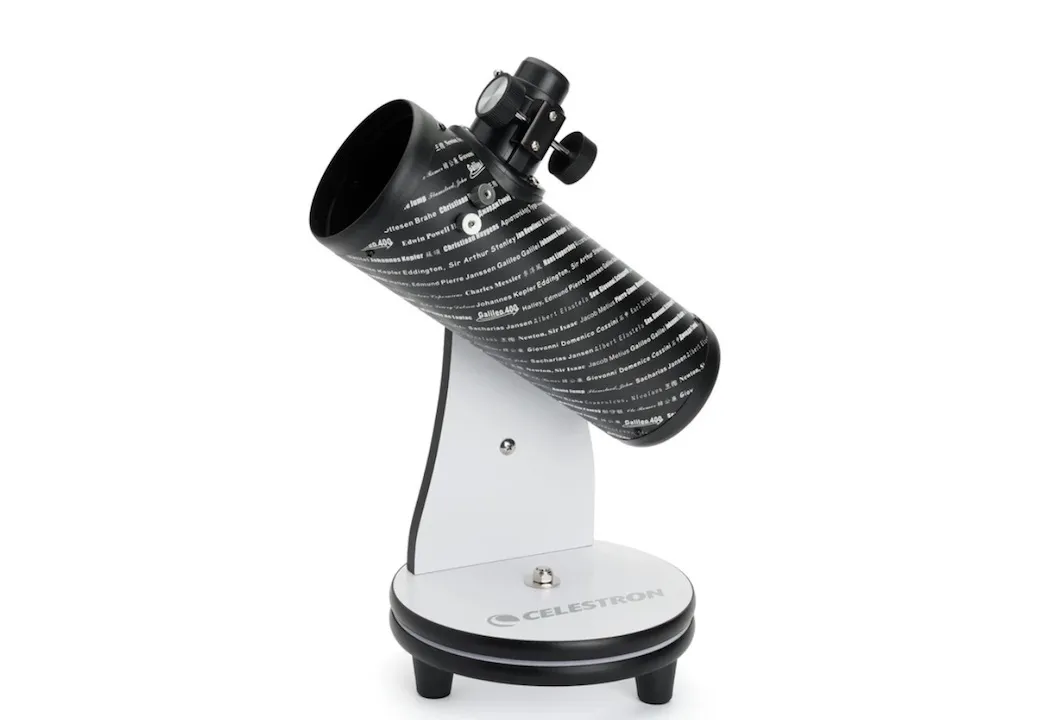
When you're choosing the best telescope for your kids, you want something robust, compact and — ideally — less than $100. Here, we've rounded up refractor and reflector telescopes that fit the bill. These instruments will give youngsters clear views of the moon, along with some of our closest planets and stars.
These telescopes offer the perfect introduction to astronomy, but for youngsters who prefer looking through two eyes, you might want to pick up some of the best binoculars for kids instead.
Below, you'll see deals on our top picks for youngsters: the Celestron FirstScope 76 Tabletop and the Celestron AstroMaster 70AZ.
