The Milky Way is a barred spiral galaxy around 13.6 billion years old with large pivoting arms stretching out across the cosmos.
– Galaxy type: Barred spiral
– Age: 13.6 billion years (and counting)
– Size: 100,000 light-years across
– Number of stars: about 200 billion
– Rotation time: 250 million years
Our home galaxy's disk is about 100,000 light-years in diameter and just 1000 light-years thick, according to Las Cumbres Observatory.
Just as Earth orbits the sun, the solar system orbits the center of the Milky Way. Despite hurtling through space at speeds of around 515,000mph (828,000kmph) our solar system takes approximately 250 million years to complete a single revolution, according to Interesting Engineering. The last time our planet was in this position, dinosaurs were just emerging and mammals were yet to evolve.
If the center of the Milky Way were a city, we would be living in suburbia, about 25,000 to 30,000 light-years from the city center. Life in the outskirts is good; we find ourselves nestled in one of the smaller neighborhoods, the Orion-Cygnus Arm, sandwiched between larger Perseus and Carina-Sagittarius arms. If we were to travel inwards towards the city center, we would find the Scutum-Centaurus and Norma arms.
Related: How to photograph the Milky Way: A guide for beginners and enthusiasts
On a clear night, void of light pollution, we can catch a glimpse of the bright lights of the galactic city streaking across the night sky. Our window into the universe, this milky white band of stars, dust and gas is where our galaxy gets its name.
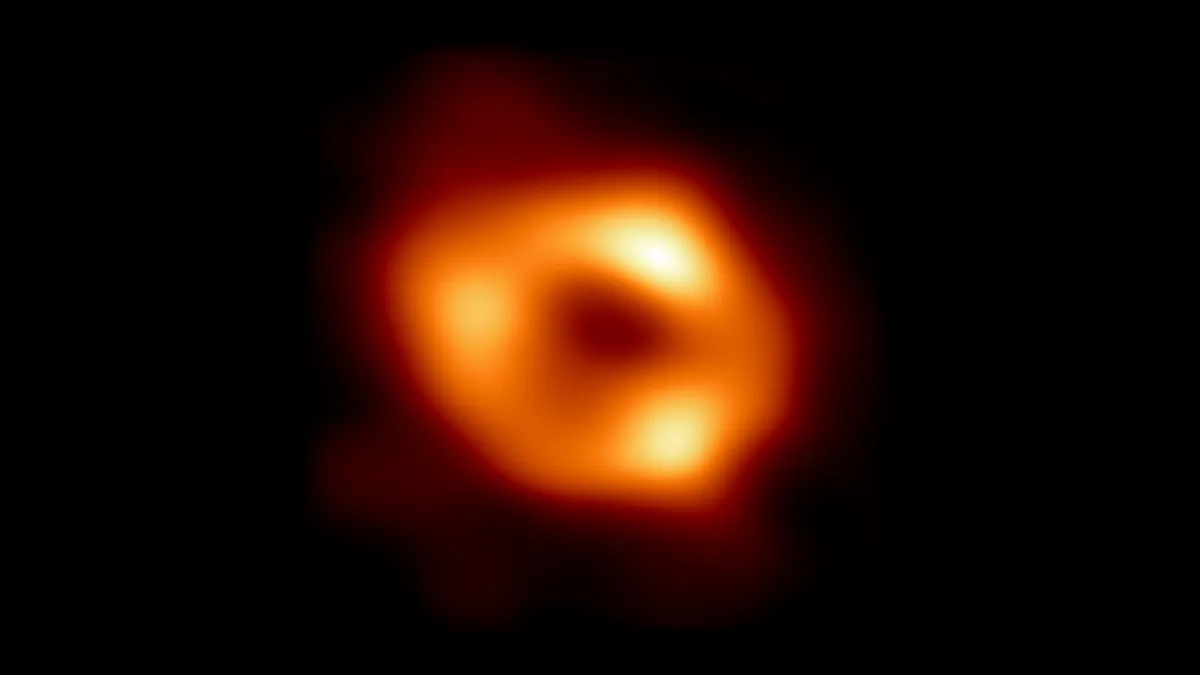
Lying at the very heart of the Milky Way is a supermassive black hole called Sagittarius A*. About 4 million times the mass of the sun, this beast consumes anything that strays too close, gorging on an ample supply of stellar material enabling it to grow into a giant. In 2022, we imaged this glutton at the core of our galaxy for the very first time, through an innovative technique allowing us to view the shadow of the black hole.
Why is our galaxy called the Milky Way?
According to the American Museum of Natural History (AMNH), our galactic home is called the Milky Way after its apparent milky white appearance as it stretches across the night sky. In Greek mythology, this milky band appeared because the goddess Hera sprayed milk across the sky.
Around the world, the Milky Way is known by different names. For example in China it is called "Silver River" and in the Kalahari Desert in South Africa it's called the "Backbone of Night".
Milky Way FAQS answered by an expert
We asked Rory Bentley, astronomer at the University of California, Los Angeles, a few frequently asked questions about the Milky Way.

Astronomer and graduate student at the University of California, Los Angeles, specializing in high-mass stars and studies of the Milky Way's core.
Where is Earth in the Milky Way?
Earth is located roughly halfway to the edge of the Milky Way, at a distance of about 26,000 light years from the center. We reside in a feature known as the Orion Spur (sometimes also called the Orion Arm), which is an offshoot between the larger Sagittarius and Perseus Arms that lie inwards and outwards of our location.
What type of Galaxy is the Milky Way?
The Milky Way is a large barred spiral galaxy, with a relatively small bar compared to most galaxies of a similar size. A central bar (or central bulge) is a circular to oval shaped structure of old stars which lies at the center of spiral galaxies.
What is the biggest planet in the Milky Way?
The biggest known planet in the Milky Way may be HD 100546 b, which is a very large gas giant in the process of forming with a diameter roughly 6.9 times that of Jupiter, or 77 times that of Earth.
The radius measurement is highly uncertain, as some of the material surrounding the planet may be masquerading as being part of the planet itself. The largest planets whose sizes are known for certain are HAT-P-67 b and XO-6b, both with diameters around 2.1 times that of Jupiter. Both of these planets have had their diameters measured directly as they transit their parent star.
The Milky Way: Size, structure and mass
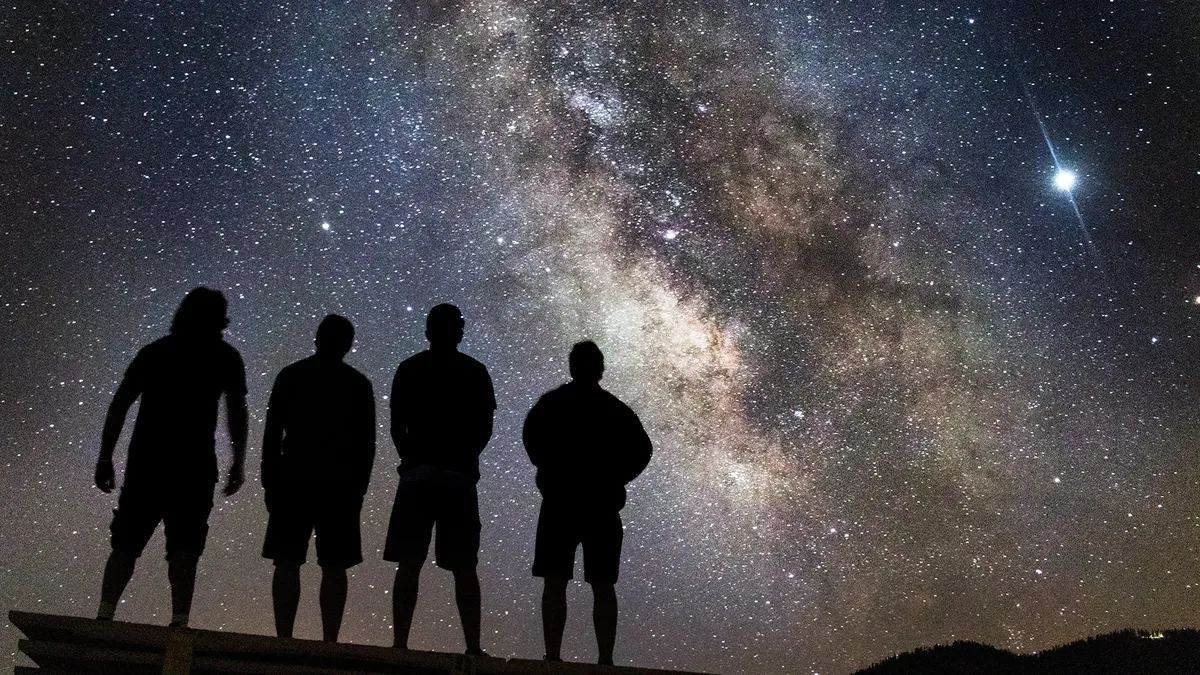
Studying the Milky Way used to be notoriously difficult. Astronomers sometimes compare the effort to attempting to describe the size and structure of a forest while being lost in the middle of it. From our position on Earth, we simply lack an overview. But two ground-breaking space telescopes launched since the 1990s have helped usher in the golden age of Milky Way research. Major strides have been made, especially since the 2013 launch of the European Space Agency's (ESA) Gaia mission.
Telescopes enabled astronomers to distinguish the basic shape and structure of some of the closest galaxies before they knew they were looking at galaxies. But reconstructing the shape and structure of our own galactic home was slow and tedious. The process involved building catalogs of stars, charting their positions in the sky and determining how far from Earth they are.
Dutch astronomer Jan Oort, sometimes dubbed the master of the galactic system, was the first to realize that the Milky Way isn't motionless but rotates, and he calculated speeds at which stars at various distances orbit around the galactic center. It also was Oort who determined the position of our sun in the vast galaxy. (The Oort Cloud, a repository of trillions of comets far from the sun, was named after him.)

Gradually, a complex picture emerged of a spiral galaxy that appears quite ordinary.
At the center of the Milky Way sits a supermassive black hole called Sagittarius A*. With a mass equal to that of four million suns, the black hole, discovered in 1974, can be observed in the sky with radio telescopes close to the constellation Sagittarius.
Everything else in the galaxy revolves around this powerful gateway to nothingness. In its immediate surroundings is a tightly packed region of dust, gas and stars called the galactic bulge. In the case of the Milky Way, this bulge is peanut-shaped, measuring 10,000 light-years across, according to ESA. It harbors 10 billion stars (out of the Milky Way's total of about 200 billion), mostly old red giants, which formed in the early stages of the galaxy's evolution.
Related: 'Weird signal' hails from the Milky Way. What's causing it?
Beyond the bulge extends the galactic disk. This feature is 100,000 light-years across and 1,000 light-years thick, and it's home to the majority of the galaxy's stars, including our sun. Stars in the disk are dispersed in clouds of stellar dust and gas. When we look up to the sky at night, it's the edge-on view of this disk extending toward the galactic center that takes our breath away.
Stars in the disk orbit around the galactic center, forming swirling streams that appear to emanate like arms from the galactic bulge. Research into the mechanisms that drive the creation of spiral arms is still in its infancy, but the latest studies suggest that these arms form and disperse within relatively short periods of up to 100 million years (out of the galaxy's 13 billion years of evolution).
Inside those arms, stars, dust and gas are more tightly packed than in the more loosely filled areas of the galactic disk, and this increased density triggers more intense star formation. As a result, stars in the galactic disk tend to be much younger than those in the bulge.
"Spiral arms are like traffic jams in that the gas and stars crowd together and move more slowly in the arms. As material passes through the dense spiral arms, it is compressed and this triggers more star formation," Denilso Camargo, of the Federal University of Rio Grande do Sul in Brazil, said in a statement.
The Milky Way currently has four spiral arms, according to the National Science Foundation (NSF). There are two main arms — Perseus and Scutum-Centaurus — and the Sagittarius and Local Arm, which are less pronounced. Scientists still discuss the exact position and shape of these arms using Gaia data.
The Milky Way disk is not flat but warped, according to ESA. As it rotates, it precesses like a wobbling spinning top. This wobble, essentially a giant ripple, circles the galactic center much more slowly than the stars in the disk, completing a full rotation in about 600 to 700 million years. Astronomers think this ripple may be a result of a past collision with another galaxy.

Sprinkled around the disk and the bulge are globular clusters, collections of ancient stars, as well as approximately 40 dwarf galaxies that are either orbiting or colliding with the larger Milky Way according to a statement from ESA.
All of that is surrounded by a spherical halo of dust and gas, which is twice as wide as the disk. Astronomers believe that the entire galaxy is embedded in an even larger halo of invisible dark matter. Since dark matter doesn't emit any light, its presence can only be inferred indirectly by its gravitational effects on the motions of stars in the galaxy. Calculations suggest that this puzzling stuff makes up to 90% of the galaxy's mass.
The mass of the Milky Way, dark matter included, equals 1.5 trillion solar masses, according to recent NASA estimates. The galaxy's visible matter is distributed between its 200 billion stars, their planets and the massive clouds of dust and gas that fill the interstellar space. Astronomers aren't quite sure how many planets are in the Milky Way, given we have only found a few thousand all told, but one NASA estimate suggests it's more than 100 billion planets. How many solar systems there are in the Milky Way is also a mystery, as we are still looking for the planets.
Where is the sun in the Milky Way?

The sun orbits about 26,000 light-years from the black hole Sagittarius A*, roughly in the middle of the galactic disk. Traveling at the speed of 515,000 mph (828,000 kph), the sun takes 230 million years to complete a full orbit around the galactic center.
The sun sits near the edge of the Local Arm of the Milky Way, one of the two smaller spiral arms of the galaxy. In 2019, using data from the Gaia mission, astronomers found that the sun is essentially surfing a wave of interstellar gas that's 9,000 light-years long, 400 light-years wide and undulates 500 light-years above and below the galactic disk according to ESA.
Planets of the solar system do not orbit in the plane of the galaxy but are tipped by about 63 degrees.
"It's almost like we're sailing through the galaxy sideways," Merav Opher, an astrophysicist at George Mason University in Virginia, told Space.com.
What is the black hole in the Milky Way?

The black hole in the Milky Way is called Sagittarius A*. The black hole is mostly dormant, which makes it very challenging to observe. Sagittarius A* has a mass 4.3 million times that of the sun, astronomers Reinhard Genzel and Andrea Ghez discovered it in 2008. The approximate diameter is 14.6 million miles (23.5 million kilometers) . By comparison, the Milky Way itself is roughly 100,000 light-years wide and 1,000 light-years thick.
A huge disk of gas around Sagittarius A* billows out as far as 5 to 30 light-years from the supermassive black hole. It is this huge, but tenuous, area of gas that gives a bit of material for Sagittarius A* activity. The region is known to emit X-rays due to feeding on the gas, or because of friction within the disk as temperatures soar to as much as 18 million degrees Fahrenheit (10 million degrees Celsius).
Scientists would love to have more information about this supermassive black hole to figure out more about how it was formed and the conditions that made its growth possible. A couple of possibilities include smaller black holes getting quite large as they eat up dust and gas in the environment nearby; alternatively, smaller black holes may merge together and create something more monstrous.
Generally, scientists do have improving models for stellar-mass black holes and intermediate-mass black holes. These objects form when huge stars, many times the mass of our sun, collapse after stopping nuclear fusion. Since they are no longer able to stop the gravitational collapse, they shrink to a gravitationally powerful object that can warp time and space around it so much that light no longer can escape.
We're gradually learning more about Sagittarius A* through efforts such as the first-ever image of the black hole, which was obtained on May 12, 2022. The image captured faint amounts of light caused by heated matter moving super-fast towards the center of the black hole; the image is a high-definition shadow. This imaging required a big set of observatories around the world, approximately the size of Earth — which was possible through the Event Horizon Telescope (EHT).
Related: Here's How Scientists Turned the World Into a Telescope (to See a Black Hole)
Milky Way galaxy type and the great debate of 1920

We are constantly building on our wealth of knowledge of the Milky Way, though up until relatively recently astronomers believed that all the stars in the sky belonged to our galaxy.
"The Great Debate" in 1920 saw astronomers Herber Curtis and Harlow Shapley argue the scale of the universe and the prospect of "island universes" (galaxies), according to the National Academy of Sciences.
On one side of the debate, Shapley believed the Milky Way was much larger than previous estimates and that we weren't at the center. He also claimed that "spiral nebulae" such as Andromeda were a part of the Milky Way. On the other side of the debate, Curtis did not dispute Shapley's claims of a far larger Milky Way, he did however argue that there were large island universes (galaxies) such as Andromeda, that lay beyond the boundaries of the Milky Way.
The dispute was resolved when Edwin Hubble's measurements of Cepheid variable stars proved Andromeda was located far outside the Milky Way. Modern estimates suggest the Andromeda galaxy, our nearest galaxy neighbor is 2.5 million light-years away.
More recently, astronomers have been trying to figure out what type of galaxy the Milky Way is. Our best estimates these days suggest that it is a barred spiral, meaning that there is a bar structure across the center. Astronomers can estimate the shape of the Milky Way by looking at its population of stars, as well as their movements across the sky.
A future collision of galactic proportions
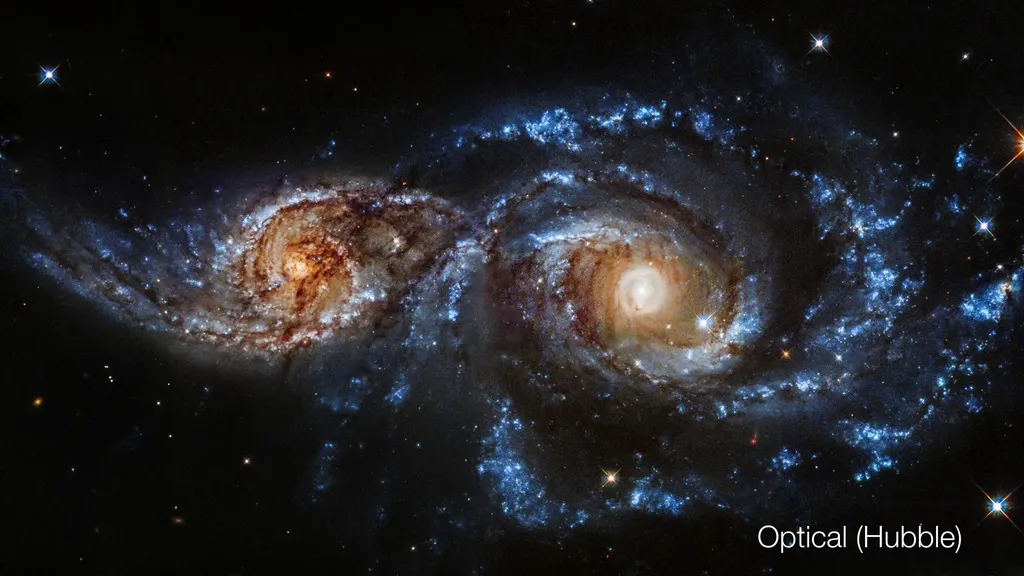
We now know that the Milky Way resides within the Local Group of galaxies, made up of over 30 galaxies including Andromeda, Triangulum and Leo I to name but a few. It turns out that it's pretty good to know who your neighbors are, as they may be closer than you think. The Milky Way is currently hurtling towards Andromeda at 250,000mph (400,000 km/h). Though there is no need to worry just yet, this crash of cosmic proportions is not due for another 4 billion years.
NASA and other space entities have been observing distant galaxy collisions for decades now to get a sense of what we might be facing when Andromeda and the Milky Way collide. The short story is there is little to worry about; the longer tale is the process is an interesting one as it shows how galaxies may evolve.
For example, observations of a three-way galactic collision in 2022 using the famed Hubble Space Telescope gave some intriguing insights. The largest of the group, as it got into a tight orbit with the other two, snagged some material with its relatively stronger gravity. This created an intriguing streak of gas, dust and other materials flowing into the larger galaxy, visible even from Earth.
While the arms of the Milky Way will surely be ripped up by this process, individual stars are relatively safe as the spaces between them are quite large. In other words, don't look for star collisions, as they will be practically non-existent. Starbirth, however, will accelerate due to the amount of gas being pumped into our galaxy, causing our galaxy to brighten and for its population to expand in the coming millions of years following the collision.
Our own solar system, therefore, should be relatively safe due to the low risk of star collision. That said, we may find ourselves thrown into a completely different path around the new galactic center as the merger pushes through.
One practical effect is that the constellations we observe from Earth may change as star orbits alter or new stars are added into the mix; that said, the collision is happening so far in the future that the constellations we see today may be altered in any case, due to natural starbirth and star death outside of the collision. This Milky Way timelapse shows how the night sky will shift over time.
Mapping the Milky Way's history
The evolution of the Milky Way began when clouds of gas and dust started collapsing, pushed together by gravity. First stars sprung up from the collapsed clouds, those that we see today in the globular clusters. The spherical halo emerged soon after, followed by the flat galactic disk. The galaxy started small and grew as the inescapable force of gravity pulled everything together.

The galaxy's evolution is, however, still shrouded in mystery. A discipline called galactic archaeology is slowly unraveling some of the puzzles of the Milky Way's life thanks to the Gaia mission, which released its first catalog of data in 2018.
Gaia measures the exact positions and distances of more than 1 billion stars, as well as their light spectra, which enables scientists to understand the stars' composition and age, according to ESA. The position data allow astronomers to determine the speeds and directions in which the stars move in space. As things in space follow predictable trajectories, astronomers can reconstruct the paths of the stars billions of years into the past and future. Combining these reconstructed trajectories into one stellar movie captures the evolution of the galaxy over eons.
There is also evidence that the Milky Way collided with several smaller galaxies during its evolution. In 2018, a team of Dutch astronomers found a group of 30,000 stars moving in sync through the sun's neighborhood in the opposite direction to the rest of the stars in the data set. The motion pattern matched what scientists had previously seen in computer simulations of galactic collisions. These stars also differed in color and brightness, which suggested they came from a different galaxy.

Remnants of another, slightly younger, collision were spotted a year later. The Milky Way continues devouring smaller galaxies to this day. A galaxy called Sagittarius (not to be mistaken with the black hole) currently orbits close to the Milky Way and has likely smashed through its disk several times in the past 7 billion years. Using Gaia data, scientists found that these collisions triggered periods of intense star formation in the Milky Way and may even have something to do with the galaxy's trademark spiral shape. The study suggests that our sun was born during one of those periods some 4.6 billion years ago.
Photographing the Milky Way

Photographing the Milky Way requires a dark sky, a good "season" (generally between February and October), some distance from light pollution, and the ability to use photographic equipment to catch its faint light. Luckily, the Milky Way is visible in both the northern and southern hemispheres and it is possible to capture it using standard amateur photography items.
If you can, get to your site in the daytime as you will likely want to scout the area for the best angles. Good Milky Way images tend to make use of the landscape in creative ways, so look for interesting and prominent natural features like mountains, boulders or rock shapes.
Next comes the photo shoot. Generally speaking, use a tripod, set your equipment for a timelapse mode and be prepared to experiment with different focuses and different lenses. For beginners, we also have a full guide on how to photograph the Milky Way.
The future of the Milky Way research
Since the beginning of its operations, the Gaia mission has provided three updates to its massive stellar catalog. Astronomers from all over the world continue analyzing the data in search of new patterns and revelations.
Gaia data currently generates more research papers than even the famous Hubble Space Telescope. Gaia will continue charting the galaxy until at least 2025, as long as the spacecraft remains in good health, and the catalog it has compiled will keep astronomers busy for decades to come.
Before Gaia, the largest dataset about positions and distances of stars in the Milky Way came from a mission called Hipparcos, after an ancient Greek astronomer who began charting the night sky 150 years before Christ. Hipparcos only saw about 100,000 of the brightest stars in the sun's neighborhood, compared to Gaia's one billion. The data was also less precise.
Even though Gaia sees less than 1% of stars in the galaxy, astronomers can expand their findings and model the behavior of the entire Milky Way.
Additional resources
Discover more about the Milky Way and other galaxies with this free learning material from the Open University. Explore the Milky Way in virtual reality with ESA's Gaia mission. Tour the Milky Way with Gaia Sky, a real-time, 3D, astronomy visualization software that uses ESA's Gaia mission data. Learn why it was so difficult to study the Milky Way before Gaia in this article from ESA.
Bibliography
Xiang, M., Rix, HW. "A time-resolved picture of our Milky Way's early formation history". Nature 603, 599–603 (2022). https://doi.org/10.1038/s41586-022-04496-5
Robin, Annie C., et al. "A synthetic view on structure and evolution of the Milky Way." Astronomy & Astrophysics 409.2 (2003): 523-540.
Dehnen, Walter, and James Binney. "Mass models of the Milky Way." Monthly Notices of the Royal Astronomical Society 294.3 (1998): 429-438.
Helmi, Amina. "Streams, substructures, and the early history of the Milky Way." Annual Review of Astronomy and Astrophysics 58 (2020): 205-256.