


NASA aimsto launch four space shuttle missions by the end of the year, some aboarddifferent orbiters than originally planned, in order to continue assembly ofthe International Space Station (ISS), mission managers reported late Monday.
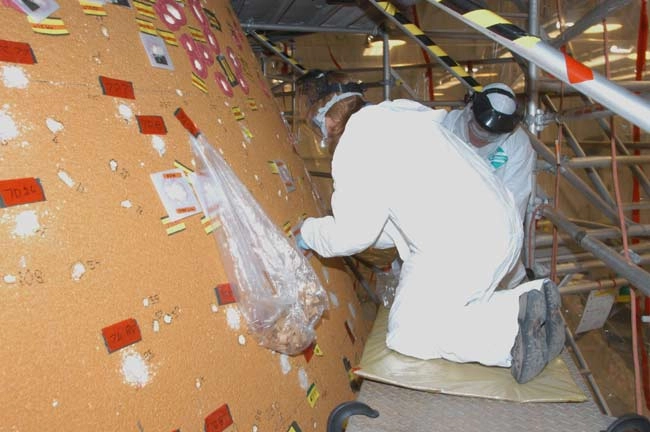
The U.S. space agency released new launch targets for three ISS-bound missions in 2007following the plannedJune 8 liftoff of the Atlantis shuttle’s STS-117 station assembly flight. Theshuttle’s 11-day mission to deliver new solar arrays to the space station hasbeen delayed beyond its initial March 15 target following haildamage to the orbiter’s foam-covered external tank.
“OnceAtlantis flies STS-117, it gets the ball rolling for everything else,” NASAspokesperson Allard Beutel, of the space agency’s Washington D.C. headquarters,told SPACE.com. “This is a chance to look a year ahead and get back ontrack.”
Under thenew plan, set down during a Monday meeting of top NASA shuttle and ISS programmanagers, Atlantis’ STS-117 mission will be followed by the Endeavour orbiter’sSTS-118 mission no earlier than Aug. 9.
The nextshuttle to fly will then be STS-120 aboard Discovery -- rather than the initiallyplanned Atlantis orbiter -- to launch the Harmony connectornode to the space station on Oct. 20. NASA then hopes to close out 2007with a Dec. 6 launch of Atlantis on the STS-122 mission to deliver the EuropeanSpace Agency’s Columbus laboratory.
TheEuropean-built module was initially slated to launch spaceward aboard NASA’sDiscovery orbiter, though the space agency reassigned some missions todifferent spacecraft to ease shuttle processing and turnaround times, NASA officialssaid.
“Basically,it gave us a little more flexibility,” Beutel said of the shuttle swap forupcoming spaceflights. “In a sense, it bought us some time back in theprocessing time required.”
NASA alsoset launch targets for the first two shuttle flights of 2008.
The spaceshuttle Endeavour is slated to launch on Feb. 14, 2008 on the STS-123 missionto deliver the Canadian-builtDextre addition to the station’s robotic arm and the first of three stationsegments that make up the Japan Aerospace Exploration Agency’s Kibo laboratory.A second element of the Kibo module, as well as its own robotic arm, are due tolaunch spaceward on April 24 on NASA’s STS-124 mission aboard the Discoveryorbiter, though the spaceflight was previously reserved for the Atlantisorbiter.
NASAshuttle and ISS managers have said that every orbiter flight in the outpost’sassembly sequence through its projected 2010 completion date depends on thesuccess of the preceding orbiter flight. It also depends on internationalcontributions such as Russian Progress cargo ship launches, Soyuz missions toswap station crews and the upcoming launch of Europe’s first AutomatedTransfer Vehicle (ATV) supply ship.
“We’re insuch a position now where everything must line up, one after another, liketumblers in a lock to get to the end of that sequence,” Beutel said.
- STS-117 Power Play: Atlantis Shuttle Crew to Deliver ISS Solar Wings
- IMAGES: The Spacewalks of NASA’s STS-116 Mission
- Complete Shuttle Mission Coverage
- All About the Space Shuttle
