





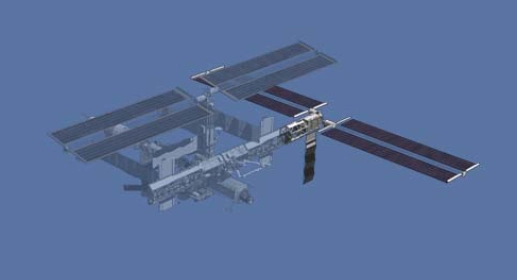
CAPE CANAVERAL, Fla. - When NASA's shuttleAtlantis launches toward the International SpaceStation (ISS) Sunday, it will kick off an intricate series of missions thatwill--with each flight--leave the orbital laboratory closer to completion.
Atlantis'six-astronaut crew are setto launch spaceward at 4:30 p.m. EDT (2030 GMT) on Aug. 27 on NASA's STS-115mission to deliver two newsolar wings and a massive pair of trusses to build up the station's portside. The spaceflight is NASA's first major ISS construction mission since the 2003 Columbia accident.
"It's agood feeling to be back in the space station assembly business," Paul Hill,NASA's shuttle mission operations manager, told SPACE.com.
With afrenetic schedule, new equipment, two back-to-back spacewalksthat must go as planned to deploy the new solar panels, and one finalextravehicular activity (EVA), the STS-115 mission has been touted as one ofNASA's most challenging to date. But in fact, it's just an appetizer.
"So it'skind of a mixed feeling," Hill said. "It's really exciting to be getting backinto the construction business, but we're going back into that constructionbusiness on the hardest things we've ever done."
Hill said NASA'splanned shuttleflights, particularly those over the next 18 months, will be a marathon ofthe most complex maneuvers ever conducted in space. While the agency and itspartners have performed many of the necessary tasks individually, future ISS constructionstrings those actions together and requires a whole lot more of them, he added.
"Theassembly of the station on these flights has no parallel in space history,"Michael Sufferdini, NASA's ISS program manager. "It's like building a ship inthe middle of the ocean from the keel up."
Physically,the space station is only 50percent complete and contains only 40 percent of the pressurized volume--whichincludes crew living and work space--it will have once NASA's plannedconstruction plan is fulfilled by 2010.
NASA plansat least 15 more shuttle flights to complete the $100 billion space stationbefore retiring its three remaining orbiters. Once finished, the ISS will spanmore than 300 feet (91 meters) with enough living space to rival a five-bedroomhome and support crews of up to seven astronauts, Hill said.
"We'll gofrom a space station that's been a marvel in orbit, but only had a reasonablysmall capability to do science, to a much larger space station that takes amuch lower effort to keep...going," Hill added.
Meticulouslychoreographed spacewalks are planned not only for shuttle astronauts during ISSconstruction flights, but also for station crews as well to ready the outpostfor each subsequent alteration.
Among thedrastic changes in appearance is next summer's planned move of the station'sPort 6 (P6) truss, which currently sprouts from the outpost's center with twosolar arrays at the end, to the tip of the segments to launch aboard Atlantis.
Coolingsystems must also be activated, and new trusses, solar arrays and two newlaboratories--Europe's Columbus moduleand Japan's Kibosegment, which carries the largest pressurized volume of any ISS component--stillwait here to be launched from NASA's Kennedy Space Center.
Launchingthe international components and fulfilling NASA's obligations to its partnernations in the ISS project, are critical not just to complete the ISS, but alsoto reach beyond low-Earth orbit, NASA said.
"In mymind, this world will not explore unless we go together," Sufferdini said.
- VIDEO: First Tasks of NASA's STS-115 Mission
- Gallery: Prepping Atlantis
- The International Space Station So Far: Five Years of Service, But Incomplete
- Complete Space Shuttle Mission Coverage
- NASA's STS-115: Shuttle Atlantis to Jump Start ISS Construction
- The Great Space Quiz: Space Shuttle Countdown
