Meet the Boeing's Starliner

Boeing's CST-100 Starliner is a 21st century space capsule designed to launch NASA astronauts into orbit on commercial trips to the International Space Station and beyond. See photos of how it works here.
Boeing's CST-100, Artist's Rendering

An artist's rendering of Boeing's crew-carrying CST-100 space capsule.
Riding the Atlas V

A Boeing CST-100 spacecraft is shown atop a United Launch Alliance Atlas 5 rocket in this artist's illustration. The CST-100 is a capsule-based vehicle designed to carry seven astronauts into low-Earth orbit on trips to the International Space Station or other orbital destination.

Starliner in Orbit
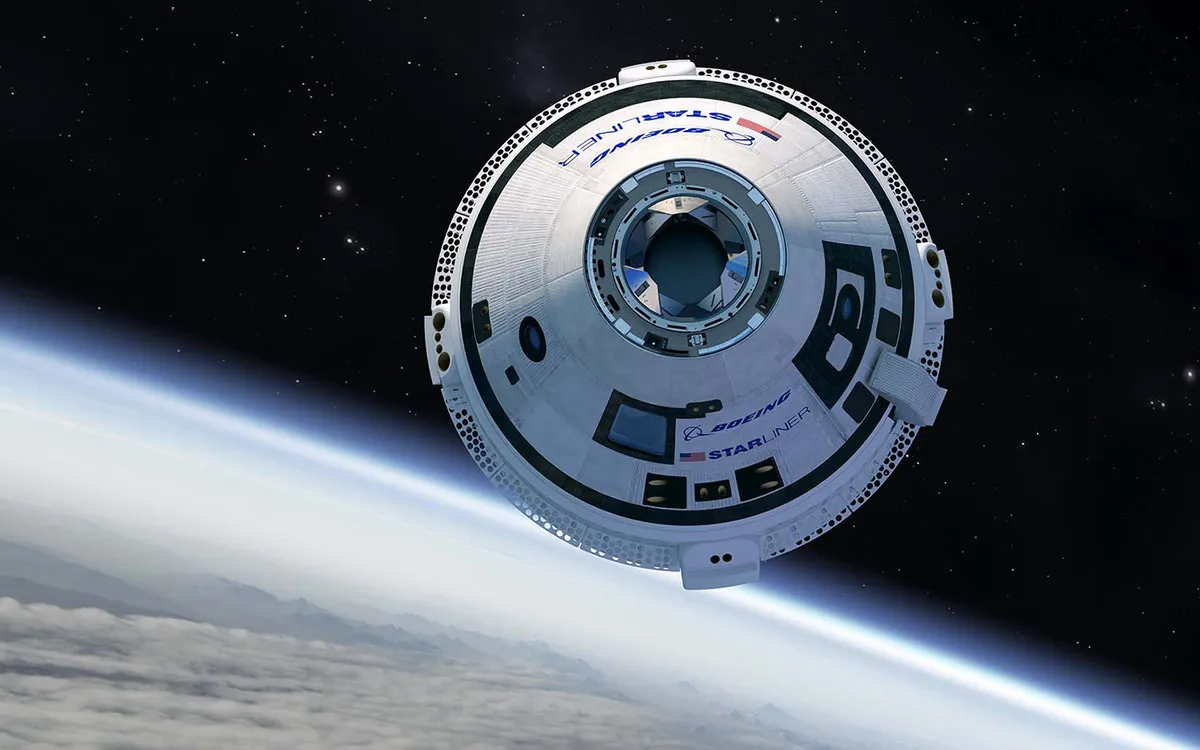
Boeing's CST-100 Starliner is designed to ferry astronauts on regular trips to low-Earth orbit. Here, the capsule is seen in space in an artist's rendering.
Mission: Space Station

The first destination for Starliner will be the International Space Station. NASA picked Boeing as one of two companies (SpaceX is the other) to fly astronauts to the orbiting laboratory.
Docking at ISS

Boeing's Starliner will link up with a space station at a docking port on the U.S. segment of the orbiting laboratory.
Return to Earth

Unlike U.S. space capsules of the past, Boeing's Starliner will return to Earth on land instead of in the ocean. The capsule is equipped with parachutes and air bags to cushion its landing.
Model of Boeing's CST-100 Astronaut Taxi

A model of Boeing's CST-100 space capsule shows the crew-carrying craft's interior design. The CST-100, which can carry up to seven astronauts, could fly its first manned mission by 2015 or 2016, Boeing officials have said.
Mockup of Boeing CST-100

View inside Boeing's mockup of its CST-100 commercial capsule designed to take astronauts to low Earth orbit.
CST-100 Spacecraft interior

This is an interior view of The Boeing Company's CST-100 spacecraft, which features LED lighting and tablet technology. Image released July 22, 2013.
Space Fashions

Astronaut Chris Ferguson dons the CST-100 Starliner space suit at NASA's Kennedy Space Center.