SpaceX launched 27 more of its Starlink broadband satellites to orbit today (Aug. 26), in a predawn liftoff from California's central coast.
The spacecraft rode atop a Falcon 9 rocket, which lifted off from Vandenberg Space Force Base at 5:35 a.m. EDT (0935 GMT; 2:35 a.m. local California time).
The rocket's first stage came back to Earth as planned about 8.5 minutes later, landing atop the SpaceX droneship "Of Course I Still Love You" in the Pacific Ocean. It was the 24th flight for this particular booster, which is designated B1082.
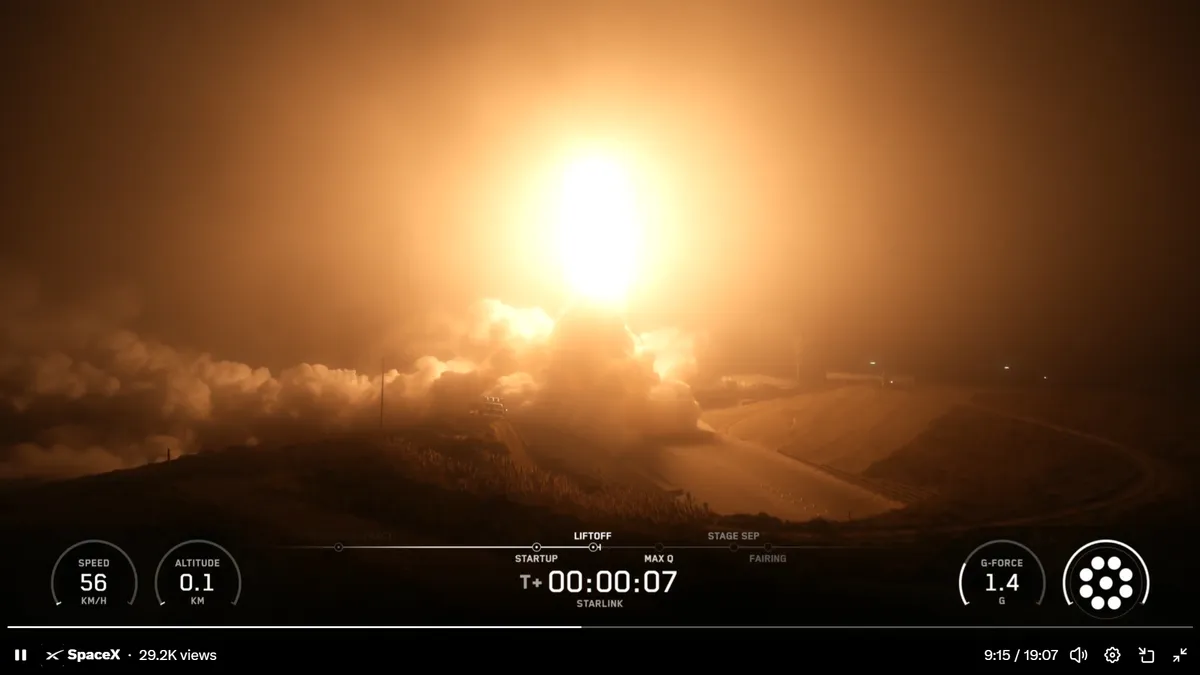
The Falcon 9's upper stage, meanwhile, continued powering its way skyward. It's scheduled to deploy the 27 satellites in low Earth orbit 62 minutes after launch.
There are already quite a few of them up there. The Starlink network — by far the largest satellite constellation ever assembled — currently consists of more than 11,000 active spacecraft.
USSF-62 | OneWeb Launch 20 | NROL-145 | 20 Starlink missions
The Falcon 9 has now flown 101 times so far in 2026, and 78 of those launches have been Starlink missions. The workhorse rocket is on pace to fly about 155 times this year — quite a number, but a bit shy of its record of 165, which was set in 2025.
Falcon 9 Starlink missions have historically flown out of both Vandenberg and Florida's Space Coast (from NASA's Kennedy Space Center and Cape Canaveral Space Force Station, which are next door to each other). But Vandenberg will be the only Falcon 9 Starlink site from now on: SpaceX announced yesterday (Aug. 25) that it's pausing Florida Starlink launches until they can be performed by the company's Starship megarocket, which remains in development.