





Rocket Lab will launch its 100th space mission early Saturday morning (Nov. 14), and you can watch the milestone liftoff live.
An Electron rocket topped with a private Japanese Earth-observing satellite is scheduled to launch from Rocket Lab's New Zealand site on Saturday, during a window that opens at 12:30 a.m. EST (0530 GMT; 6:30 p.m. local time).
The mission, which Rocket Lab calls "The Mountain God Rises," will be the 100th to date for the California-based company. You can watch it live via Rocket Lab here, and Space.com will carry the feed if, as expected, it's made available. Coverage will begin about 30 minutes before launch.
Rocket Lab launched for the first time in May 2017, sending the brand-new Electron up on a test flight from New Zealand. That effort failed, but Electron bounced back on its second-ever liftoff, delivering several cubesats to low Earth orbit (LEO) in January 2018.
In the years since, the 59-foot-tall (18 meters) Electron has become one of the most prolific and reliable rockets in the world, carrying small payloads to the final frontier for a variety of customers.
And it's hitting the century mark in record-breaking fashion: No commercially developed rocket has gotten there faster, not even SpaceX's workhorse Falcon 9, according to Rocket Lab founder and CEO Peter Beck.
"It's an unprecedented milestone for a commercial small-lift orbital rocket, and a threshold rarely crossed in modern spaceflight," Beck said on Monday (Nov. 9), during Rocket Lab's third-quarter earnings call with investors. "But what matters most to us and our customers is that we have achieved a 96% reliability rate across 99 launches."
Electron will meet the moment in style on Saturday morning, thanks to some fancy livery.
"Black rocket 🤝 Golden milestone. Electron is all dressed up for launch 100," Rocket Lab said via X on Tuesday (Nov. 10), in a post that shared a photo of the specially painted first stage.
Not all of Rocket Lab's missions have gone orbital, it should be noted: A suborbital variant of Electron known as HASTE, which customers use to test technologies in a hypersonic flight environment, has nine missions under its belt to date.
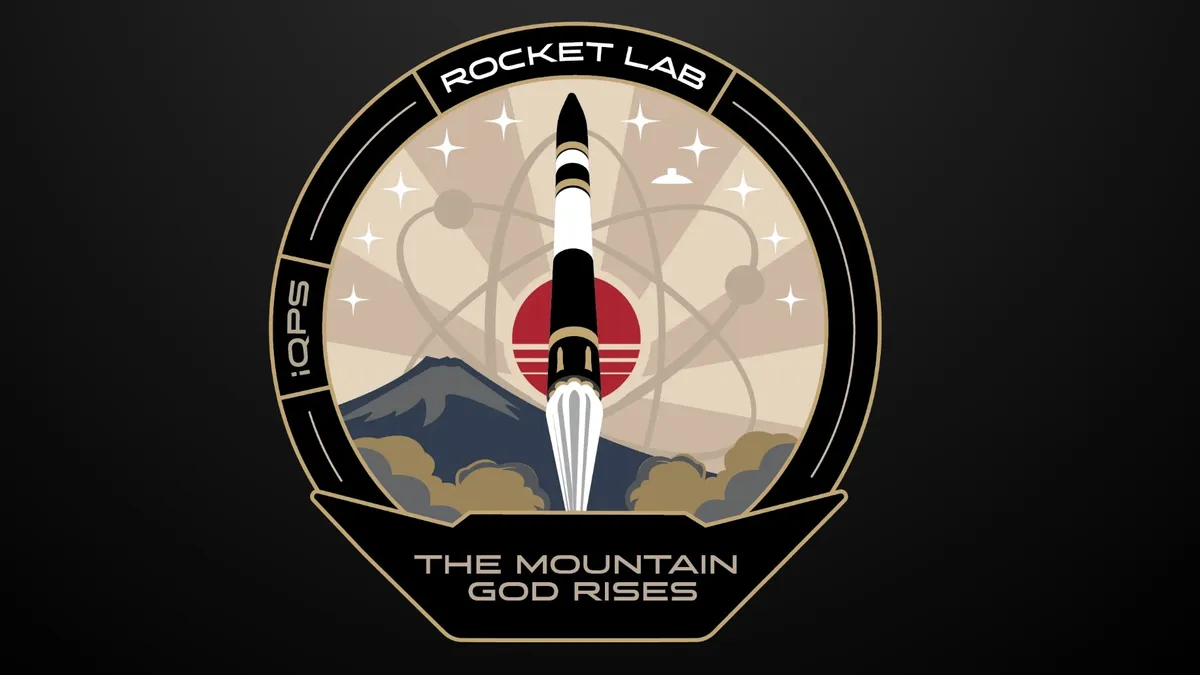
"The Mountain God Rises" will be Rocket Lab's 11th launch to date for the Tokyo-based company iQPS, which is building a constellation of three dozen synthetic aperture radar (SAR) satellites in LEO. If all goes to plan, Electron's upper "kick stage" will deploy a single iQPS spacecraft 357 miles (575 kilometers) above Earth.
SAR satellites can see through cloud cover and image our planet at night as well as during the day, offering key advantages over spacecraft that are optimized to view in optical wavelengths.