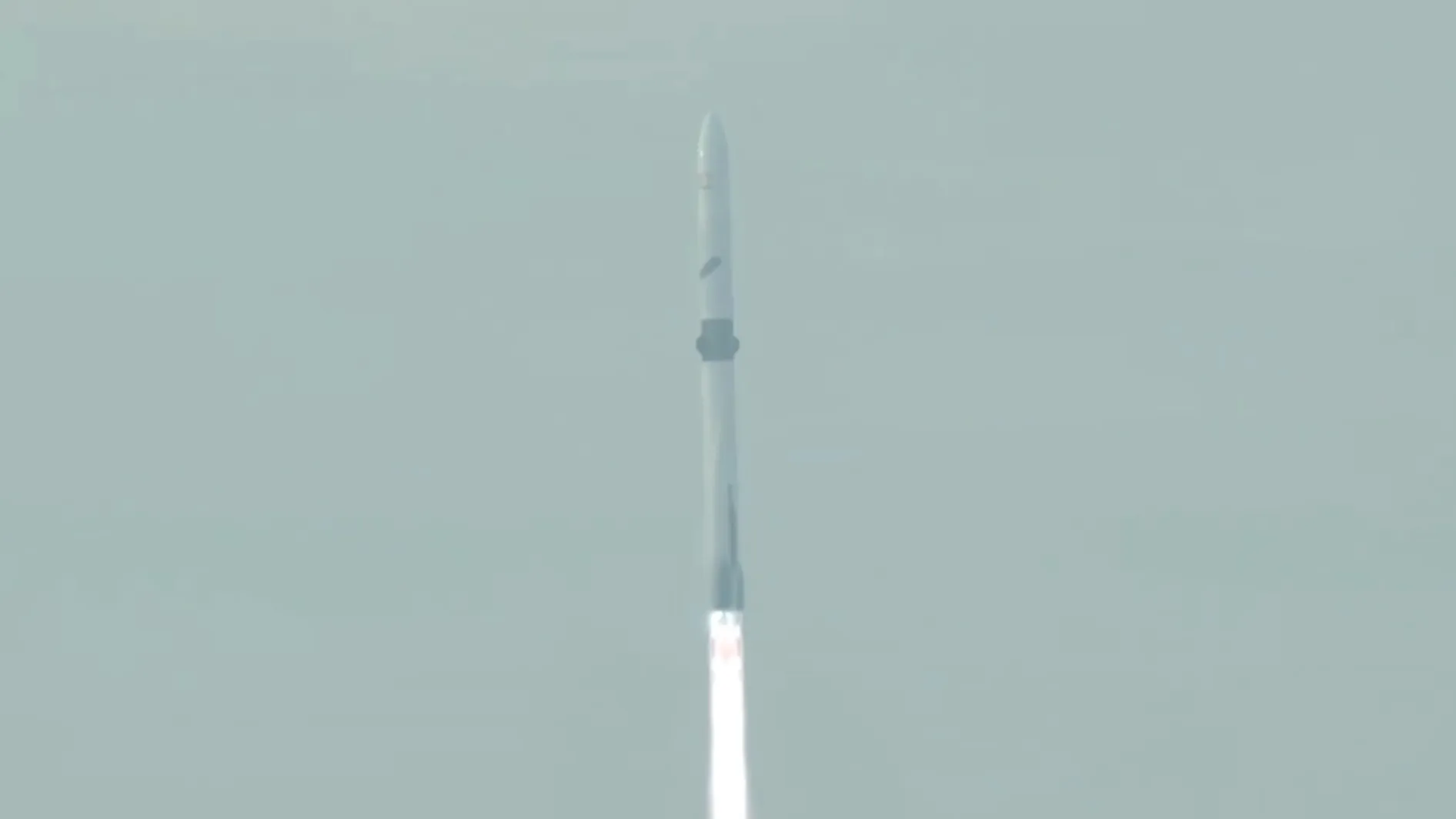
Blue Origin's huge New Glenn rocket has been temporarily grounded.
The U.S. Federal Aviation Administration (FAA) is requiring an investigation into New Glenn's third-ever mission, which launched on Sunday morning (April 19) and resulted in the loss of its payload — the BlueBird 7 internet-beaming satellite.
"The FAA will oversee the Blue Origin-led investigation, be involved in every step of the process, and approve Blue Origin's final report, including any corrective actions," the FAA wrote in an update on Monday (April 20).
Sunday's mission, which Blue Origin called NG-3, lifted off from Cape Canaveral Space Force Station in Florida.
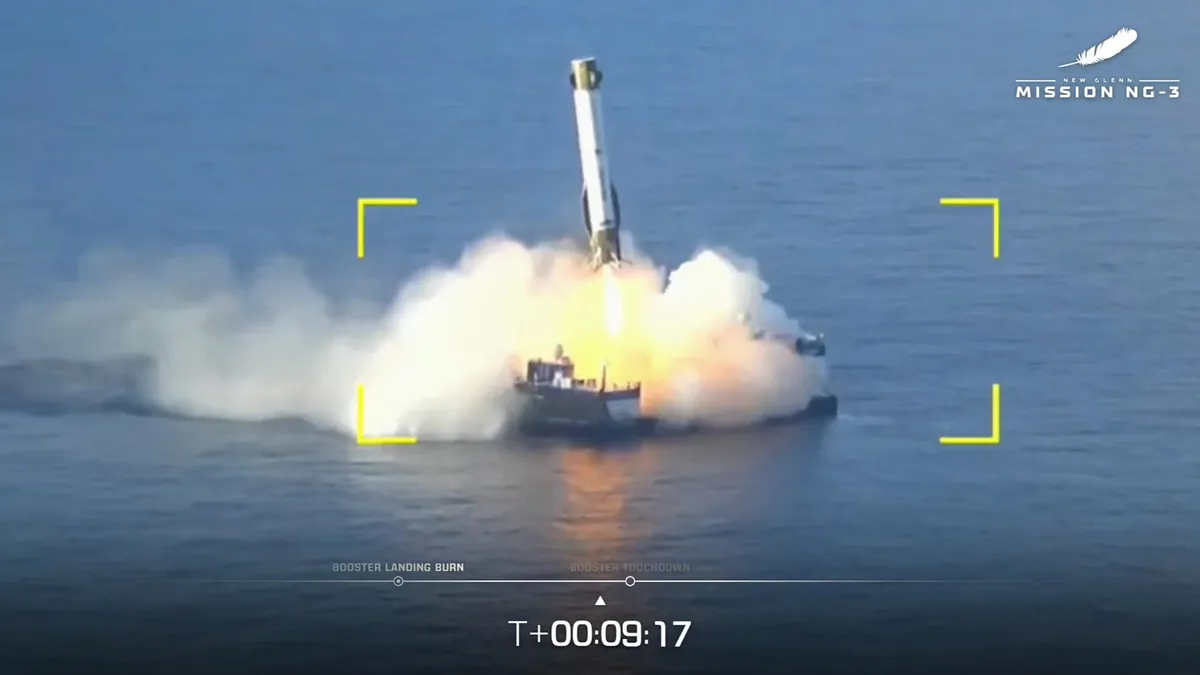
The 322-foot-tall (98 meters) New Glenn performed well at first; its reusable first stage even aced its return to Earth, landing as planned in the Atlantic Ocean atop the Blue Origin droneship "Jacklyn."
But the rocket's upper stage ran into problems while hauling BlueBird 7 to low Earth orbit (LEO). One of the stage's two BE-3U engines didn't produce enough thrust during a key burn, according to Blue Origin CEO Dave Limp, and the satellite was deployed into the wrong spot as a result.
"While the satellite separated from the launch vehicle and powered on, the altitude is too low to sustain operations with its on-board thruster technology and will [be] de-orbited," BlueBird 7's operator, the Texas company AST SpaceMobile, wrote in an update on Sunday. "The cost of the satellite is expected to be recovered under the company's insurance policy."
AST SpaceMobile is building out a constellation of direct-to-cellphone satellites in LEO. BlueBird 7 was the second of the company's "Block 2" spacecraft to lift off, after BlueBird 6. These satellites are huge, featuring antennas that cover 2,400 square feet (223 square m) when deployed.
A lot of eyes will be on this mishap investigation, because a lot is riding on New Glenn's success — and not just for Blue Origin.
For example, later this year, the rocket is supposed to launch the first-ever test flight of the company's Blue Moon spacecraft, one of the two contracted crewed lunar landers for NASA's Artemis program.
"Dave, I have no doubt the team at Blue Origin will get back to the pad and fly again soon — overcoming setbacks only gets us closer to achieving the near-impossible. I’m confident Blue's sustained achievements — like the successful reuse and recovery of the New Glenn first stage we saw this week — will keep us on track for success with the Artemis program," NASA Administrator Jared Isaacman wrote on Tuesday (April 21), in an X post addressed to Limp.
"Thank you, Jared. Learnings from this setback will make us better. We'll be back on the pad soon for AST SpaceMobile, NASA, and all our customers," Limp replied.