


Military officials in the U.S. and other nations have increasingly warned about the potential for conflict in space in the coming years. While many would perceive the current push to militarize space as a concern primarily for modern military thinkers, there is a far deeper — and at times, a surprising — history of warfare technologies developed for use in outer space.
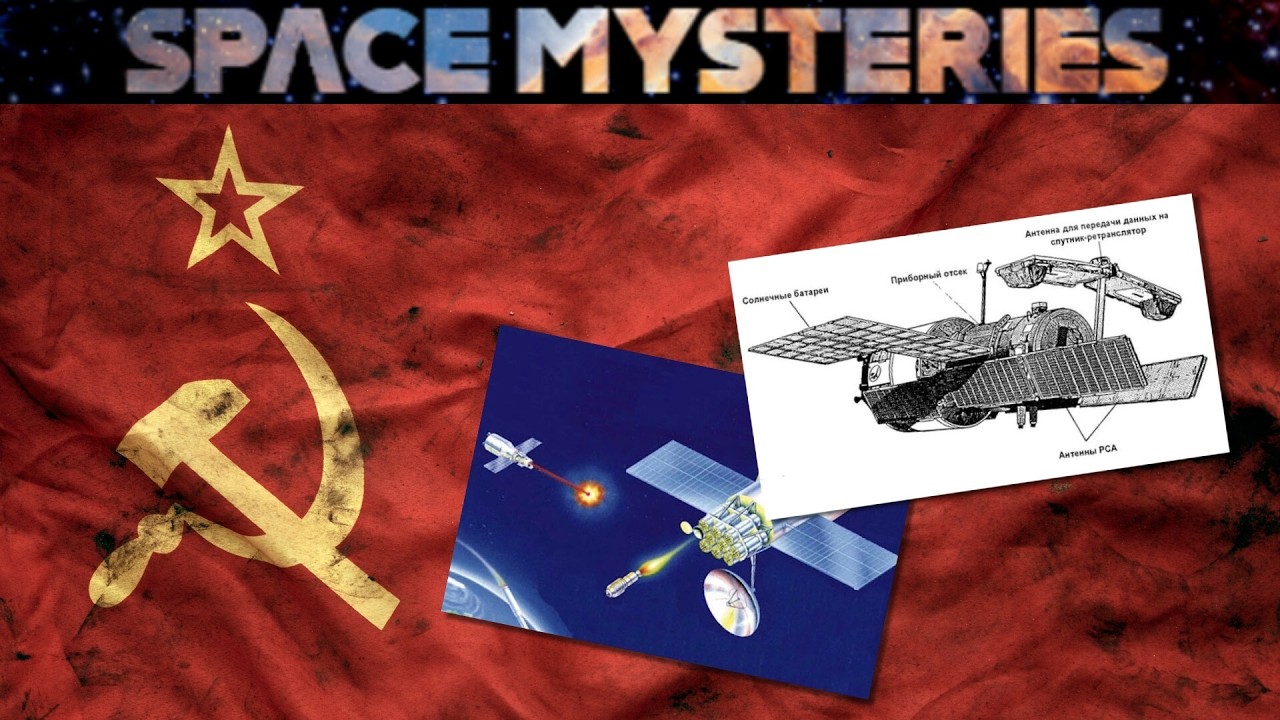
At the height of the Cold War, one particularly unusual early application for space warfare was pursued by the Soviet Union, which involved mounting a rapid-fire cannon aboard a secret military space station. The weapon was reportedly developed for the Soviet-era Almaz military space station program, an ambitious Cold War-era initiative that sought to leverage cutting-edge orbital technologies of the day to enhance Moscow's military reconnaissance capabilities.
At the time, Soviet officials were concerned that the United States was already developing spacecraft that could approach, investigate, and either capture or disable Moscow's sensitive satellites. The natural response to such concerns was to develop defense systems capable of neutralizing such threats — and the result became legendary in some circles as one of the strangest weapons of the Space Race. But was this Soviet "space cannon" ever successfully fired in orbit?
What do we know?
Images of a Cold War oddity come to light
The short answer is yes, according to historian Anatoly Zak, who manages the long-running site Russian Space Web, an online hub for information about orbital pursuits in the USSR.
However, for many years, the appearance of the mysterious orbital cannon remained shrouded in mystery. In an email, Zak told Space that while the existence of this curious weapon of yesteryear had been known for decades, it was not until images were broadcast by the Russian military television program "Voennaya Priemka" that he was able to reassemble the most complete picture of how the weapon actually looked.
"This particular cannon was known since the 1990s, but that propaganda show of the Russian military TV channel showed the hardware from different directions," Zak said.
After examining this rare historical imagery, Zak said it enabled him "to build a detailed 3D reconstruction."
"This is a pretty routine method for historians and I've been doing it for more than two decades," Zak said, and images of his reconstruction, along with details about the cannon and its history, can be seen on his website.
...And after nearly half a century of waiting, finally, a clear visual of the legendary Almaz space cannon (left), along with my circa 2016 virtual recreation. FULL STORY: https://t.co/lmN0BSeWBo https://t.co/o4kfirMC3tFebruary 10, 2021
The secret history of the Soviet Union's "space cannon"
Originally developed under weapons designer Aleksandr Nudelman for the Moscow-based KB Tochmash design bureau, inspiration for the space cannon came from aircraft gun technology designed by Aron Rikhter, builder of the famous Rikhter R-23. This gas-operated revolver automatic cannon was first developed by Rikhter in the 1950s, and adapting the weapon to the unusual demands of orbital combat led to the development of what is sometimes identified as the R-23M Kartech.
Details about the precise specifications of this orbital variant of Rikhter's famous weapon vary. In some historical accounts, the weapon is described as a modified 23-millimeter cannon, although according to Zak, it was a 14.5-millimeter cannon developed by Nudelman and his team. Estimates for its firing rate vary anywhere from 950 to several thousand rounds per minute, with some sources claiming the weapon could fire shells at a velocity of 1,500 miles per hour.
Engineers who worked with the Almaz project later claimed that during ground tests, Nudelman's orbital version of the famous Rikhter autocannon successfully pierced a metal target (a gasoline canister was reportedly used for this) from a mile away — a clear demonstration of the weapon's capabilities.

Firing an autocannon in orbit
Despite the successful ground tests, taking technology like this to orbit presented unique new problems for the Almaz project team.
As opposed to mounting the weapon on a turret, it was reportedly attached directly to the Almaz station itself. In this way, cosmonauts were able to use an optical sight for aiming, although this also required the entire 20-ton space station to be oriented toward the intended target—in essence, the entire station served as a massive orbital gun mount.
The Almaz program was concealed behind the Soviet Union's more widely known Salyut space station program. Although presented publicly as civilian technologies, some of the Salyut spacecraft were secretly developed and deployed as reconnaissance platforms equipped with state-of-the-art cameras and other intelligence collection utilities. In 1974, it was aboard one of these "civilian" spacecraft — Salyut 3 — that the cannon was carried to orbit.
Based on the available historical information, the weapon is believed to have only been fired in space on one occasion, which took place on Jan. 24, 1975. At this time, Salyut 3's crew had already returned to Earth, and the station was scheduled for deliberate deorbiting within hours of the planned test of the weapon.
One obvious reason for this had been that officials weren't entirely certain what the effects of firing the cannon might be on the spacecraft, such as the weapon's recoil on the station while fired in a microgravity environment. To overcome this, the station's maneuvering thrusters were reportedly fired at the time the weapon was fired in order to overcome problems resulting from recoil.
Here again, accounts differ, although an estimated 20 rounds were fired during the test, either at once or in a series of bursts. Each of the projectiles subsequently entered Earth's atmosphere and is believed to have burned up during reentry.

What remains unknown?
Today, it remains unclear what, if anything, the Soviet engineers learned during these tests. No detailed results of the experiment were ever released — at least not publicly.
Altogether, it seems likely that Soviet officials considered the weapon impractical, and plans for later Soviet space stations reportedly looked at the use of interceptor missiles as their primary means of defense.
Meanwhile, the Soviet military was steadily embracing more efficient orbital technologies: uncrewed reconnaissance satellites. The appeal of using low-cost satellites for reconnaissance won out in the end, and an upgraded version of the Almaz station, which had initially been slated for launch later that decade, never made its way to orbit.
The mystery continues
Arguably, the story represents one of the more unusual chapters in Cold War military experimentation, and while many details remain obscured in the shadows of Cold War-era Soviet history, enough is known today to confirm that the Almaz project's tests represent the only known case where a conventional firearm was deliberately fired in orbit.
