See our amazing collection of stories and features about the increasingly important topic of space weather (aka solar storms).
Related Topics: Solar Eclipse, Aurora Borealis
Latest about space weather

The dazzling show comes as aurora season gets underway — and the sun's turbulent declining phase could mean we're in for a good one.

A storm sent a surge of current through telegraph wires that caused a train on one of Britain's early railway lines to be delayed by 16 minutes.

NASA's Advanced Composition Explorer, or ACE satellite, studies energetic particles traveling through space.

NASA's SunRISE mission has been assigned a new launch vehicle: It will now be delivered to orbit by a SpaceX Falcon Heavy rocket rather than a United Launch Alliance Vulcan Centaur.

Multiple CMEs are heading toward Earth, with G1-G2 geomagnetic storm conditions possible as the holiday weekend begins.

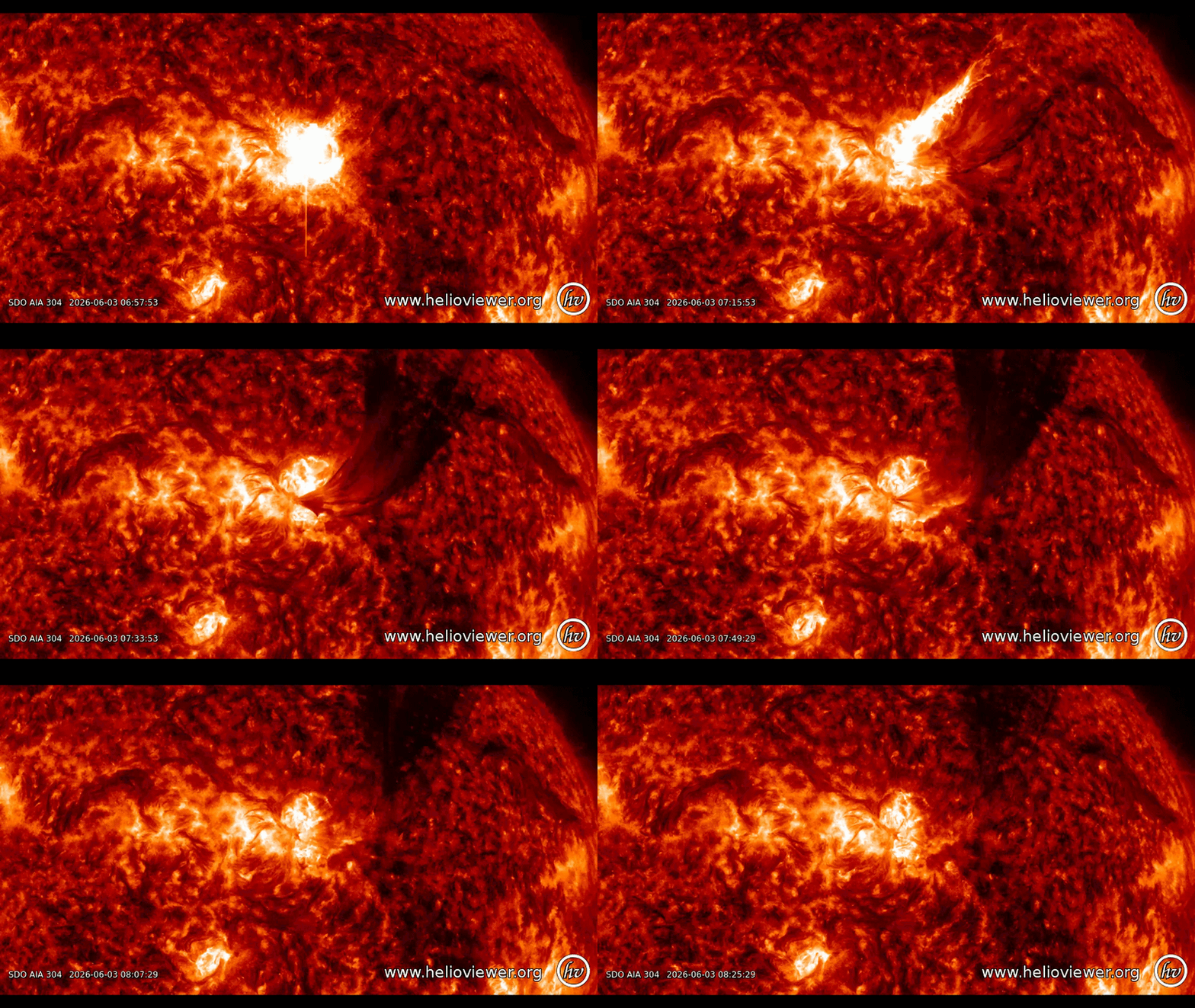
The X1.1 eruption briefly disrupted radio communications across the daylight side of Earth, while forecasters now expect the accompanying CME to reach Earth on July 3.

Scientists have proposed a spacecraft-based system to actively strengthen Earth's magnetic shield and reduce the impact of powerful solar storms.

A coronal mass ejection is currently racing toward Earth and could trigger G2 to G3 geomagnetic storm conditions on June 8, potentially boosting aurora displays across northern latitudes.