





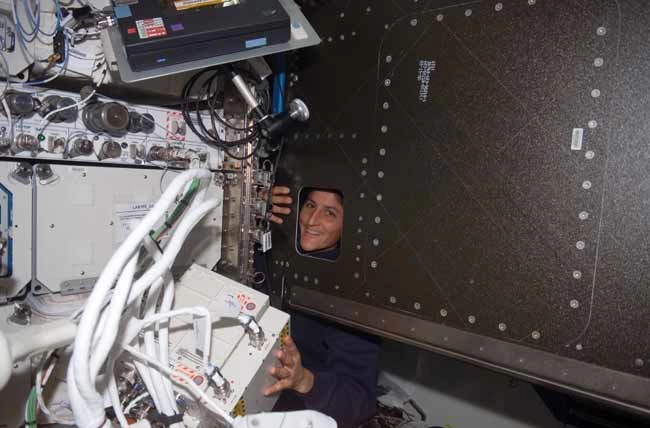
HOUSTON --Astronauts aboard the International Space Station (ISS) will test a new U.S.oxygen generator that will prove vital for the outpost?s expansion to largercrews.
Working intandem with flight controllers on Earth, the station?s three-astronaut Expedition15 crew is expected to activate the outpost?s U.S.-built OxygenGeneration System for the first time since its delivery last year.
?We expectto generate, for the first time, U.S. oxygen from water,? said NASA?s deputyISS program manager Kirk Shireman during a Tuesday briefing.
Shuttleastronauts delivered theU.S. oxygen generator to the ISS in July 2006, but the new hardware had towait until another mission?s crew - last month?s STS-117 astronauts aboardAtlantis - installed and opened a newhydrogen vent valve outside the station?s Destiny laboratory. A softwareupgrade last week primed the oxygen generator for action, thought it won?t berequired for full use until the station ramps up to its full six-person crew in2009.
?This isjust a test,? Shireman said. ?If things go well, we expect to generate about 40hours of oxygen.?
Today?scheck is slated to begin in mid-afternoon, around 3:00 p.m. EDT (1900 GMT),NASA said.
The 1,500-pound(680-kilogram) U.S. oxygen generator uses electrolysis to separate water intobreathable oxygen and waste hydrogen, which is dumped overboard via a vent inNASA?s Destiny laboratory aboard the ISS. A similar Russian machine, dubbedElektron, performs the same function aboard the station?s Russian-built segmentand has served as the orbital laboratory?s primary oxygen generator to date.
The currentElektron and oxygen stores aboard docked Russian cargo ships are sufficient tomeet the life support needs of current crews, but future ISS expeditionastronauts will find the U.S.-built oxygen generator vital for normaloperations, NASA said.
?It?s anadditional capability and an additional redundancy level,? Shireman said of theU.S. system right now. ?[But] it?s a major technology that?s required toproduce oxygen to support the six-person crew, and it?s a big step for us.?
- Air Apparent: New Oxygen Systems for the ISS
- SPACE.com Video Interplayer: Space Station Power Up with STS-117
- Complete ISS Expedition Coverage
