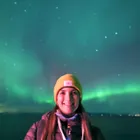
Good news, aurora chasers — round two could be on the way tonight!
If you missed last night's severe G4 geomagnetic storm last night or just can’t get enough of the northern lights, stay alert: geomagnetic storm conditions are expected to continue, so keep your eyes on the skies and your aurora alerts switched on.
Active geomagnetic storm conditions may persist into early June 2, according to NOAA's Space Weather Prediction Center, as Earth's magnetic field reverberates from the coronal mass ejection (CME) impact in the early hours of June 1. It is also being buffeted by high-speed solar wind from coronal holes and another CME could strike late on June 2.
The speedy solar storm that struck Earth on June 1 was travelling around 1,938 km/s or 4.3 million mph. It's complex and made up of material from multiple CMEs, so we could continue to feel the effects of this impact for another 24 hours.
"We just entered what looks to be the "core" of the first structure," space weather physicist Tamitha Skov told Space.com. "Considering this storm is comprised of material from multiple CMEs all compressed into one composite structure, there is a chance we will see more than one "core" signature. So, there is a chance this could still give us a waning show 24 hours from now."
And that's not all! We have another, albeit smaller, CME heading toward Earth, which could stir up geomagnetic activity again around June 2 or June 3.
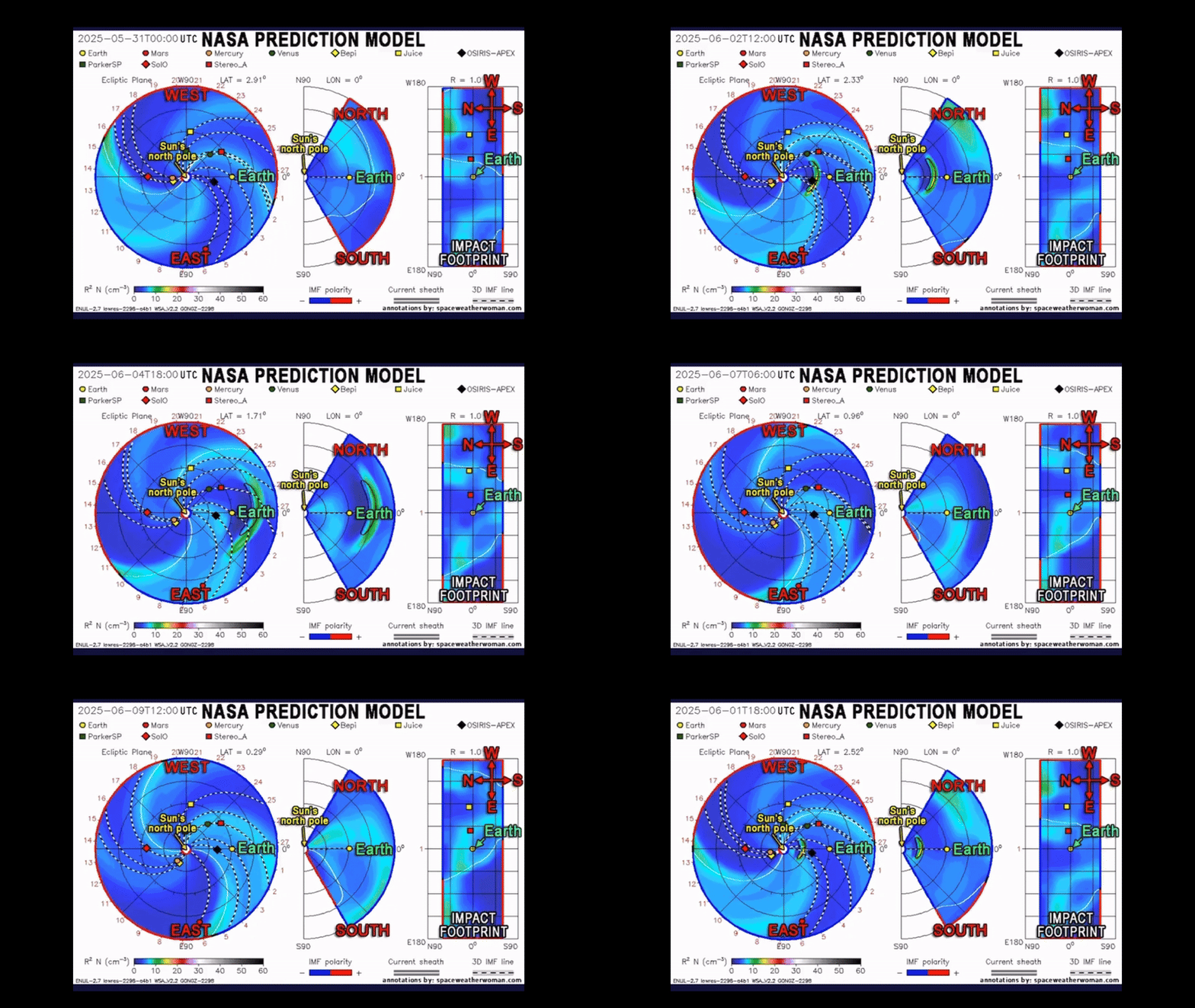
"This storm is expected to arrive late on June 2, so we could see storming through June 3 UTC time," Skov told Space.com. "That being said, expect the aurora chances to be weaker than they are now. Likely, we will only be at a G1-G2 level storm by midday June 3."
If G2 levels are reached, we could see auroras stretch as far south as New York and Idaho (typically 55° geomagnetic lat.)
How do CMEs cause geomagnetic storms and auroras?
CMEs carry electrically charged atoms, known as ions. When these ions collide with Earth's magnetosphere, they can trigger geomagnetic storms — major disturbances in Earth's magnetosphere. During such storms, the ions interact with gases in Earth's atmosphere, releasing energy in the form of light. This light is observed as the northern lights, or aurora borealis, in the Northern Hemisphere, and the southern lights, or aurora australis, in the Southern Hemisphere. Geomagnetic storms are classified using a G-scale that measures their intensity, ranging from G1 for minor storms to G5, the most extreme.
Editor's note: If you snap a great picture of the northern or southern lights and would like to share it with Space.com's readers, send your photo(s), comments, and your name and location to spacephotos@space.com.