President Trump's big NASA budget cuts appear to be dead on arrival, again.
Earlier this month, the White House released its fiscal year (FY) 2027 federal budget request, which slashes NASA's total budget by 23% and its science funding by 47%.
Trump proposed the same basic reductions for FY 2026 but was denied by Congress, which has the power of the purse in Washington. And it looks like history will repeat itself this year.
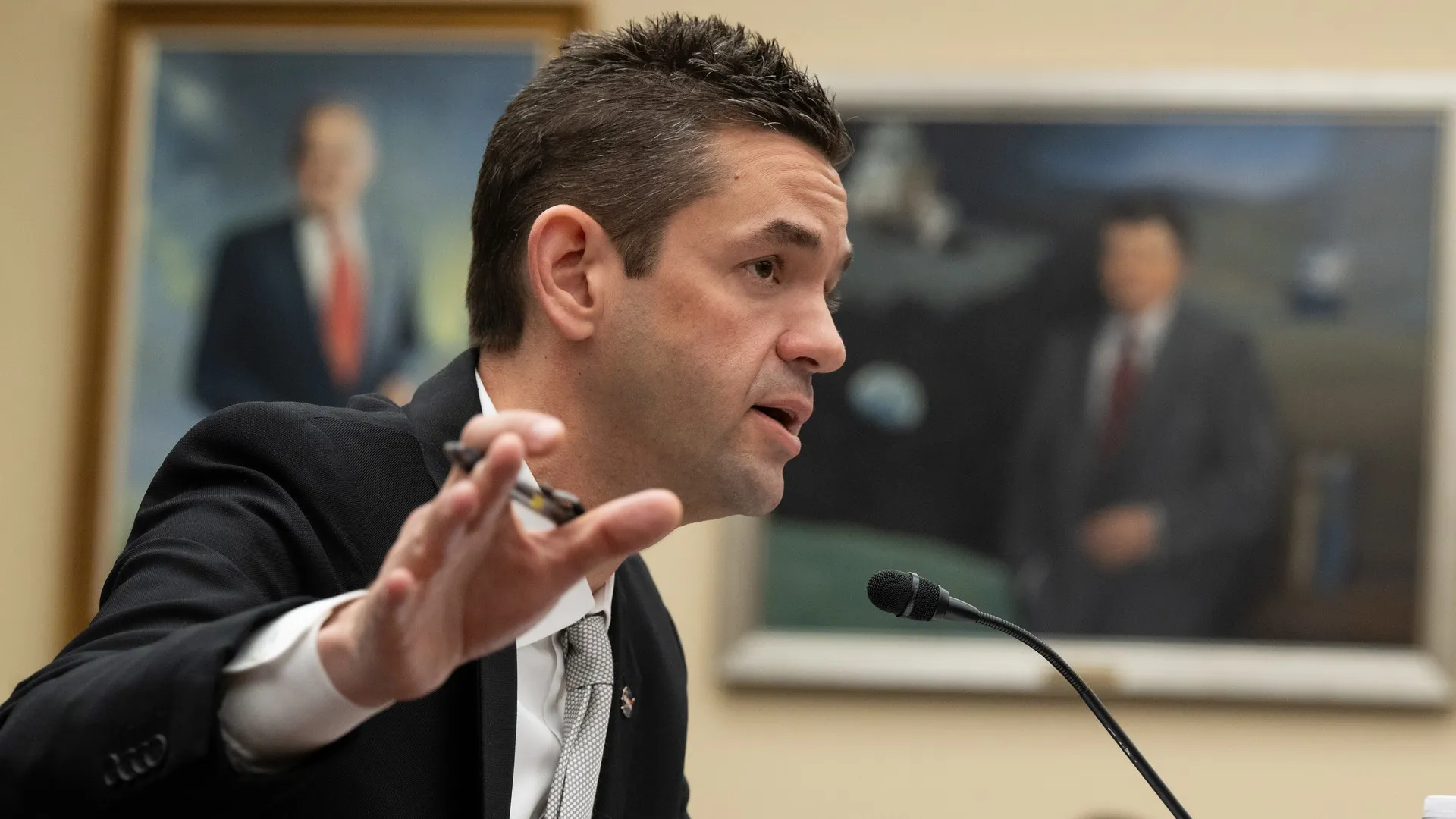
The U.S. House of Representatives' Committee on Science, Space, and Technology held a hearing about the NASA budget on Wednesday (April 22) that featured agency chief Jared Isaacman as its star witness.
During the event, representatives from both sides of the aisle voiced concerns about the proposed cuts and signaled an intent to reject them again.
"Both the president and Congress have provided explicit direction for NASA to undertake a range of activities, from exploration and science to aeronautics research. We must ensure that NASA is funded at a level that allows it to pursue those missions," Rep. Brian Babin (R-Texas), who chairs the committee, said during the hearing.
"I simply do not believe that this budget proposal is capable of supporting what President Trump himself has directed the agency to accomplish over the course of his two terms, nor what Congress has directed by law," he added.
Babin stressed that he's a fiscal conservative and is worried about the national debt (which currently stands at nearly $39 trillion). But pinching pennies on NASA doesn't make sense, he argued, given that the United States is facing increased competition in the final frontier from China.
China aims to put astronauts on the moon by 2030, Babin pointed out, and operates a space station in low Earth orbit that will likely keep running long after the International Space Station is retired. The nation is also launching increasingly complex and ambitious robotic science missions.
"We must ask whether this proposed budget maintains United States civil and commercial space dominance, or if we risk ceding that leadership to our adversary, China," Babin said. "Only through Congress, our commercial space sector and the administration working together can we ensure continued U.S. leadership in space."
The committee's ranking member, Rep. Zoe Lofgren (D-California), also voiced strong objections.
"OMB, once again, tries to argue that NASA and the United States will continue to lead in space and Earth science, human exploration, aeronautics and space technology, while all but exploration would see draconian cuts," Lofgren said, referring to the White House's Office of Management and Budget.
"Cuts totaling 5.6 billion, or 23% from the fiscal year 2026 enacted level, [are] not wise. These reductions do not exactly send a 'welcome home' message to the Artemis 2 crew or to the NASA workforce," she added. "Slashing space and Earth science, aeronautics and space technology while our society increasingly depends on space assets and services to function — that's just not a winning strategy."
Lofgren does not expect Congress to get behind the president's plan.
“I fully expect, as the chairman has mentioned, Congress to reject this request, as we did in fiscal year 2026," she said. "Mr. Chairman, as you have said yourself, you are a conservative Republican from Texas. I'm not, but we see this the same way, and I'm hopeful that we can work together and make sure that our country remains in the lead when it comes to space."
Isaacman defended the proposed cuts, which isn't surprising; he serves at the pleasure of the president and is a representative of his administration.
The NASA chief, who was confirmed on Dec. 17, argued that the agency can do more with less, stressing that many of its high-profile missions have gone significantly over budget in recent years.
For example, Isaacman said, the Dragonfly drone mission to Saturn's huge moon Titan featured an original development cost of $850 million. The price tag for the flagship mission, which is expected to launch in 2028, is now about $3.4 billion. He also cited the recently canceled Mars Sample Return campaign, whose estimated costs ballooned from $4 billion to roughly $10 billion.
Isaacman also repeatedly said that he feels a strong responsibility to spend American taxpayer money wisely, even in times of great competition in the final frontier.
"American exceptionalism is being challenged in the high ground of space," he said during Wednesday's hearing. "To win, we cannot establish programs that are designed to be too big to fail but at the same time too costly to succeed. Nor should it be throwing more money at the problem, but rather fixing the problems and concentrating resources on the mission and delivering outcomes."
Isaacman argued that the White House's proposed 2027 budget, along with funding delivered via the Working Families Tax Cuts Act of 2025, should be sufficient. The money has "focused the agency on these priorities: return to the moon, increase launch cadence and land American astronauts on the [lunar] surface by 2028," he said.
The NASA chief also said that cuts to fields such as Earth science won't be felt too deeply going forward, because private industry is already picking up the slack via fleets of increasingly competent satellites. And he defended the planned closure of NASA's Office of STEM Engagement, which many members of the House committee lamented.
"Inherent in everything we do at NASA is inspiration," Isaacman said. "It does not come necessarily from pamphlets or flyers, but from missions like Artemis landing astronauts on the moon, X planes and breathtaking images from space telescopes and rovers — moments that inspire children to dress up as astronauts for Halloween and grow up to contribute to humankind's greatest adventure."
Lofgren said that, last year, NASA begin implementing the White House's budget request before it was enacted by Congress. She cited the agency's Electrified Powertrain Flight Demonstration project (EPFD), saying that its manager sent out a cancelation email on May 30, 2025 — the same day that Trump's full 2026 budget request was released.
"You didn't make this decision, and I won't ask you to defend the decisions of your predecessors or discuss them," Lofgren said to Isaacman during the hearing. "But I want to make sure that as you move forward in this agency, that you will adhere to the law — what Congress has enacted. Adhering to the proposal is not what the law requires; the law requires that NASA adhere to what Congress passes."
Isaacman agreed. "Of course, we will always follow the law at NASA," he said.
The NASA chief added that he looked into the EPFD email situation and found it to be mostly innocent, though "perhaps the project manager used some incorrect wording in the first sentence or two."
It's a longstanding agency practice, he added, to prioritize resources based on the lowest amount of funding that the agency may get — from the presidential budget request, or the House and Senate counters to that request.
"The head of the aeronautics research directorate made the call on this one [EPFD} that, based on a prioritization of resources, [he or she] did not feel this was a program that should continue going forward," Isaacman said. "Of course, after FY 26 appropriations, it was resumed."