




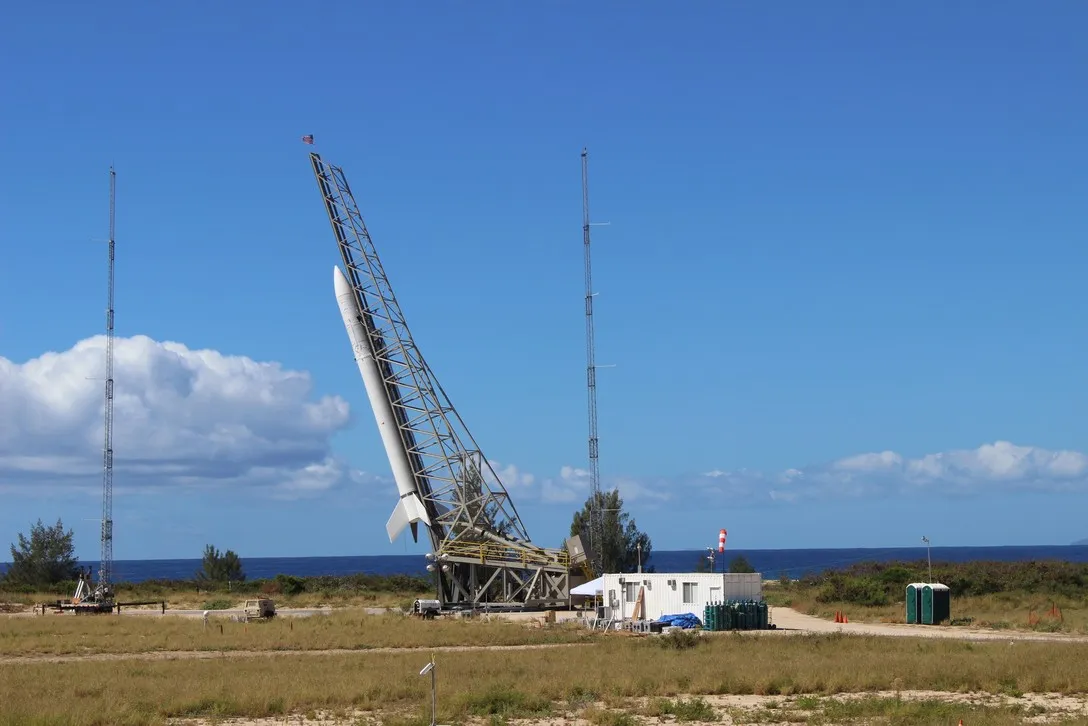
On Nov. 4, 2015, the United States Air Force planned to launch an experimental rocket for small satellites from the Pacific Missile Range Facility off Barking Sands, Kauai, Hawaii. The launch didn't according to plan.
For this mission, the Air Force was testing out the Super Strypi rocket. The rocket used a rail to help with the liftoff.
Super Strypi left the ground, but the rocket quickly spun out of control. When it crashed, it destroyed all of the tiny satellites riding aboard the rocket. The cause? Likely a problem with the first stage motor.
The mission lost 13 tiny satellites known as cubesats. Cubesats are a popular option for space missions, because they are small and cheap, and they often operate in swarms. After failing to launch this batch of cubesats, the Super Strypi program never recovered from its failure, and the Air Force never tried launching another one.
Why it mattered
The Super Strypi rocket was a 21st century take on a 1960s rocket. It was designed to be a modern version of the three-stage Strypi sounding rocket used for for reentry vehicle and anti-missile target tests. Its three stages, powered by Aerojet Rocketdyne solid rocket motors, was designed to reach orbit, rather than suborbital trajectories common to most sounding rockets.
The U.S. Air Force hoped Super Strypi would be a new tool for quick-response launches based on national security needs. Altogether, it was designed to launch small payloads of up to 300 kilograms into space for a mere $15 million per mission.
The rocket's primary payload was the ORS-4 satellite, short for Operationally Responsive Space 4, which was built for the Air Force by engineers at the University of Hawaii (who nicknamed it HiakaSat). It was designed to capture Earth imagery and monitor the environment over the course of a year.
The 12 other payloads on Super Strypi included eight cubesats for NASA's Edison Demonstration of Smallsat Networks mission, and as well as four others for universities that had been added as secondary payloads.
Since the Super Strypi failure, neither the Air Force or Space Force has opted to use the rocket for a new mission. The Space Force has turned instead to commercial companies for fast-turnaround launch support.
In June of this year, the U.S. Space Force teamed up with Rocket Lab to launch the Victus Haze mission with just 17 hours of notice, a new record to demonstrate short-turnaround launch response.