
Latest articles by Stephanie Pappas

A circular shape on the seafloor visible on Google Earth is raising cries of "UFO," but chances are … it's not aliens.

One of Earth's two mysterious mantle blobs is much higher than the other, raising questions about its impact on Earth's surface.

The Bernardinelli-Bernstein comet is officially the largest ever observed, according to new measurements.

Storms in the U.S. and Uruguay set new records for longest lightning bolt and longest-duration lightning flash.

The International Space Station will plunge into the sea in January 2031, NASA has announced.

A new animation of Earth shows vegetation taking up and releasing carbon in sync with the seasons.

The U.S. government will officially investigate UFOs with a new office based in the Pentagon.

The mysterious presence of mantle materials more than 1,000 miles (1,609 km) from where they originated may be explained by a 'window' 62 miles (100 kilometers) below the Earth's surface.

The artificial intelligence (AI) program DeepMind has gotten closer to proving a math conjecture that's bedeviled mathematicians for decades.

After speeding up during 2020, the Earth's spin had settled down. A negative leap second may still be needed in the next decade.
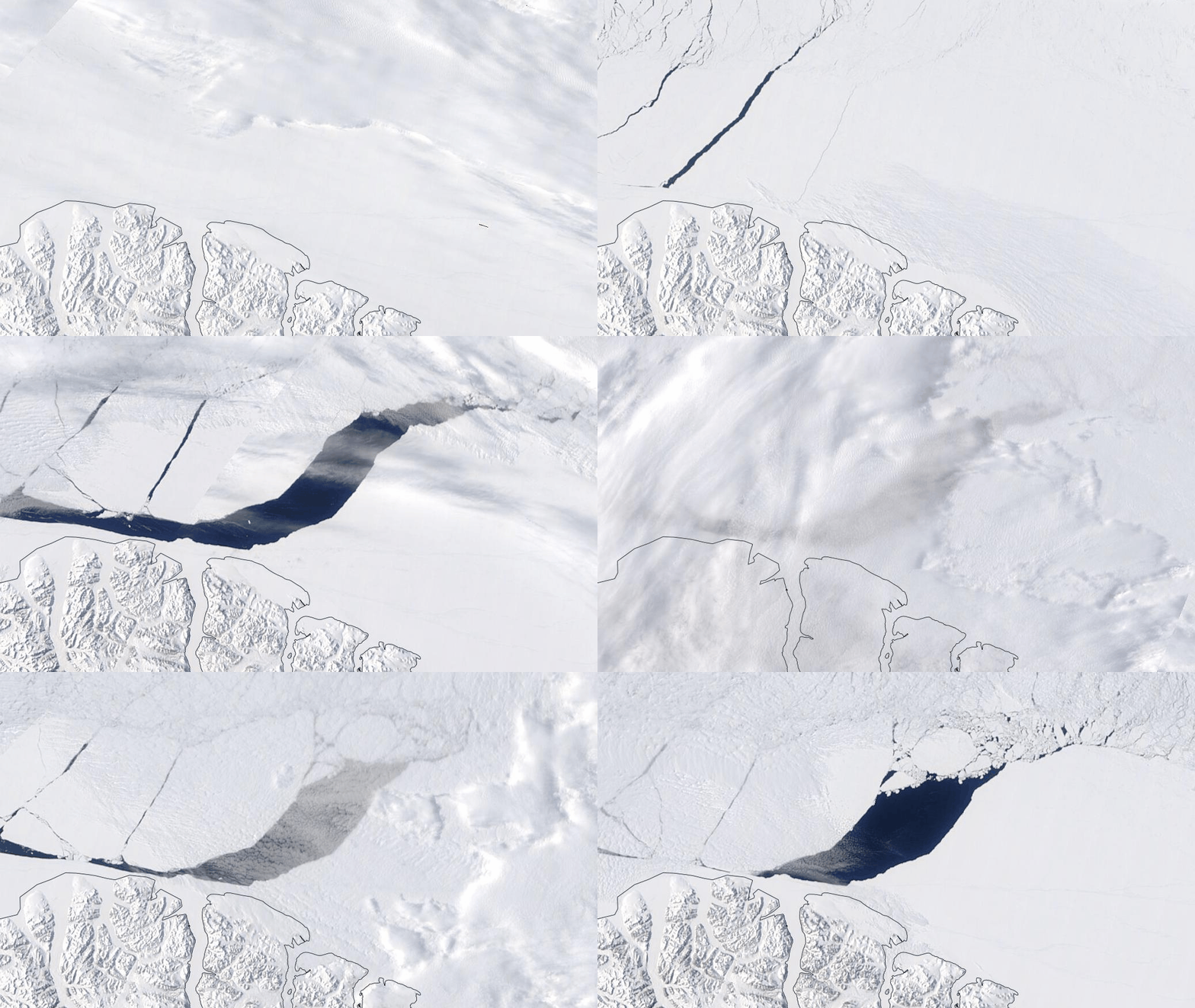
A polynya, or rift, opened in the Arctic's oldest, thickest ice in May 2020, new research finds.

The melting of Earth's polar ice is warping the planet's crust. Here's how that's linked to climate change.

The winning photographs for the 13th annual Astronomy Photographer of the Year awards have been announced, and the sun is the star of the show.

Here's a look at stunning astronomy images from the Royal Observatory Greenwich's Astronomy Photographer of the Year competition.

A six-year search of space beyond the orbit of Neptune has netted 461 newly discovered objects, including four that could shed light on Planet Nine.

A new freely downloadable universe simulation reveals the structure of galaxies and galactic clusters over more than 13 billion years of history.

The Greenland ice sheet, nearly 2 miles thick in places, hides a landscape of canyons, mountains, fjords and gem-like lakes.

A small rock arch in Gale Crater is a whimsical example of the textures of Mars.

A fireball streaked across North Texas last night, leading to several hundred witness reports of a bright flash and sonic boom.

A meteorite found nestled in a horseshoe imprint in England was formed in the early days of the solar system and may contain the building blocks of life.

NASA scientists have mapped the dynamic, ever-shifting lakes beneath Antarctica in more detail than ever before.

The best astronomy photos of 2021 invite the eye upward and outward, bringing stunning views such as auroras above Earth and visions of a stellar nursery

The planet has been losing 33,000 square miles (87,000 square kilometers) of ice coverage each year since 1979.

