





To date, astronomers have discovered nearly 5,000 exoplanets, or planets beyond our solar system. But many people still have a soft spot for one particular planet, Earth.
That might be biased, but still: Given what scientists have learned about exoplanets so far, a combination of several different factors seems to make Earth unique, no many how many worlds humans dream of visiting.
"You hear all the time how Earth-like Mars is, but if you were taken to Mars you wouldn't feel happy there at all," Don Brownlee, an astronomer at the University of Washington, told Space.com in 2008. "It's not Earth-like."
Related: 15 places on Earth that look exoplanetary
Size and location
First off, Earth has established itself in a particularly comfortable neighborhood.
Although our sun experiences an 11-year activity cycle, the star isn't too disruptive to Earth even at its peak activity. That's a marked contrast to, for example, red dwarfs, small stars known for sizeable outbursts of radiation.
Earth is a cozy distance from the sun as well, orbiting at an average of 92,955,807 miles (149,597,870 kilometers) away. The pairing of planet and star also allows Earth to retain liquid water on its surface.

"A planet much farther in would receive too much energy from the sun, and a planet too far out would quickly freeze," Diana Valencia, a planetary scientist now at the University of Toronto Scarborough in Canada, told Space.com in 2008. In addition, Earth's size lets it hold onto our precious atmosphere.
Friendly neighbors
Earth is also shaped by its partnership with the moon, which is relatively large compared to Earth.
Earth's moon stabilizes our planet's rotation, preventing drastic movements of the poles that would cause massive changes in climate. The moon also shapes conditions on the surface by creating the ocean's tides.
Jupiter is also a key player, despite its vast distance from Earth. Because of its huge mass, Jupiter acts as a sort of celestial vacuum cleaning up the debris that clutters the solar system — rocks as small as cars and as huge as moons that would dramatically change Earth's surface if they impacted.
(The Mars-size object that scientists believe collided with the early Earth to form our planet and the moon would have snuck past Jupiter, of course.)
A watery world
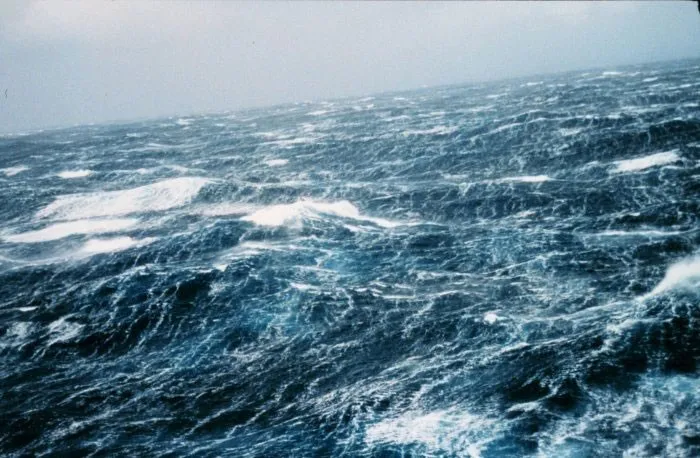
Perhaps the most strikingly unique feature of Earth is its vast oceans, which cover 70% of the planet's surface. Earth is the only world in our solar system with liquid water at its surface today.
Scientists believe that Mars and Venus may have long ago had oceans, but these are long gone. And while scientists have found signs of water ice on worlds from Mercury to large asteroids to Saturn's strange moon Titan, they have so far struggled to find its liquid form.
Plate tectonics
Intriguingly, water is tied to another unique feature of Earth, its system of plate tectonics, the slip-sliding movements of Earth's crust that are thought to have shaped the planet's towering mountain ranges and plummeting ocean depths.
Many scientists have argued water enables plate tectonics to happen. "Water is what lubricates plate tectonics, which is what leads to the extreme difference between continents and seafloors, the large amount of earthquakes and volcanoes, fresh mountain-building," Mike Brown, a planetary scientist at Caltech, told Space.com in 2008.
Meanwhile, plate tectonics keep the planet's temperature regulated, remaining in temperature ranges at which liquid water can endure.
Habitability and beauty

From the liquid oceans to the steady spin, all these features combine to make Earth unique in one particularly important way: Earth is the only world known to host living beings. Examining how that life is possible isn't just glorying in our luck to share the planet with everything from amoebas to elephants and from oaks to zebrafish.
Scientists also believe that understanding what's unique about Earth is crucial for understanding what other planets might be like. After all, even with all the spacecraft humans have sent out to explore our neighboring worlds, Earth remains the only one with which we have first-hand knowledge.
That Earth hosts intelligent life — and life capable of studying the galaxy around us — makes it doubly unique. Gregory Laughlin, an astrophysicist and planet hunter now at Yale University, told Space.com in 2008 that he believes these achievements too should be credited to our planet.
"During the last half century, the planet Earth has fashioned together tiny pieces of the metal in its crust, and has flung these delicately constructed objects to all of the other planets in the solar system," Laughlin said. "From our anthropocentric viewpoint, we naturally separate ourselves from the planet that we live on, but if one adopts the point of view of an external observer, it is the 'planet' (taken as a whole) that has done these remarkable things."
Related: 10 Earth impact craters you must see
Different worlds
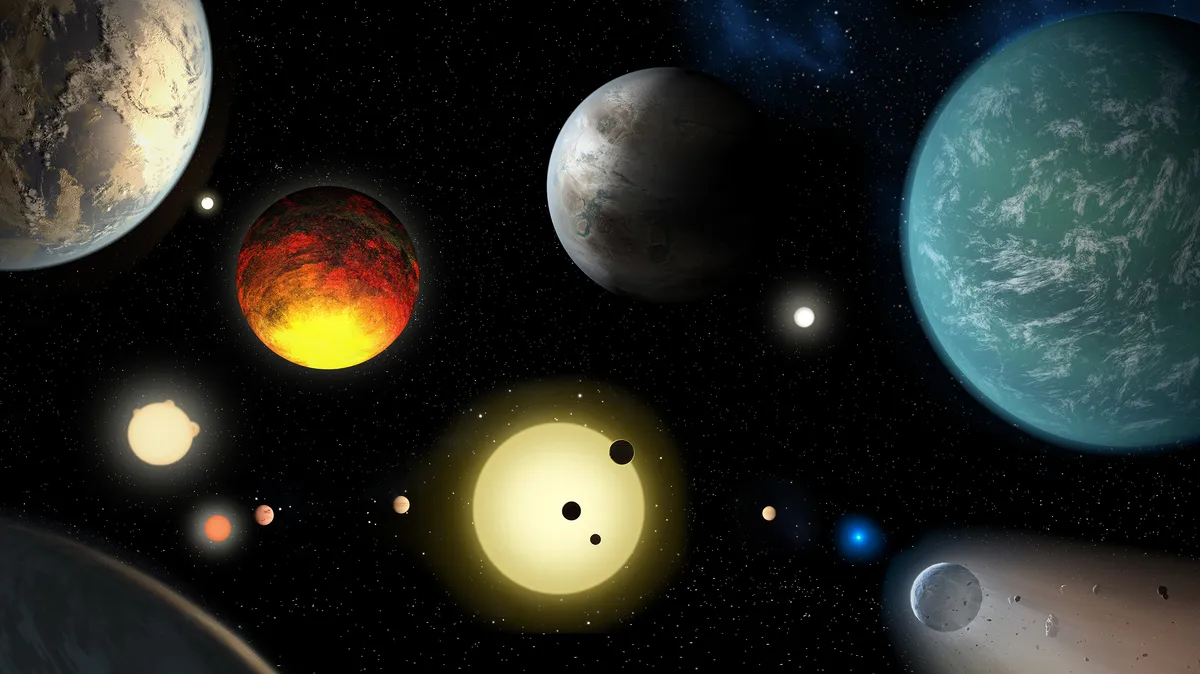
So far, we haven't seen any planet outside the solar system that looks quite like Earth. Scientists have discovered nearly 5,000 exoplanets to date, and while they can know only very limited information about each of these worlds, nothing matches Earth's unique set of characteristics.
Instead, scientists have discovered a treasure trove of planets each unique in their own way: hot gas giants zipping around their stars in just hours, planets where one side is eternally hot enough to vaporize iron, planets with no star at all.
As our technology improves, many planet hunters hope to find Earth's twin. The search has led scientists to debate whether Earth is really as unique as we think it is. Many scientists believe that Earth's most celebrated trait, life, may well exist on some of those countless other planets out there, if only astronomers can develop the tools to see it.
"Certainly there will be other planets that support life," he said. "I think life is actually quite common. I think we're going to find there are literally billions of them in the galaxy."
Additional resources
- Visit NASA's hub for understanding Earth as a planet.
- Explore NASA's kid-friendly resources for learning about Earth.
- Browse NASA's hub for understanding exoplanets.
