
• TechMediaNetwork
  • LiveScience
  • SPACE.com
  • Newsarama
  • TopTenREVIEWS
advertisement


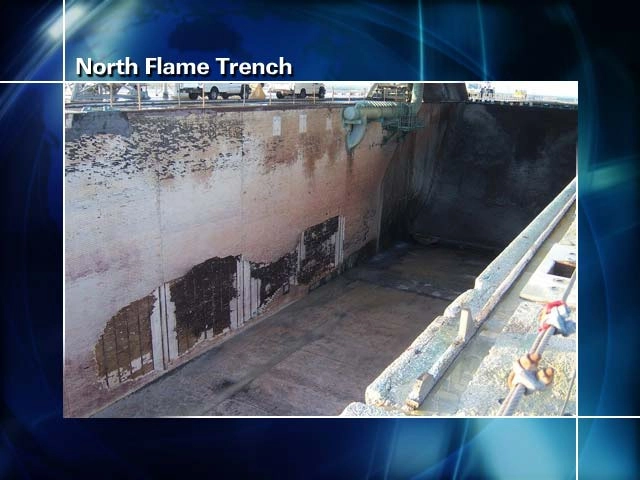
This image, taken after the shuttle Discovery’s May 31, 2008 launch from Pad 39A at the Kennedy Space Center, shows the extend of damage and lost wall material caused during the liftoff. Credit: NASA


Debris from NASA's Pad 39A launch site lies strewn near the pad’s perimeter fence after the shuttle Discovery’s May 31, 2008 launch. Credit: NASA


This image shows launch pad debris blown into nearby waters as the shuttle Discovery lifted off from Pad 39A at NASA's Kennedy Space Center on May 31, 2008. Credit: Ben Cooper


NASA's space shuttle Discovery launches into space carrying Japan's massive Kibo lab module for the International Space Station on May 31, 2008 at 5:02:12 p.m. EDT (2102:12 GMT) from Pad 39A at the Kennedy Space Center. Credit: SPACE.com/Roger Guillemette.
NASA Set for Space Shuttle Landing, Launch Pad Fix
NASA Eyes Launch Pad Damage for Next Shuttle Flight
Shuttle's Landing Success Sets Stage for Hubble Mission
Final Hubble Shuttle Mission to Launch Oct. 8
NEW VIDEO: Liftoff! Shuttle Discovery Rockets to Space
Discovery lifts off with Japan's Kibo ("Hope") lab for the ISS on the STS-124 mission. Credit: NASA
VIDEO: Shuttle Discovery's Space Station Victory Lap
Pilot Kenneth Ham has the stick as Discovery completes its fly around of the ISS after undocking. Credit: NASA

Engineers Sure Repairs Will Not Delay Shuttle
By Patrick Peterson
FLORIDA TODAY
posted: 17 June 2008
10:34 a.m. ET

NASA engineers are guaranteeing that damage to the flame trench will be fixed before the August rollout of Atlantis for an early October launch to repair the Hubble Space Telescope.

"We'll be fixed and ready to go by that point," assistant launch director Ed Mango said.

After Discovery's May 31 launch, NASA engineers found that some 5,300 bricks had been blown out of a wall in the flame trench, traveling as far as 1,800 feet to a perimeter fence and beyond.

Bits of asbestos filler material also were found in the debris.

Technicians have done tap testing to find loose bricks and have drilled two-inch test holes into several bricks to determine whether they will hold during the next launch.

NASA favors fixing the gash with a spray-on heat resistant material. Replacing the nearly 50-year-old bricks would be difficult.

"They're not readily available," said structural engineer Perry Becker, who is in charge of NASA's investigation and repair plan.

Becker said the concrete wall of the flame trench is not damaged, but it must be protected from the shuttle's 6 million pounds of thrust.

"The bricks are there to protect the concrete wall behind them, so if you don't have any bricks, eventually it's going to be eroding the concrete behind it," he said.

A repair plan will be presented for approval by the end of the month.

Becker said the three-foot concrete wall behind the bricks is solid and the Apollo-era launch pad is structurally sound.

Published under license from FLORIDA TODAY. Copyright © 2001 FLORIDA TODAY. No portion of this material may be reproduced in any way without the written consent of FLORIDA TODAY.


New Starry Night Pro Plus Version 6
$249.95
Explore More


Site Map | News | SpaceFlight | Science | Technology | Entertainment | SpaceViews | NightSky | Ad Astra | SETI | Hot Topics
Image Galleries | Videos | Reader Favorites | Image of the Day | Amazing Images | Wallpapers | Games | Community | Reviews
about us | FREE Email Newsletter | message boards | register at SPACE.com | contact us | advertise with us | terms & conditions | privacy statement
DMCA/Copyright
  What is This?