





Thedecision of two top NASA managers to voteagainst the upcoming July 1 launch of the space shuttle Discovery pivotedon the risk of losing the orbiter, but not its astronaut crew, the officials saidWednesday.
NASA chiefengineer Christopher Scolese and the agency's top safety officer Bryan O'Connorsaid that, despite their objections, neither official believed the plannedlaunch of Discovery's STS-121mission carried unacceptable risk for the seven astronauts making the spaceshot.
"We feltthat the risk was to the vehicle and not the crew," Scolese told reportersduring a teleconference, adding that NASA's planto keep shuttle astronauts aboard the International Space Station (ISS) iftheir orbiter is damaged and can't return home is vital to crew safety. "Whileit's an undesirable situation to be in, it is certainly something that's viableand provides us with the additional security for this mission."
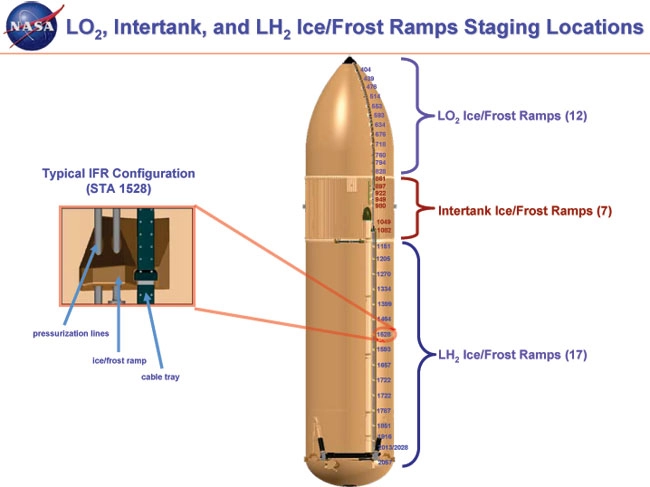
Scolese andO'Connor each cast a negative vote for Discovery's scheduled July 1 liftoffduring a standard FlightReadiness Review meeting that concluded June 17. Their concerns revolved aroundthe hazard posed by foam insulation that could fall from a series of icefrost ramps coating brackets on shuttle's external tank and strike theorbiter. [Click here for NASA chief Michael Griffin's rationale for the STS-121 launch decision.]
Externaltank launch debris has been a serious concern since the 2003 Columbia accident, whendamage from a foam strike breached that orbiter's heat shield during liftoffand led to its destruction, and the loss of seven astronauts, during reentry. Despitemore than two years of work and modifications, largefoam pieces were seen falling from Discovery's fuel tank during its STS-114launch last summer.
Discoveryis now poised to launch its STS-121 crew, commanded by shuttle veteran StevenLindsey, on a 12-day trip to the ISS. The flight will test new fuel tank changes,methods for shuttle inspection and repair, and deliver fresh supplies to theISS.
"The crewis okay with this, as I'm sure you've heard them say,"O'Connor said of the launch decision.
Futurefix and safe haven
NASA shuttleofficials have said the primary reason for not delaying Discovery's STS-121 flightuntil a proper icefrost foam ramp fix is ready is two-fold.
First,Discovery's current fuel tank has already been stripped of a 38-foot (11-meter)foam-covered ramp to reduce the amount of debris that could shake loose duringlaunch. The change constitutes the biggest aerodynamic modification to theshuttle launch system in 25 years, and should be tested alone withoutadditional changes, NASA officials have said.
Adding tothat is the absence of a viable ice frost ramp modification.
"Right nowwe really don't have an ice frost ramp fix," William Gerstenmaier, NASA'sassociate administrator of space operations, said in the teleconference.
A fix couldbe ready by the end of the year, he added.
Meanwhile,the space station is primed to support a nine astronauts - the two members ofExpedition 13 is already onboard - for more than 80 days should it be requiredto provide safe haven for the STS-121 crew, NASA officials said. But it is alsonot a situation shuttle managers want to put Discovery's crew intounnecessarily.
"Puttingnine people on that space station is a real stress," O'Connor said. "It's notlike you've brought them home yet."
But with therisk posed by the ice frost ramps understood and accepted by NASA administrator MichaelGriffin and other top agency officials, O'Connor said he felt his concerns had beenheard.
"I feltthat I was not going to lie down in the flame trench or throw down my badge," O'Connorsaid. "We now go forward and see if we can get this vehicle off the launch padnext week."
- The Great Space Quiz: Space Shuttle Countdown
- NASA Safety Chief Speaks Out on Foam Concerns
- STS-121 Crew to Fly on July 1
- Return to Flight: NASA's Road to STS-121
