Looking Ahead: 2012 Pivotal for Private Spaceflight
After the rise of private spaceflight continued step by step in 2011, the year ahead should be a pivotal one. Several leading space groups will take center stage to showcase their wares.
Not only will their commercial spacecraft be tested, but so will the relationships that NASA has with the new and old guard of the private space industry.
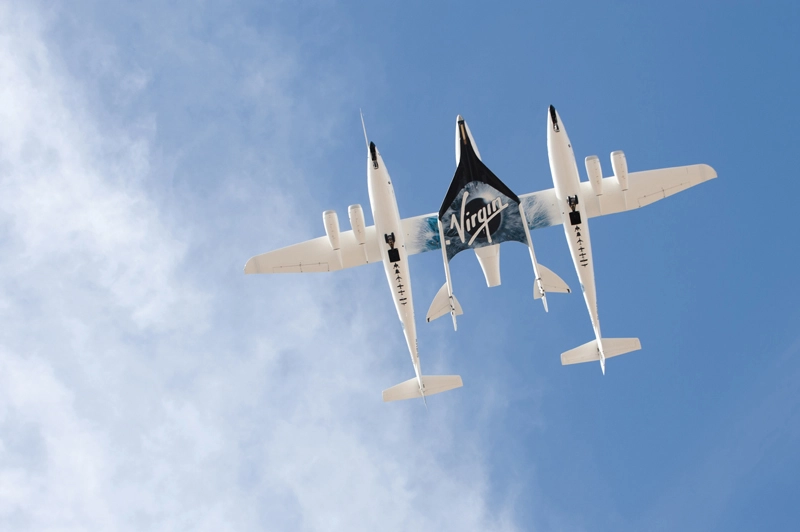
In suborbital space travel, the most visible program in development is Sir Richard Branson's Virgin Galactic enterprise, a pursuit to create the first commercial spaceline.
Virgin Galactic's future is being shaped by Mojave, Calif.-based Scaled Composites, which is engineering the WhiteKnightTwo/SpaceShipTwo space launch system.
Thirteen glide flights of the SpaceShipTwo space plane were completed in 2011 at the Mojave Air and Space Port in California; two of them took place within 24 hours. The quick turnaround time was orchestrated to demonstrate Virgin Galactic's intentions to eventually conduct daily flights to space. [Gallery: SpaceShipTwo Makes First Glide Flight]
In recent ceremonies, the "Virgin Galactic Gateway to Space" was dedicated at New Mexico’s Spaceport America, the nation's first dedicated commercial spaceport. The structure is a combined terminal and hangar facility, which will be able to support up to two WhiteKnightTwo and five SpaceShipTwo vehicles.
In addition, the Gateway will house all of the company's astronaut preparation and celebration facilities, a mission control center, and an area for friends and family to gather.

Power me up, Scotty!
But still to come is a key step: powering SpaceShipTwo via its hybrid rocket motor. That motor will provide the needed oomph to fly space travelers to the edge of space on a suborbital trajectory.
"We expect a big 2012," said George Whitesides, the CEO and president of Virgin Galactic.
The main milestones relate to flight testing, Whitesides told SPACE.com. "We plan to integrate the rocket motor into the spaceship, do our first powered flight and, after some additional flights, we plan to go to space."
Meanwhile, Virgin Galactic intends to be busily working on outfitting the interior of Spaceport America and building up staff there to get ready for ticket-to-ride customer flights.
"And maybe one or two other pieces of news which you'll just have to stay tuned for," Whitesides added.

Continuing transformation
Carissa Christensen, managing partner of the Tauri Group in Alexandria, Va., said the big story of 2011 was not the retirement of NASA's shuttle fleet but commercial achievement in human spaceflight by companies like Sierra Nevada, Space Exploration Technologies Corp. (SpaceX) and Blue Origin.
"This continuing transformation was overshadowed by the end of the shuttle program – as if we mourned the passing of the mainframe but overlooked the emergence of the PC," she said.
But as these and other private space groups push forward their plans, how susceptible are they – and the entire private sector – to failure?
"Two factors create some resilience to failure," Christensen responded. "First, there are multiple providers using different approaches. Second, a significant proportion of investment comes from company founders with a long-term commitment to commercial space."

U.S.economic challenges
"Thinking about space, specifically commercial space, crew, and private space travel for 2012, is challenging for me," said David Livingston, founder and host of the popular radio/Internet talk show "The Space Show."
The reasons are many, Livingston suggested, such as the widespread dysfunction of the U.S. government, along with the domestic and global economic challenges America faces.
"There are a number of crucial policy issues coming up," Livingston said, "including the expiration at the end of 2012 of the Commercial Space Launch Amendments Act of 2004."
That public law was put in place primarily to promote the development of the commercial human spaceflight industry.
"Regarding the government space program, I predict more or less the continuation of programs in place today with funding at levels more or less similar to the levels today," Livingston said.

Status quo space?
So what lies ahead?
"I see 2012 as a period of status quo for the most part," Livingston said.
Given the November elections, Livingston doesn’t see space policy, including commercial crew, rising to the level of a major campaign issue for any candidate.
"We might also see more delays as projects are spread out over more time to reduce annual spending levels," Livingston predicted.
For the private sector, including space tourism, Livingston's crystal ball prognostications are upbeat.
"We have the promise of a very exciting year with successful flights by SpaceX and others. I expect in 2012 we will finally see powered suborbital vehicle flight tests followed by commercial operations by the end of the year or in 2013, assuming all goes well with the flight tests," Livingston said.
According to Livingston, the private sector has the most potential for excitement and forward movement in space, as it moves closer and closer to both orbital and suborbital commercial operations.
"Short of government regulations being implemented that hinder this industry or a more severe economic crisis than what we are now experiencing, 2012 will be key to the future of this emerging private-sector industry," Livingston said.

Old Space vs. New Space
2012 will signal – technically, financially, and politically – just how healthy and stable NASA's partnership is with new and old guard industry in cultivating and using a range of space services.
In that mix are several firms that are relatively fresh to the space scene, such as Armadillo Aerospace, Blue Origin, Masten Space Systems, Paragon, Sierra Nevada, SpaceX, UP Aerospace, Virgin Galactic, and XCOR Aerospace. Rounding out the industry are veteran space providers such as Orbital Sciences Corp., Boeing, and United Launch Alliance.
"As traditional in an election year, we will see a heightened struggle in Congress between the want to reduce federal budgets and need to placate voters in 'Old Space' states," said William Watson, executive director of the Space Frontier Foundation, a space advocacy nonprofit organization.
"Perhaps the most significant New Space accomplish to date will occur in 2012 — transport of cargo to the International Space Station via SpaceX," Watson said, bullish on SpaceX versus the company's rival, Orbital Sciences.
A successful docking of SpaceX's Dragon capsule with the space station could help position the company to launch its intended crewed spacecraft sooner rather than later, Watson added. [Photos: The Falcon and Dragons of SpaceX]
"Even more importantly, SpaceX's supporters on Capitol Hill and within NASA will have an accomplishment to fuel further budgetary support for the starving commercial crew development program (CCDev) and similar future programs," Watson said. "This would help all New Space initiatives."
Watson said he is not expecting more than a powered test flight from Virgin Galactic in 2012, with even smaller milestones reached by others.
"Revolutionizing access to space takes time and patience," Watson said.
Leonard David has been reporting on the space industry for more than five decades. He is a winner of the 2011 National Space Club Press Award and a past editor-in-chief of the National Space Society's Ad Astra and Space World magazines. He has written for SPACE.com since 1999.