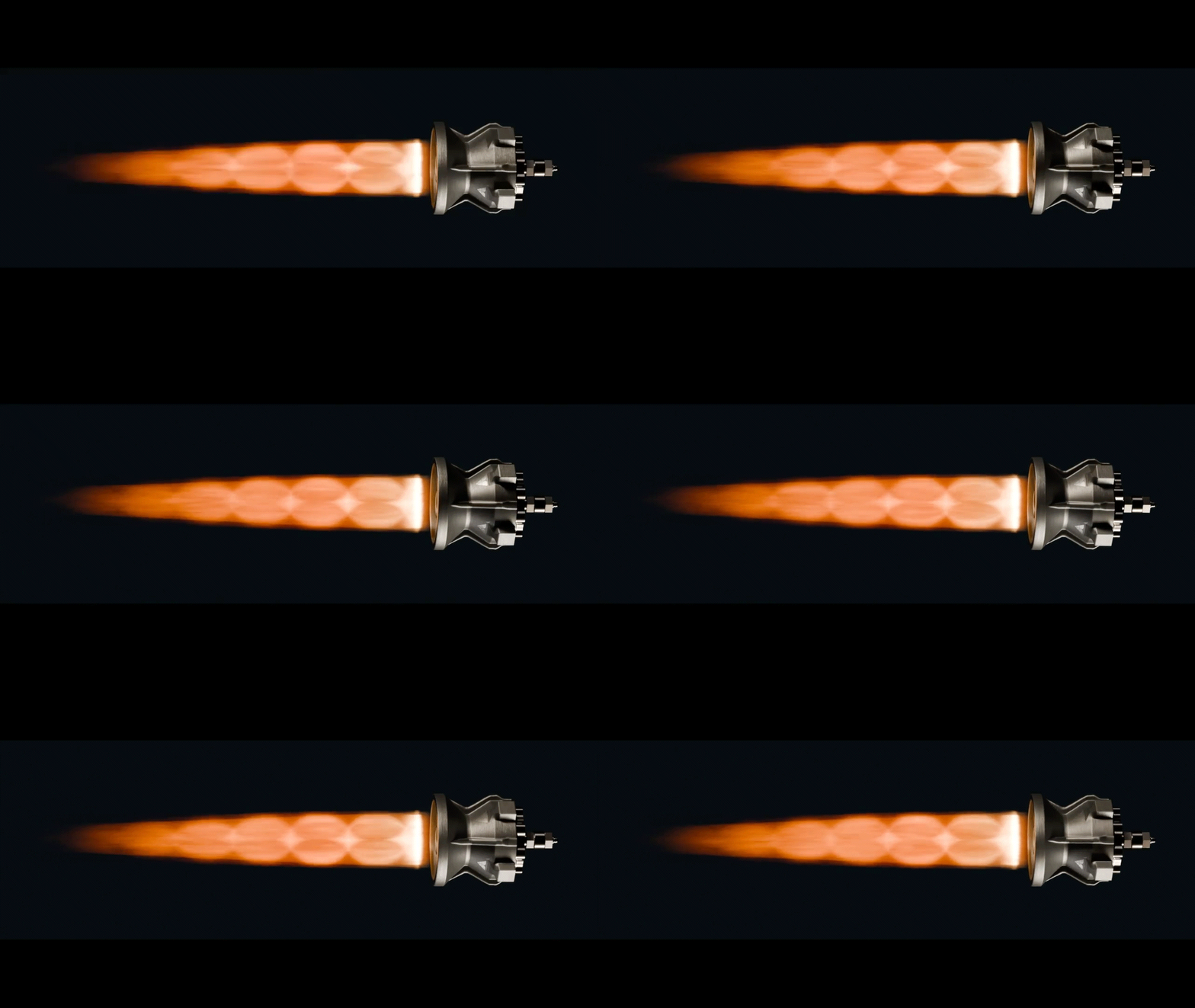
Houston-based company Venus Aerospace announced today (June 8) the closing of its "Series B" financing round, which raised $91 million to evolve its rotating detonation rocket engine (RDRE) from functioning prototype to a scalable propulsion system with multiple applications.
Venus completed a demonstration launch with its test vehicle in May 2025, accomplishing the first such flight from U.S. soil powered by an RDRE. At scale, the company envisions a wide variety of uses for the design, including powering aircraft up to Mach 6 straight off the runway, orbital transfer vehicles for satellites in space, and as the engine for future spacecraft capable of landing on extraterrestrial worlds like the moon.
The newest financing round was anchored by Houston-based venture capital firm Mercury Fund, with contributions from a handful of other investors, including Lockheed Martin Ventures. Venus co-founder and CEO Sassie Duggleby called the funding "an important step" toward maturing the RDRE for production.
"Our customers need propulsion systems that go farther, can be produced reliably and are built on supply chains they can trust," she said in a statement. "We are advancing that capability with American engineering and manufacturing talent to strengthen U.S. defense, expand space access and support the future of high-speed flight."
RDREs differ from conventional rocket engines in the way they ignite and expel their propellants. Typical engines burn fuel as part of a controlled process inside a combustion chamber, which is directed through the engine nozzle and bell. RDREs use a ring-shaped combustion chamber and feature a continuously circulating detonation wave, which produces higher pressure and increased thrust while burning less fuel, in theory.
RDREs aren't a new concept, but designing a functional model had more or less evaded all attempts outside science fiction — until Venus' demonstration launch last year. That flight also caught the attention of former NASA deputy administrator and space shuttle astronaut Pam Melroy, who joined the company's board of directors four months later.
"What differentiates our RDRE is not just that it works, but that it has flown at high thrust and was designed with scale, manufacturability and mission integration in mind," Venus co-founder and CTO Andrew Duggleby said in the same statement. "Our propulsion architecture combines efficiency, throttling, reusability and manufacturability in a way that customers need for real defense and space missions. We are focused on translating technical progress into reliable systems for operational use."