This is the month of the "Great Celestial Summit Meeting" between a crescent moon, three bright planets and two bright stars. The stars (Pollux and Castor) and planets (Venus, Jupiter and Mercury) will be arrayed across the west-northwest sky during the first half of the month, with the moon moving in to join them during the evenings of June 16 and June 17. The most amazing sight will be provided by Venus and Jupiter as they approach each other on a nightly basis, before finally arriving at a close conjunction, less than two degrees apart, on the evening of June 9.
Meanwhile, the early hours of the morning belong to Saturn and Mars. Saturn rises well after midnight most of this month, but is well placed in the southeast sky at the break of dawn. Using a telescope magnifying 30x or more will bring out its beautiful ring system, a big improvement compared to a year ago, when they appeared virtually edgewise to our line of sight. Meanwhile, Mars is becoming easier to sight, after being enmeshed in the bright twilight glow for nearly a year. It becomes evident, low in the east-southeast, a couple of hours before sunup. Shining now at first magnitude, it will brighten, but very slowly, during the second half of this year.
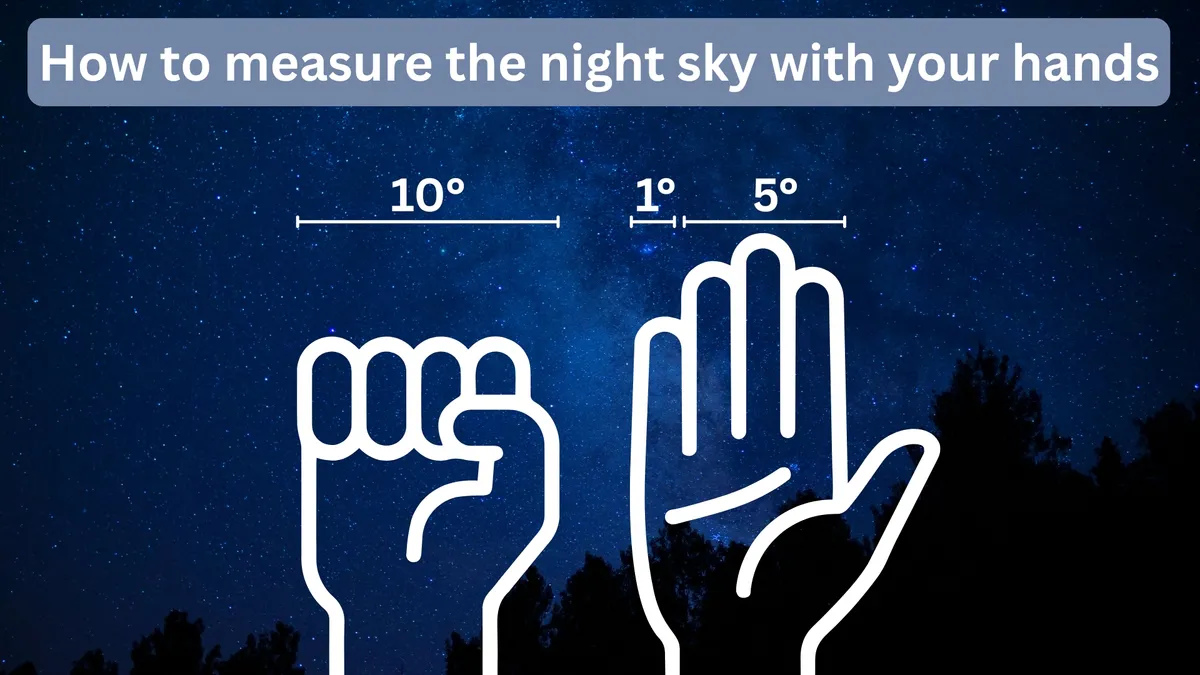
In our schedule, remember that when measuring the angular separation between two celestial objects, your clenched fist held at arm's length measures roughly 10 degrees. Here, we present a schedule below which provides some of the best planet viewing times, as well as directing you as to where to look to see them
The sun
The sun at 4:25 a.m. EDT on June 21, arrives at that point where it is farthest north of the celestial equator (the solstice). Summer officially begins in the Northern Hemisphere, and winter begins in the Southern Hemisphere.
Mercury
Mercury during the first three weeks of June makes its highest vault into twilight for mid-northern observers this year. Each night, this shy planet comes into view at almost the same time and place in the west-northwest sky. During the first half of this month Mercury is about 18 degrees up at sunset (as seen from latitude 40 degrees north) and perhaps 12 degrees high when the sky has darkened enough for us to spot it.
On the evening of June 15, it's positioned about 7 degrees to the lower right of Jupiter and for the next few evenings, we'll have a "planet trifecta" with Venus, Jupiter and Mercury aligned diagonally from upper left to lower right.
On June 16, a thin waxing crescent moon joins the evening planet trio and sits about 3 degrees above and slightly to the left of Mercury and about 5 degrees to the right and slightly below Jupiter. By June 22 Mercury is still 23 degrees from the sun, 2 degrees less than at greatest elongation, but even fainter at magnitude +1.2. It will be lost from view soon after.

Venus
Venus won't reach its greatest elongation from the sun until mid-August. But for viewers at mid-northern latitudes, June is the month when Venus appears highest right after sunset. This is true because the planet is moving rapidly south relative to the sun.
This dazzling world (magnitude -4.0) is now more than 25 degrees high at sunset for observers around 40 degrees north latitude. It sets about 2½ hours after the sun at the start of June and maintains this interval throughout the month. Of course, for the first nine days of June, the big attraction will be to follow Venus as it marches a bit closer each evening toward Jupiter. They will be closest together on the evening of June 9, just 1.6 degrees apart. As darkness deepens, another set of "twins" comes into view just a fist-width to the right of the planetary pair. The stars Pollux and Castor in the constellation of Gemini appear three times farther apart and much dimmer than Venus and Jupiter. On June 10, Venus forms a nearly straight and horizontal line, just over 10 degrees long with the Gemini twins. Venus pulls rapidly to the upper left of Jupiter after their close conjunction. On June 17, an even more striking celestial tableau awaits as darkness falls, with the crescent moon sitting only a couple of degrees to the left of Venus, while well to their lower right sit Jupiter, Pollux, Castor and Mercury.
On June 19, Venus is now in the middle of the faint zodiacal constellation of Cancer the Crab. Wait until about an hour after sunset and use binoculars or a wide-field telescope at low magnification to detect big Messier 44, the Beehive Cluster, as a faint sprinkling of stars less than a degree to the lower left of Venus, a lovely sight.
Mars
Mars is finally creeping out of the sun's glow after hiding there since last August. On June 12, shortly after 4 a.m. local daylight time, Mars will be situated about 7 degrees to the lower left of a slender crescent moon, itself riding low in the east-northeast sky.
Racing across Aries into Taurus by June 20, fans of the red planet will be glad to hear that in late June, it begins to rise a little before the start of morning twilight. On June 29, Mars (shining at magnitude +1.3) passes 4½ degrees to the lower right of the Pleiades. By then, it will be rising about 2¼ hours before the sun.
Jupiter
Jupiter keeps appearing lower in the dusk each night as it's getting ready to relinquish its six-month run as the most prominent evening planet. The month kicks off with Jupiter and Venus attracting attention in the west-northwest sky at dusk. These two brightest planets are separated by about 8 degrees on June 1, with Jupiter positioned to the upper left of Venus. But that gap will close noticeably in the nights ahead. By June 7, they will be poised impressively side by side at nightfall, with far more brilliant Venus about 2.5 degrees to the right of Jupiter.

By the next evening, Venus is upper right of Jupiter and has pulled to within just 1.8 degrees. They are closest together, only 1.6 degrees apart, on June 9. In a telescope, Jupiter appears around 2½ times wider than Venus, but of much lower surface brightness. Even though the clouds of both planets are highly reflective, Venus is about seven times closer to the sun, where the intensity of sunlight is much greater. The big planet will vanish into the evening twilight during early July as it transitions from the evening to the morning sky on July 29.
Saturn
Saturn rises so late, around 3 a.m. local daylight time on June 1, and about 2 hours earlier by month's end — that you're better off going out at dawn when it's well up in the southeast sky. It's located near the border separating the constellations Pisces and Cetus and on the morning of June 10 you will find it hovering about 5 degrees below and slightly to the right of a waning crescent moon. It's looking like Saturn once again, displaying its rings at a tilt of better than 8½ degrees after their edgewise presentation last year.
Joe Rao serves as an instructor and guest lecturer at New York's Hayden Planetarium. He writes about astronomy for Natural History magazine, Sky and Telescope, The Old Farmer's Almanac and other publications.