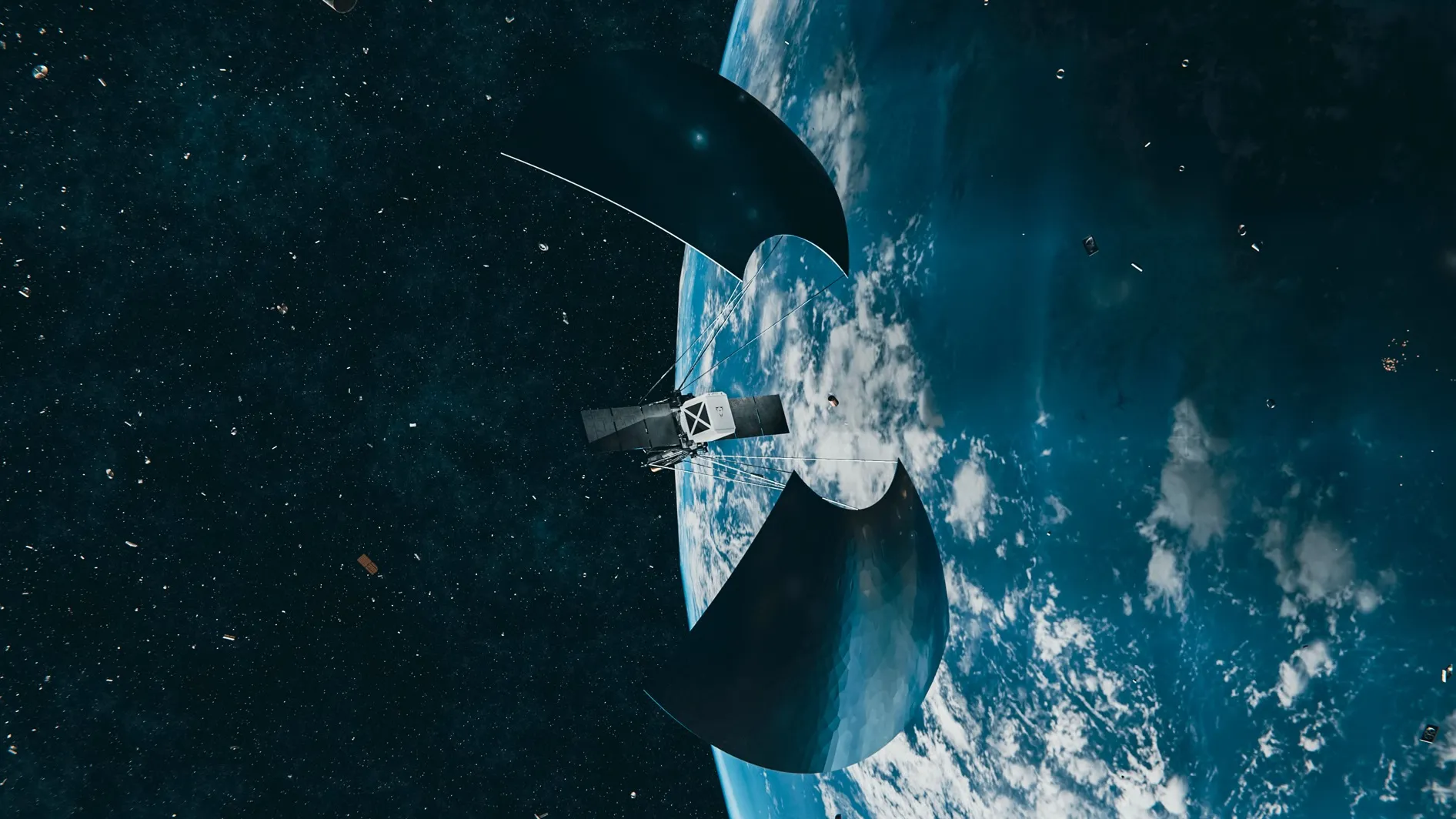
Two private companies are partnering up to establish a repeatable debris removal service for low Earth orbit.
The U.S. firm Portal Space Systems and Australian startup Paladin Space are working together to establish the commercial Debris Removal as a Service (DRAAS) for removing multiple debris objects during a single mission.
The partnership, which Portal announced on March 19, will see a combining of respective technologies to make the service possible. The platform will be based on Portal's maneuverable, refuelable Starburst spacecraft and will integrate Paladin's Triton payload for imaging, classifying and capturing tumbling debris objects under 1 meter (3 feet) in size.
Space debris experts estimate there are nearly 130 million pieces of junk in orbit, ranging from fragments from explosions and satellite deployments up to huge pieces such as abandoned spacecraft and spent rocket stages. That number alarms many people in the space community and has spurred efforts to start cleaning up our orbital neighborhood.
Some companies have already made serious headway on this effort, showing that debris capture is technically feasible. But Portal and Paladin want to go a few steps further.
"This is about making debris removal operational, not experimental," said Jeff Thornburg, CEO of Portal Space Systems, in a statement. "Satellite data underpins communications, navigation, weather forecasting, and national security. Maintaining that infrastructure requires active debris management."
"Most collision-avoidance activity is driven by small debris," said Harrison Box, CEO of Paladin Space. "Triton is built to remove dozens of those objects in a single mission, which fundamentally changes the cost structure of debris remediation and provides the greatest benefit to satellite operators."
The service has already attracted interest, according to Portal, which states that Starlab Space has signed a letter of intent to integrate the service into future space station operations.
Portal aims to send Starburst-1 into orbit in late 2026 on the SpaceX Transporter-18 rideshare mission, which could pave the way for commercial launches in 2027 onwards. The company also raised $50 million in Series A funding in early April to boost development of its maneuverable spacecraft.