LAS CRUCES, New Mexico - Backers of commercial space travel continue to make progress in building customer-carrying spaceships, pursuing novel ways to fly the public into suborbital space.
"We're at the birth of a new industry," said Peter Diamandis, Chairman of the X Prize Foundation. But to advance that industry, a flourishing private market place is needed, he said to attendees of the 2nd International Symposium for Personal Spaceflight.
What is required is "something that gives off more money than it consumes," Diamandis explained, contrasting entrepreneurial space progress to more traditional government-backed programs. "Dream big" he told the community of personal spaceflight advocates, builders, and investors.
The meeting held here is part of the Wirefly X Prize Cup competitions on tap for October 20-21 at the Las Cruces International Airport.
Knocking on the door of the future
Like early explorers conquering great distances here on Earth, the frontier of space is the calling for the 21st century.
Those early pioneers, like space travelers of today "sought the frontier," said Michael Simpson, President of the International Space University in France. "We're knocking on the door of the future...and we are the privileged generation to see it crack open just enough...to have the opportunity to pass through.
"I can see a time, hopefully within the next three to five years when the X Prize Cup is flying races of suborbital vehicles," said Chuck Lauer, Director of Business Development for Rocketplane Kistler, based in Oklahoma City, Oklahoma.
Lauer predicted suborbital hops using a triangular course bounding between spaceports in Oklahoma, New Mexico, and California. "And we do it all in the afternoon," he said.
"It's a wonderful thing to be at the start of an industry...but also a very scary thing," Lauer advised the audience, to bring private suborbital and orbital space trips into reality.
Life-changing experience
NASA isn't necessarily interested in developing the personal spaceflight industry, explained Ken Davidian of NASA's Centennial Challenges in Washington, D.C. "However, the personal spaceflight industry could benefit NASA in a lot of the programs that we want to ultimately develop. There's a lot of synergy there."
NASA-sponsored Centennial Challenges include the Lunar Lander Challenge and Vertical Rocket Challenge competitions, as well as the Space Elevator games to be held during the upcoming Wirefly X Prize Cup.
"I'm really hoping to be handing out some big checks," Davidian added. "I'm getting checks printed up at Kinkos as we speak."
There's nothing like the view from space, noted veteran shuttle astronaut, Tom Jones, with four flights under his space helmet.
Jones said his space travels represent "the richest experience of my life," he explained. While NASA is transitioning to its new Crew Exploration Vehicle, also occurring is a new era of commercial spaceflight, he pointed out.
"Space flight has really been a life-changing experience for me...just as it will be for many of you in the future," Jones said.
Genius factory
In the spaceliner-building business, the pace is quickening for Sir Richard Branson's Virgin Galactic.
Alex Tai, Chief Operating Officer of Virgin Galactic, said that he hopes suborbital passenger flight from New Mexico's Spaceport America will start in 2010. The group's spaceliner of choice - SpaceShipTwo - is now being crafted by Scaled Composites in Mojave, California, he said, calling it a "genius factory."
"There are bits of spaceship all over the factory floor. It's absolutely incredible. Those will be ready, we believe sometime in 2009," Tai said.
Point-to-point flight around the Earth via suborbital vehicles is a technology that is available now, Tai said.
Tai's forecast is that the cost per seat on their spaceliners will be ever-decreasing to make access to space more and more affordable to all.
"Our business plan is for 50,000 people to space over ten years. And we can do this because we believe we have very safe, very reliable and a very cost-effective and efficient way of getting people into space."
New space entries
The diversity of approaches to fly people to the suborbital heights was in evidence at the symposium.
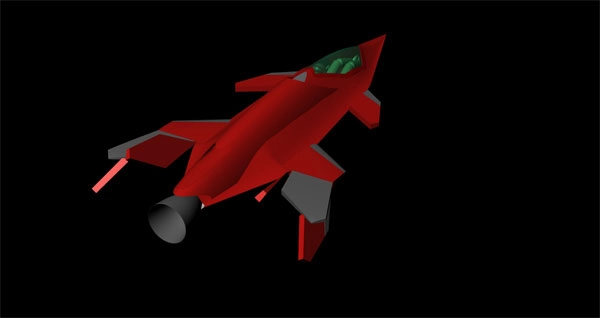
New entries are the XF1, the Excalibur, as well as the Valkyrie - all unveiled by Brian Feeney, President of Canada's da Vinci Project.
Feeney foresees his class of spacecraft as an "extreme sport" type of vehicle. The initial version of his spaceship is a hybrid between NASA's X-36 design and Boeing's Bird of Prey craft. He outlined plans to scale up the ships from handling single customers to the larger Valkyrie design - able to hold 7 passengers and two pilots.
Dumitru Popescu, President of Aeronautics and Cosmonautics Romanian Association detailed the Stabilo - a balloon-lofted suborbital system, created by the European team ARCA. "It's the most unconventional suborbital ship," he said.
Popescu said a test flight of the Stabilo design is slated for next month, with a carrier balloon test completed last August.
- VIDEO: Complete Coverage of the X Prize Cup
- LIVE Coverage of the X Prize Cup
- Showtime for Spaceship Builders
- Space Elevator: Hoist to the Heavens
- X Prize Cup to Host NASA's Lunar Lander Challenge
- Rocket Racing League: Spreading Its Wings
- Sky High Plans For UP Aerospace