


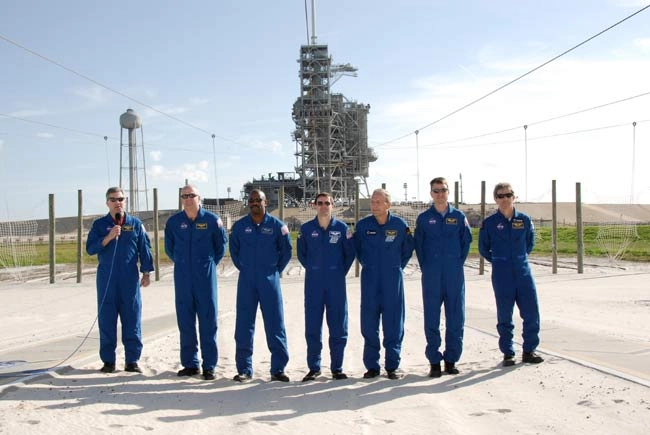
NASA?sshuttle Atlantis and its seven-astronaut crew are on track for a planned Dec. 6launch to the International Space Station (ISS), mission managers said lateFriday.
Commandedby veteran shuttle flyer Stephen Frick, Atlantis and its seven-astronaut crewwill launch Thursday at 4:31 p.m. EST (2131 GMT) to deliver the European-built Columbus laboratory to the ISS.
?Atlantisis on the pad ready to go, with no major issues or concerns regarding thatvehicle,? said NASA shuttle program manager Wayne Hale during a briefing at theagency?s Kennedy Space Center in Cape Canaveral, Fla.
Atlantis?STS-122 mission will mark NASA?s fourth shuttle flight of 2007, the most ina single year since the agency resumed orbiter flights after the 2003 Columbia tragedy, and comes after a packed month of construction work by the station?s Expedition16 astronauts. The three-person crew performed threespacewalks in 15 days and some tricky robotic arm work to ready the stationand its new Harmony connecting module for the European Space Agency?s Columbus lab.
?In mymind, it?s been an unprecedented year for us,? said Mike Suffredini, NASA?sspace shuttle program manager. ?I will say, we always knew this particularmoment was going to be a challenging moment for us.?
Deliveredby NASA?s shuttleDiscovery last month, the Harmony module is designed to serve as the anchorfor Europe?s Columbus module and Japan?s massive, three-segment Kibolaboratory, which will launch in stages next year to further expand the $100billion space station.
Frick andhis STS-122 crewmates will perform at least three spacewalks during theirplanned 11-day mission to install Columbus, replace ISS hardware and swap outone member of the station?s Expedition 16 crew.
If Atlantis?power supplies hold out, NASA may extend the mission by two extra days and adda fourth spacewalk to take another look at a balky rotational joint designed toturn the station?s starboard solar wings like a paddlewheel to track the sun. Previouslimited inspections by spacewalkers found the joint to be contaminatedwith metallic grit, and engineers require additional data before they candecide on a repair plan.
?With somepower downs, we can get a couple of extra days,? Suffredini said. ?During a [fourthspacewalk] we?d do some thorough inspections of the solar array joint.?
But ifAtlantis? power supplies can?t support the extra spacewalk or its astronautcrew grows too fatigued, the inspection could be shifted to later in the Expedition16 mission, he added.
NASA plansto launch some spare parts for the joint aboard Atlantis and another shuttleset to launch in February to prepare for what could be a lengthy repair requiringmultiple spacewalks, mission managers said.
Engineersalso suspect that indications of a possibleair leak in seals between the station?s Harmony and U.S. Destiny labare the result of instrumentation error. A series of tests this week, some ofwhich are still ongoing, have yet to turn up any sign of an actual leak.
?The datasuggests this leak does not exist,? Suffredini said.
- VIDEO: ISS Commander Peggy Whitson Takes Charge
- NEW IMAGES: Discovery's STS-120 Mission in Pictures
- The Orbital Chef: The Top 10 Space Foods
