


NASA engineersand their Russian counterparts are closing in on the source of a major computerglitch that afflicted the International Space Station (ISS) during last month?sshuttle mission to the orbital laboratory.
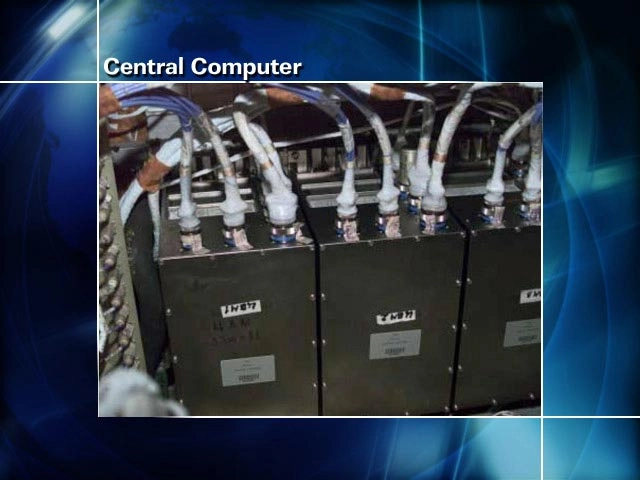
ISSengineers are eyeing odd readings in cables, as well as corrosion in anelectronics box, as a potential culprit for lastmonth's failure of control and navigation computers in the station'sRussian segment during NASA's STS-117construction mission.
?We knowsomething is definitely anomalous in these areas,? said Kirk Shireman, NASA?sdeputy ISS program manager, in a recent mission briefing. ?Is that the onlyproblem? We?re still looking at that.?
Thetargeted cables and electronics box, known as a BOK 3 unit, both feed into thestation's six-computer network governing Russian control and navigationsystems, Shireman said.
Thecomputers, which oversee the station?s Russian-built command systems, vitallife support hardware and attitude control thrusters, failed as the shuttleAtlantis? astronaut crew installed and activated a new pair of starboard-sidesolar arrays at the ISS. The glitch left the orbital laboratory temporarilydependent on its U.S. segment and Atlantis? thrusters for attitude control. ISSExpedition 15 commander Fyodor Yurchikhin and flight engineer Oleg Kotov later reactivatedthe ailing computers, using jumper cables to bypass faulty surgeprotector-like secondary power sources in each of the machines.
Engineersinitially suspected the glitch stemmed in some part from changes to the station'senvironment or power grid after Atlantis astronauts installed a new 17.5-tonpair of starboard trusses and unfurled two new solar wings.
?At thispoint in time, it?s looking like that was not the cause,? Shireman said, addingthat engineers continue to look at all possible sources. ?But we haven?tdismissed it.?
In itscurrent configuration, the repaired ISS computer systems are capable of supportingNASA's planned STS-118 shuttle mission to the station in early August, missionmanagers said.
Commandedby veteran shuttle flyer Scott Kelly, shuttle Endeavourand its STS-118 crew will deliver more than two tons of cargo to thestation, as well as a new spacer piece of the outpost's starboard-side trussand a host of spare parts. Endeavour's crew also includes NASA's first educatorastronaut Barbara Morgan, who first joined NASA more than 20 years ago as thebackup flyer for the agency's Teacher in Space program before the 1986Challenger accident.
ISS engineers,however, continue to discuss whether to send replacement parts for theafflicted cables, BOK 3 unit or computers themselves to the ISS aboard theunmanned Russian cargo ship Progress 26 before Endeavour's crew reaches theorbital laboratory. The automated supply ship is slated to launch Aug. 2 fromBaikonur Cosmodrome in Kazakhstan and dock at the ISS a few days later.
NASA'sSTS-118 crew is set to launch aboard Endeavour on Aug. 7.
"It'slikely that we'll actually perform some of the maintenance activities while weare docked during STS-118," Shireman said.
- Tense Day Ends in Some Relief for Space Station
- SPACE.com Video Interplayer: Space Station Power Up with STS-117
- Complete ISS Expedition Coverage
