





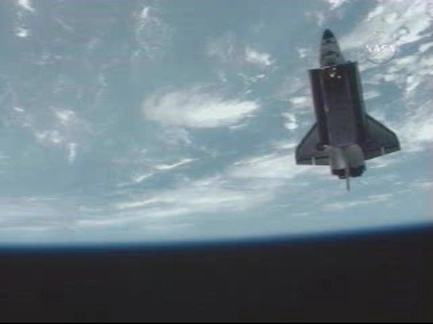
HOUSTON -- Astronautsaboard NASA?s shuttle Atlantis scanned their heat shield for a second timeTuesday as engineers on Earth pondered a bit of debris seen during the orbiter?sdeparture earlier from the International Space Station (ISS).
Atlantis?STS-117 crew inspected vital heat-resistant panels along the shuttle?s wingedges and nose cap for damage by micrometeorites and orbital debris lateTuesday, but at first look the scan showed no obvious signs of change from anearlier survey, shuttle officials said.
CathyKoerner, NASA?s lead STS-117 shuttle flight director, said image analysts willstudy the images overnight to ensure Atlantis? heat shield is still clear for aplanned Thursday landing. Mission managers initially cleared the orbiter of anyconcern related to debris shed during its June 8 launch last week pending thenow-standard late inspections.
NASA analystsare studying a white object that appeared to drift from the ISS in video takenby a camera aboard Atlantis well after the shuttle had castoff from the orbital laboratory to determine if it actually emanated fromthe station or is merely small bit of debris near the orbiter.
?The earlyanalysis is that it?s probably something that came from the orbiter since theorbiter was moving away,? NASA?s ISS program manager Mike Suffredini said,adding that image analysts are studying additional video from Atlantis just tobe sure. ?Which makes it a very small object.?
If it camefrom thespace station, the object would be larger due to the distance between theoutpost and Atlantis, and resembled a blanket-like material in video from theshuttle, Suffredini said. The ongoing study is a mark of due diligence sincethe object was clearly visible in video from the undocking, but it is notthought to be a concern, he added.
Koerneradded that ice is a typical companion near the shuttle during orbital maneuversas exhaust water freezes, and said it is not uncommon for small objects to flynear orbiters in space.
LastSeptember, a number of small objects spotted floating nearby Atlantis by itsSTS-115 crew prompted additionalinspections and a landing delay, but no damage or other concerns wereultimately found.
Atlantisundocked from the ISS at 10:42 a.m. EDT (1442 GMT) after a busy construction flightto the orbital laboratory.
Commandedby veteran shuttle flyer Rick Sturckow, the STS-117 installed newpower-generating solar arrays and their 17.5-ton truss segments to thestation?s starboard side, furled an older solar wing and stapled a looseblanket down to Atlantis? left engine pod during the course of four spacewalks.The mission also featured a one-astronaut swap for the station?s Expedition 15crew.
Atlantis isslated to return to Earth Thursday, with landing set at 1:54 p.m. EDT (1754GMT) at NASA?s Kennedy Space Center in Cape Canaveral, Florida.
NASA is broadcasting the space shuttle Atlantis' STS-117 mission live on NASATV. Click here for mission updatesand SPACE.com's video feed.
- SPACE.com Video Interplayer: Space Station Power Up with STS-117
- IMAGES: Atlantis Shuttle?s STS-117 Launch Day
- Complete Shuttle Mission Coverage
