


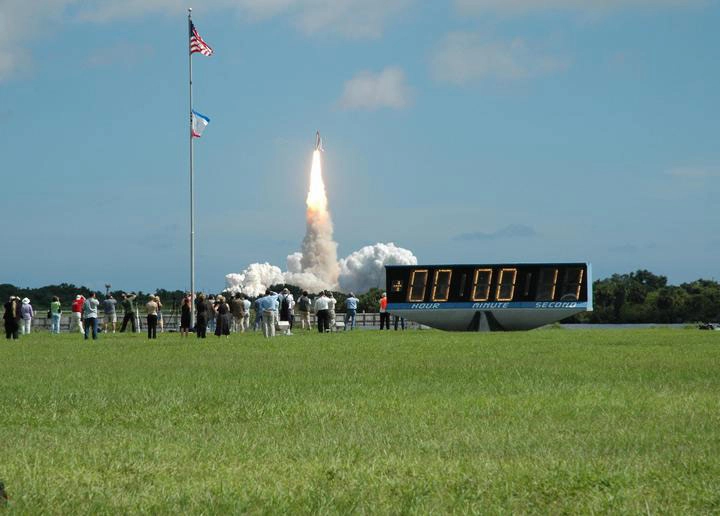
CAPE CANAVERAL, Fla. - The space shuttle Atlantis is likelyunharmed from small showers of fuel tank foam that appeared to rain on theorbiter in the late stages of its Sept.9 launch, NASA's shuttle chief said Saturday.
NASA space shuttle program managerWayne Hale said an initial look at video and images of Atlantis' 11:14:55 a.m.EDT (1514:55 GMT) launch recorded five instances of foam shedding, but none aresuspected of damaging the spacecraft.
"Not only am I not alarmed, I amreally at ease after looking at this video," Hale told reporters here atKennedy Space Center, where Atlantis rocketed toward the International SpaceStation (ISS) from its Pad 39B launch site today.
Every foam debris event recorded bya fish-eye lens cameramounted to the top of a 17-inch pipeline on Atlantis' external tank, whichfeeds the thirsty shuttle with liquid oxygen during launch, occurred after thetwo-minute and 15-second mark. Before that benchmark, debris can be swept backfast enough to strike a shuttle and cause significant damage.
"What we've seen to date today isvery good," Hale said. "We saw nothing of any consequence, or anything that'smade the reports, before four minutes and seven seconds into the flight."
Four minutes and seven seconds afterlaunch, a space shuttle has passed an altitude of about 300,000 feet - or about10 times that of a typical commercial jetliner - and almost in orbit, Halesaid.
"Anything that comes off that late is of no consequence from the debrisstandpoint, or damage to the shuttle thermal protection system standpoint," headded.
NASA has kept close watch on launchdebris after a large piece of foam insulation pierced the space shuttle Columbia's heat shieldduring liftoff, leading to the lossof the orbiter and its seven astronaut crew during reentry in 2003.
Here is a rundown of the majorevents seen in the fish-eye lens video:
- Four minutes, five seconds into launch: spray of foam debris apparently with multiple impacts to orbiter starboard side, belly tile region, wing glove area. Multiple debris events showering from outboard liquid oxygen feed line area, with possible impacts. No damage noted in any of the events.
- Five minutes, 28 seconds into launch: spray of debris outboard of liquid oxygen feed line, possible events. Again no damage identified.
- Eight minutes, 44 seconds into launch: Single piece of debris - possibly ice - separates from umbilical area, impacts port brace between Atlantis and tank to impact fuselage near nose landing gear door. No damage seen at impact site.
- Five minutes, 40 seconds into launch: Radar tracking system records a signal indicating possible debris. Image analysts are sifting though ascent imagery to seek correlation.
- 16 seconds into launch: A Tyvek cover protecting reaction control thruster falls free, three seconds late, but does not impact orbiter aft.
Hale added that a piece of whatanalysts believe to be ice or debris was seen falling clear of Atlantis' aftjust after liftoff by a ground-based camera, and posed no threat to thespacecraft or its astronaut crew.
It is too early to determine themass of the individual foam debris fragments, but additional video from acamera mounted in the umbilical well that serves as a connecting point betweenAtlantis and its tank will help determine those masses and sizes, Hale added.
More than 100 cameras watchedAtlantis' launch from the ground and in the air. Analysts will sift throughthose images to seek out any other areas of concern, shuttle officials said.
Meanwhile, Atlantis' STS-115crew relayed video and high-resolution images of the shuttle's external tank -taken just after the 15-story vessel was jettisoned after launch - to flightcontrollers. That handheld video appeared to be out of focus on NASATelevision, but the high resolution images will be quite valuable, shuttleofficials said.
The STS-115 astronauts will alsoconduct a detailed survey of their heat shield with a sensor-tipped inspectionboom on Sunday. Based on that scan, flight controllers will decide whether toinsert an extra day in the STS-115 astronauts' 11-day mission for a focusedinspection.
"Certainly I'm hopeful that we won'thave any areas to look for in the focused inspection, but it's a little earlyto make that call," Hale said.
- VIDEO: First Tasks of NASA's STS-115 Mission
- Gallery: Prepping Atlantis
- Complete Space Shuttle Mission Coverage
- NASA's STS-115: Shuttle Atlantis to Jump Start ISS Construction
- The Great Space Quiz: Space Shuttle Countdown
- Complete Coverage: ISS Expedition 13
