Editor's note Sept. 19: NOAA has confirmed that moderate (G2) geomagnetic storm levels have been reached. Aurora displays have been sighted across multiple U.S. States. including Minnesota, Wisconsin, Wyoming, and Montana. We've rounded up some of the best aurora photos here.
A giant solar tendril, known as a solar filament, lashed out from the sun on Saturday (Sept. 16) catapulting a super-hot plasma eruption known as a coronal mass ejection (CME) toward Earth.
The U.S. National Oceanic and Atmospheric Administration (NOAA) has issued a G2-class moderate geomagnetic storm watch as it keeps an eye on the Earth-directed portion of the CME expected to hit on Sept. 19.
This could be good news for aurora chasers. Should the CME arrive as anticipated, it could trigger a geomagnetic storm similar to the one on Sept. 12 that sparked auroras as far south as Colorado and Missouri, according to Spaceweather.com.
Related: Scientists may finally know why the sun's outer atmosphere is so freakishly hot
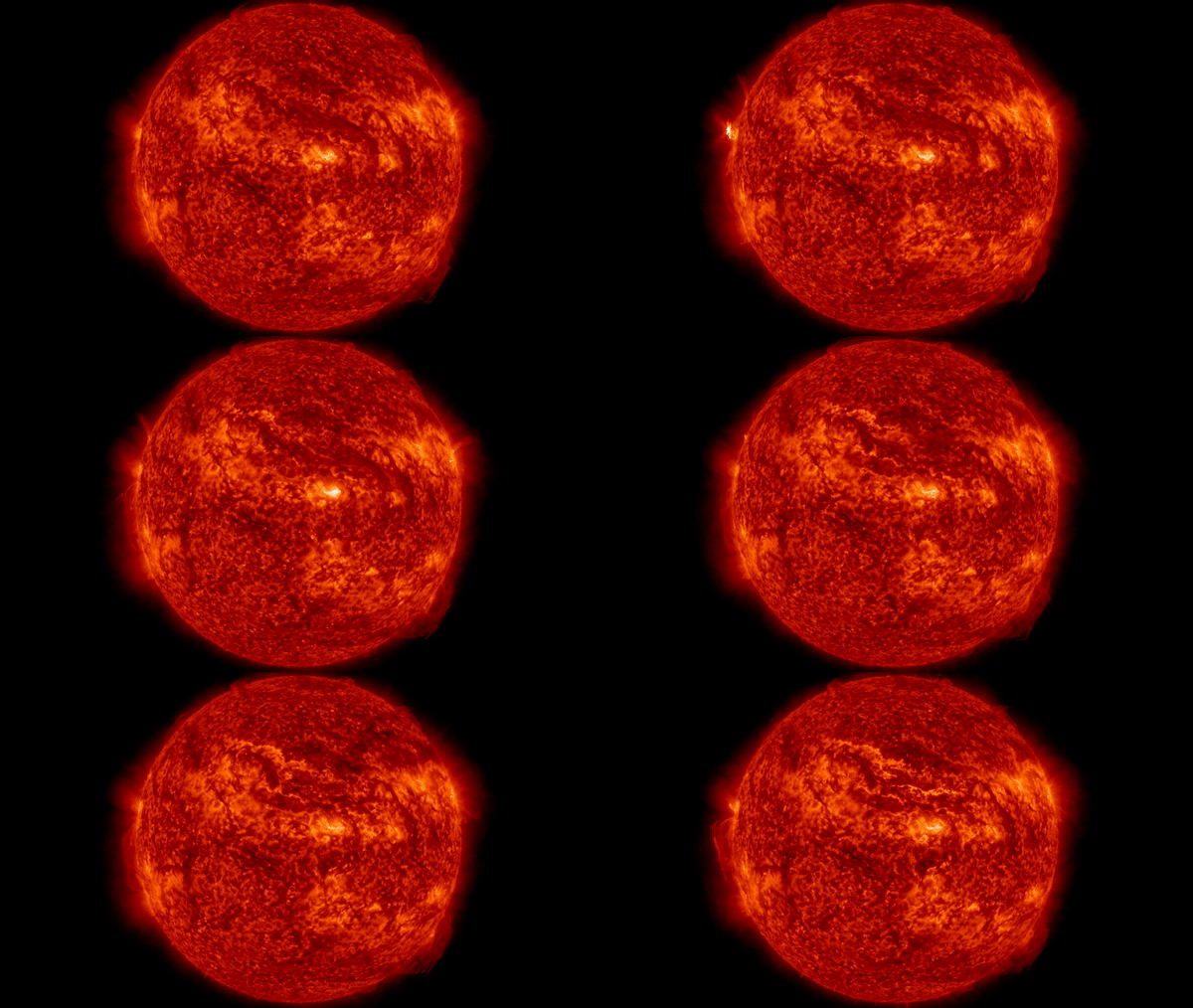
Solar physicist Keith Strong took to X (formally known as Twitter) to express his excitement about the colossal eruption. "THE BIGGEST ERUPTION I HAVE EVER SEEN! I have been observing the sun professionally for over 50 years and this is the largest filament eruption I have seen. "
THE BIGGEST ERUPTION I HAVE EVER SEEN! I have been observing the Sun professionally for over 50 years and this is the largest filament eruption I have seen. Note it covers over half the Sun, compare it to the size of the Earth (inset) but amazingly it did not produce a big flare. pic.twitter.com/RgplcTy0ApSeptember 17, 2023
Geomagnetic storms are disturbances to Earth's magnetic field caused by solar material from CMEs — large expulsions of plasma and magnetic field from the sun's atmosphere.

NOAA ranks geomagnetic storms on a scale running from G1, which could cause an increase in auroral activity around the poles and minor fluctuations in power supplies, up to G5, the most extreme level that can cause complete HF (high frequency) radio blackout on the entire sunlit side of the Earth lasting for a number of hours.
The predicted G2 storm on Tuesday (Sept. 19) could trigger extensive auroral displays and, according to NOAA, could result in a limited blackout of HF radio communication on the sunlit side and possible loss of radio contact for up to tens of minutes. There may also be degradation of low-frequency navigation signals for tens of minutes.
We can expect more extreme space weather events as the sun builds towards a peak in its 11-year solar activity cycle, expected to occur in 2025. But like weather on Earth, space weather is a fickle fellow and predictions can turn on a dime.