CAPE CANAVERAL, Fla. — After a more than two-week delay, NASA's next astronaut crew is finally in orbit.
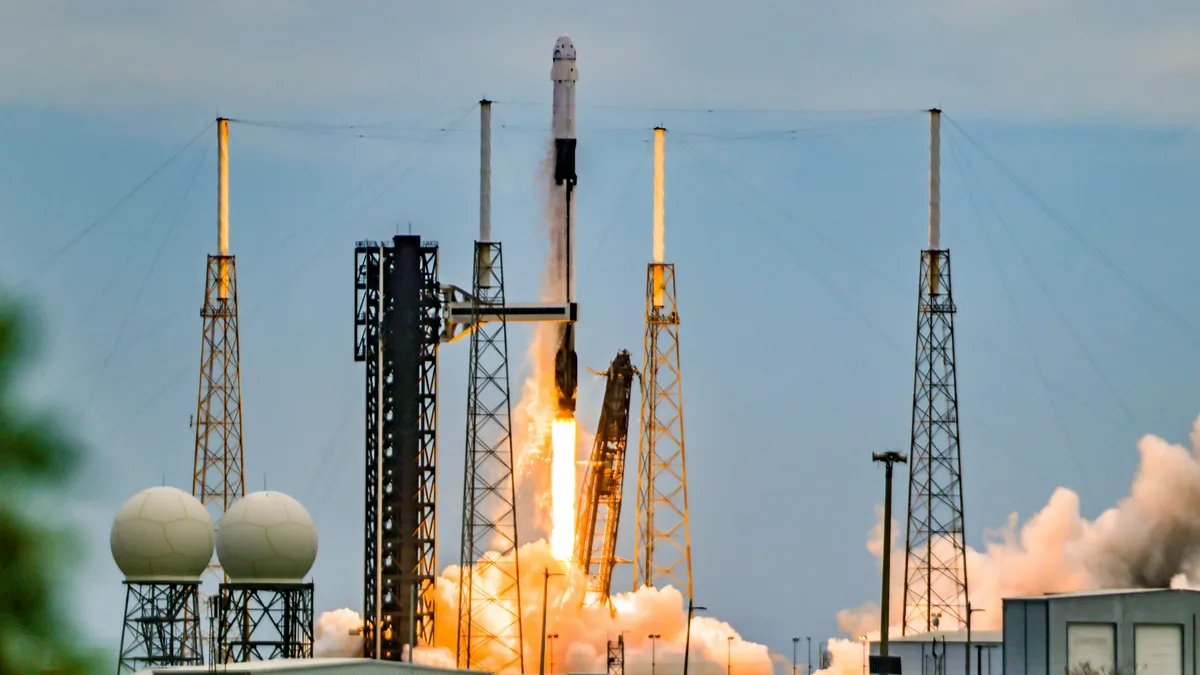
SpaceX launched its Crew-13 astronaut mission for NASA today (Oct. 1) from Cape Canaveral Space Force Station here on Florida's Space Coast on a flight to the International Space Station (ISS) that will last about 8 hours — the fastest Crew Dragon flight ever to the orbiting lab.
Crew-13's Falcon 9 rocket lifted off at 11:10 a.m. EDT (1510 GMT) from Launch Complex-40, carrying the astronaut quartet into low Earth orbit (LEO) aboard the SpaceX Crew Dragon "Grace." It's the second launch for Grace, which also ferried the crew of the private Axiom-4 mission to the ISS last summer. It's also the second mission for Crew-13's commander, NASA's Jessica Watkins, who is, coincidentally, the first NASA astronaut to launch aboard a Crew Dragon spacecraft for a second time.


Watson is joined by three spaceflight rookies: Crew-13 mission pilot Luke Delaney of NASA and mission specialists Joshua Kutryk of the Canadian Space Agency and Sergey Teteryatnikov of the Russian space agency Roscosmos.
Their trip to LEO took less than 10 minutes. About 2.5 minutes after liftoff, the Falcon 9's second stage separated from its booster, known as B1101, and, in short succession, began executing its orbital insertion burn. Meanwhile, B1101 performed a simultaneous boostback burn to reset its trajectory for a return and touchdown at the landing zone adjacent to LC-40. An entry and landing burn followed, with a successful touchdown about 7 minutes and 40 seconds after liftoff. This was the third launch and recovery of B1101.

The second-stage engine burn ended about a minute later, wrapping up an orbital insertion maneuver that lasted roughly six minutes. Grace was released another a minute afterward to begin its chase of the ISS.
"Thanks for an amazing ride," Watkins told Mission Control shortly after that milestone was reached.
"They say that courage is grace under pressure, and the incredible teams that got us to orbit today truly embody that," she added. "Thank you for your hard work, perseverance, and courageous commitment to ensuring Grace was ready and safe to fly. We carry with us on this journey all of you who have supported us along the way, and we hope to make you proud."

Crew-13 won't have to wait long to begin rendezvous and docking procedures.
Typical Crew Dragon missions take 15 to 24 hours to catch up to the space station. For comparison, Russian launch profiles deliver the Soyuz crew capsule to the ISS anywhere between three hours to two days after liftoff. Grace will only have about 7 hours, 50 minutes on orbit before docking with the ISS, setting a new Crew Dragon speed record.
The Crew-13 spaceflyers will call the ISS home for roughly six months. During their stint, they will take over ongoing station maintenance and research investigations, many of which focus on astronaut health and the long-term effects of microgravity on the human body. Other experiments on the Crew-13 docket include studies into stem-cell derived tissues to treat Parkinson's and heart disease, as well as the harvesting of produce in zero-g.
The astronauts' time aboard the ISS is expected to wrap up sometime next year, around February or March, when SpaceX launches NASA's Crew-14 astronauts to replace them. Similarly, Crew-13 will relieve the four Crew-12 astronauts. Crew-13's arrival will signal the beginning of departure preparations for the members of Crew-12, who launched to the ISS about 7.5 months ago — a slightly longer stay than originally anticipated.
Crew-12 was expected to return to Earth last month, but a delay in Crew-13 extended their mission by a few weeks. An oxidizer leak in Grace's propulsion system was discovered in August, prompting NASA and SpaceX to allot more time for prelaunch checkouts and tests.
NASA's Crew-13 coverage is scheduled to continue at 5:20 p.m. EDT (2020 GMT), with docking expected around 7 p.m. EDT (2300 GMT). Grace will dock with the forward-facing port on the station's Harmony module, where it will remain for the duration of the Crew-13 mission. Hatch opening is scheduled for 8:25 p.m. EDT (0025 GMT, Oct. 2), with short welcoming remarks by the crews to follow. You can watch all of this action here at Space.com.