
Latest articles by Joe Rao

Easter falls on the Sunday that follows the first full moon occurring on or after the day of the spring equinox. So it seems like Easter should be this weekend. Here's why it isn't.

Here's an observers' guide to the newly discovered Comet 2025 F2 (SWAN), which is visible in northern skies right now.

The Lyrid meteor shower, one of the oldest known of the annual showers, peaks this year with only some small interference from a waning crescent moon.

After putting on a great show in our evening sky since the fall of 2024, dazzling Venus puts on a spectacular showing for early morning risers for the balance of 2025.

A partial solar eclipse is coming this weekend, but weather could be an issue for many hoping to get a glimpse of the moon "taking a bite" out of the sun.

Observers across eastern North America and much of Europe will have front-row seats to the striking partial solar eclipse on March 29. Here's what to expect.

Just how rare are planetary alignments?

Here are the weather conditions that can be expected during the the total "Blood Moon" lunar eclipse thought the United States on March 13, 2025.

Observers across most of the United States will have front-row seats to the spectacular total lunar eclipse overnight on March 13-14. Here's what to expect.

The pair will be closest to each other at around 8 p.m. ET.

From fiery 'blood moons' to ancient legends, discover the surprising science and history behind lunar eclipses.

In March 2025 we have a fine opportunity to view the planet that many astronomy guide books refer to as the most difficult of the naked-eye planets to see: Mercury.

For the next few weeks, the planet Mars will form an isosceles triangle with the two bright stars marking the heads of the Gemini Twins, Pollux and Castor.

Even to a casual viewer, the waxing gibbous moon of Feb. 7 will appear quite unusual, climbing so very high in the sky.

Jupiter will also be accompanied by two naked-eye star clusters: the Pleiades and Hyades.

On the night of Feb. 5, a waxing gibbous moon will once again cover up the "Seven Sisters" of the famous Pleiades star cluster.

On Saturday evening, February 1, a lovely crescent moon passes just to the left of Venus, which is now shining at the pinnacle of its brilliance.

February brings a rare planetary parade, with five bright planets in clear view and a special alignment of Mercury and Saturn on Feb. 24.

C/2024 G3 (ATLAS) is one of the few comets on record that became bright enough to be visible in the daytime without optical aid like binoculars or a telescope.
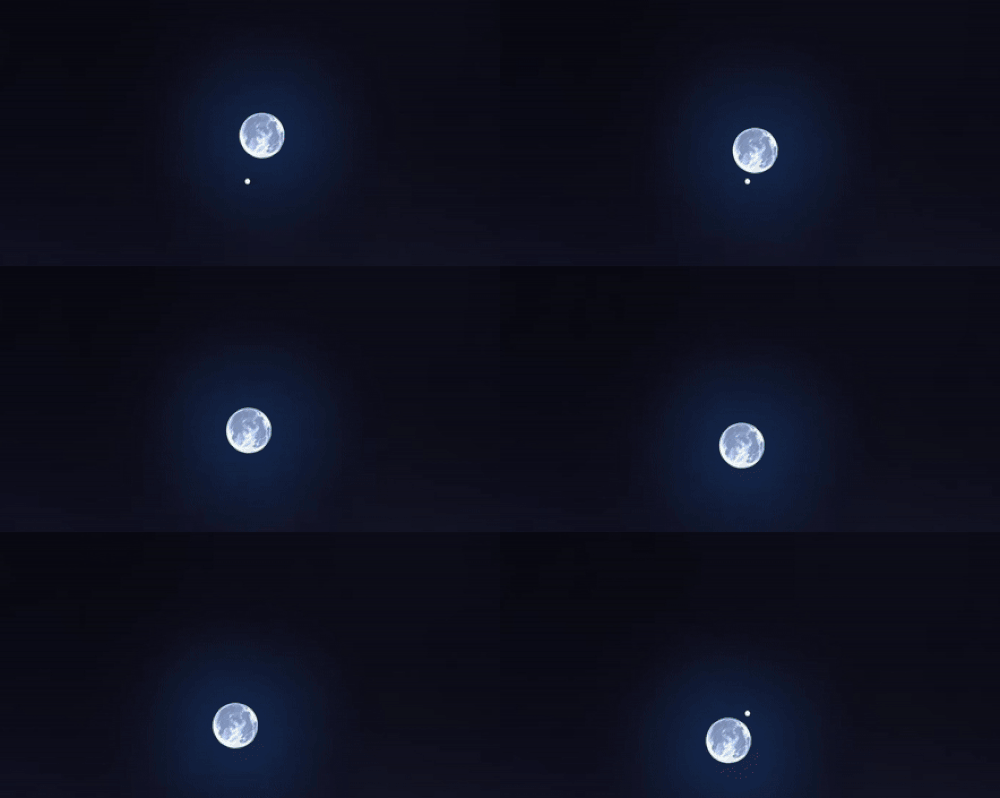
On the night of Jan. 13, the full moon will appear to pass in front of Mars, resulting in an occultation visible from the United States, much of southern and eastern Canada, and West Africa.

The moon will pass in front of the Pleiades star cluster during an occultation on Jan. 9, 2025. Here's how to see it.
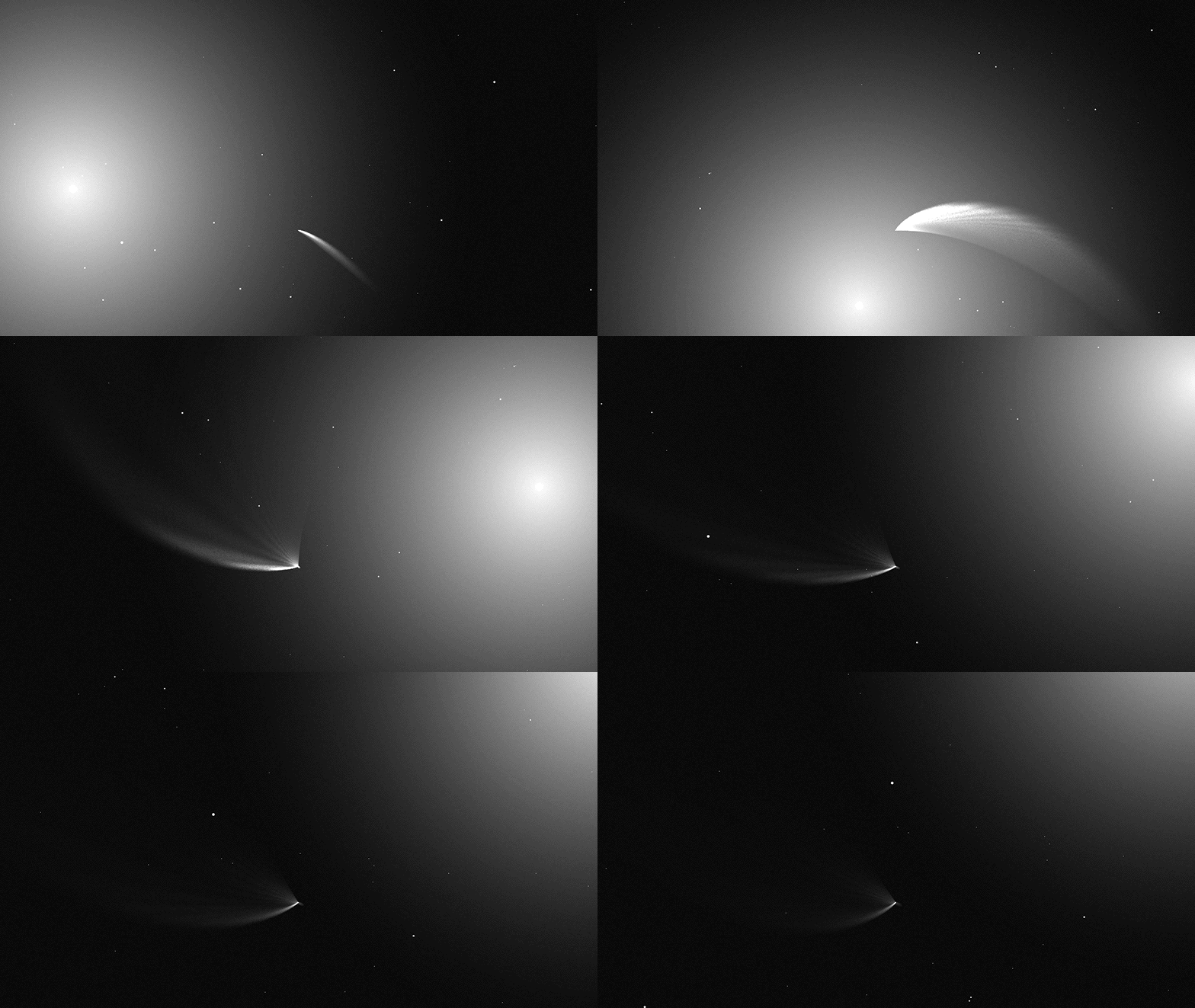
One of the brightest comets in 20 years, Comet 2024 G3 (ATLAS) returns for a close encounter with the sun — but will we be able to see it?

The 2025 Quadrantid meteor shower peaks overnight on Jan. 3, and could produce between 60 to 120 meteors per hour.

